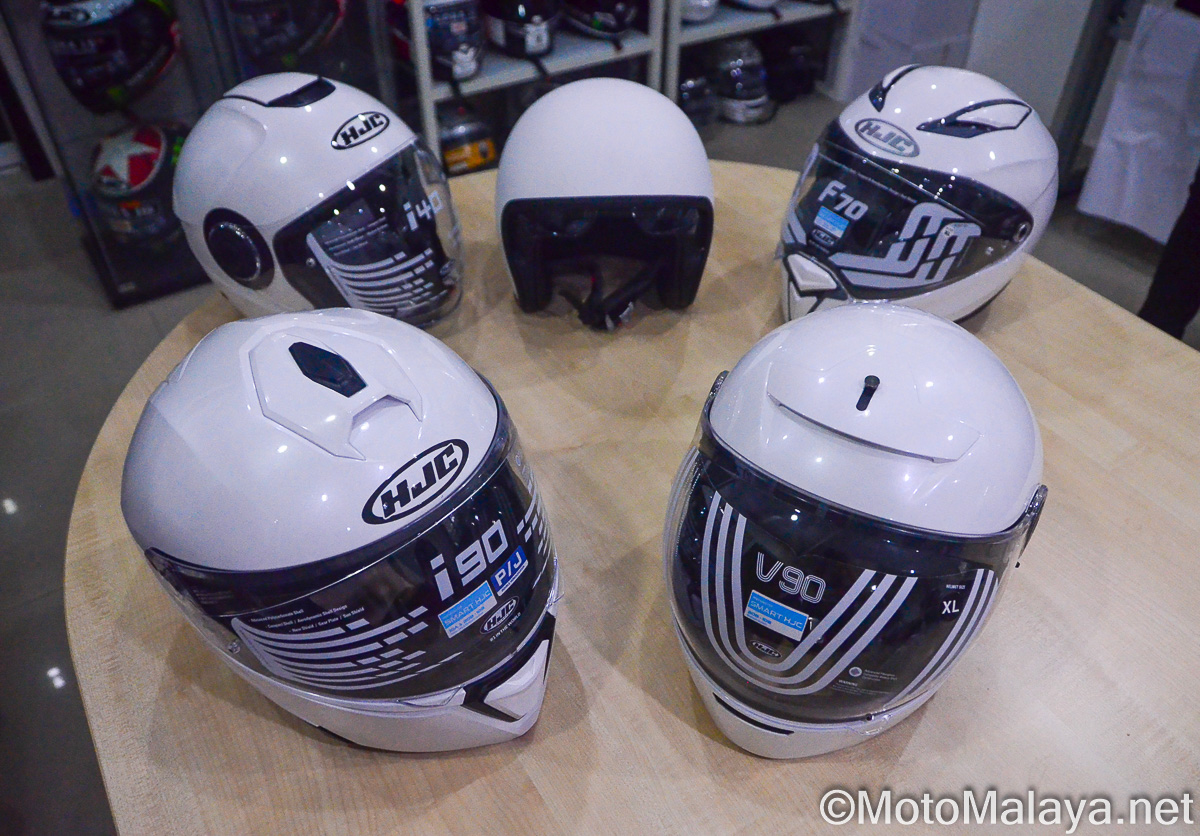
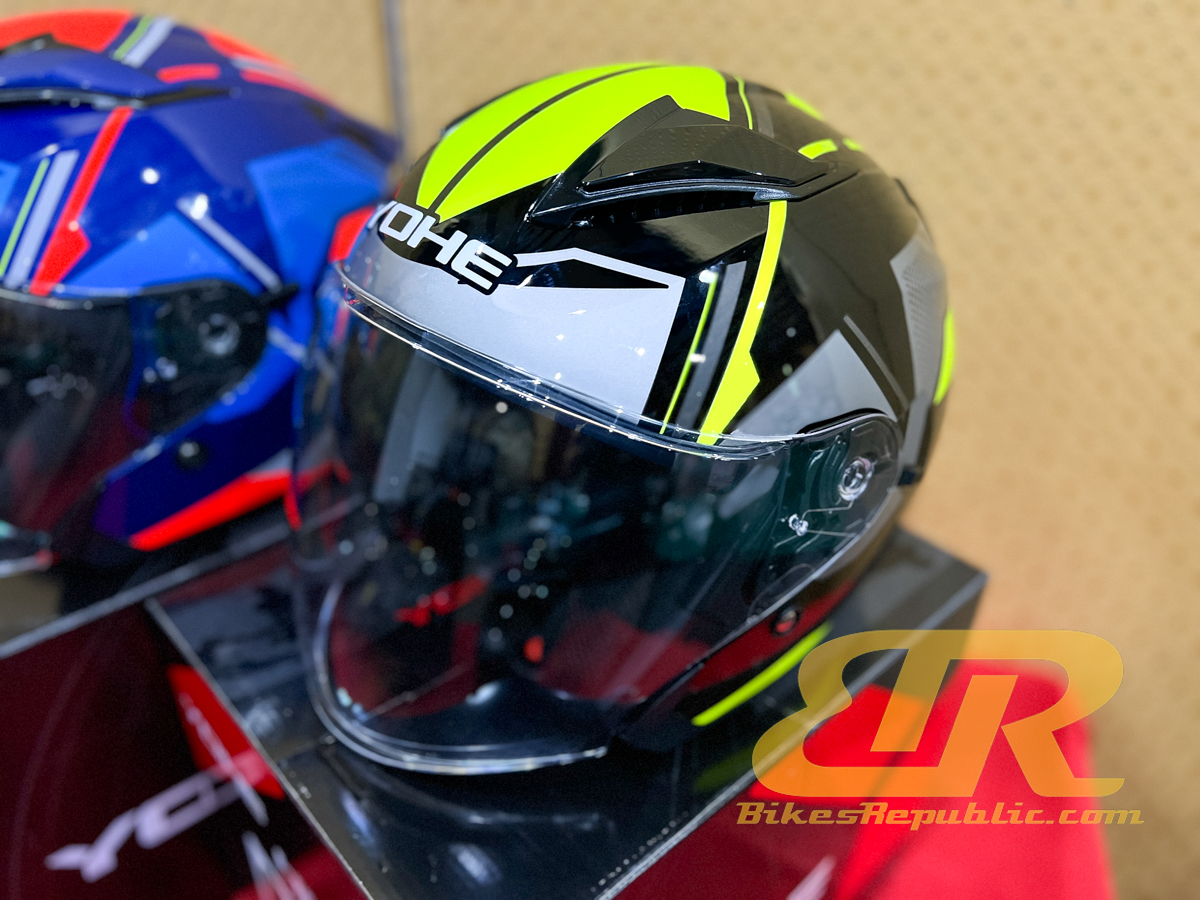
HJC Helmet Malaysia will be introducing their latest 2020 collection and you can expect a lot of good choices and varieties when they arrive at authorised dealers nationwide. Sometime after the second quarter of 2020, you can get your hands on the latest 2020 HJC F70, i90, i40, V90, and V30. That’s just the start as more new models will arrive in the coming months! (more…)
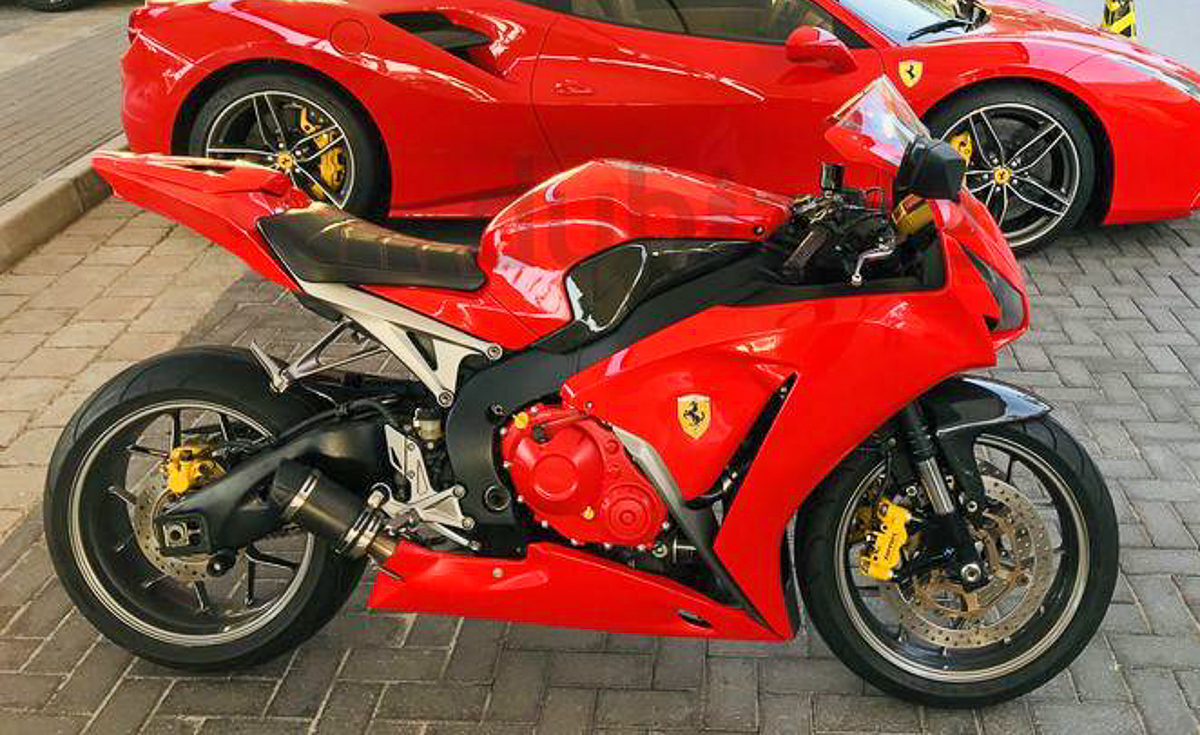
Dubai is known for some of the world’s most outrageously extravagant things from hotels to supercars, superbikes and many more but one particular Honda CBR1000RR Fireblade caught our attention. It’s not hard to notice, especially when it has been customed and badged to look like a two-wheel Ferrari! (more…)
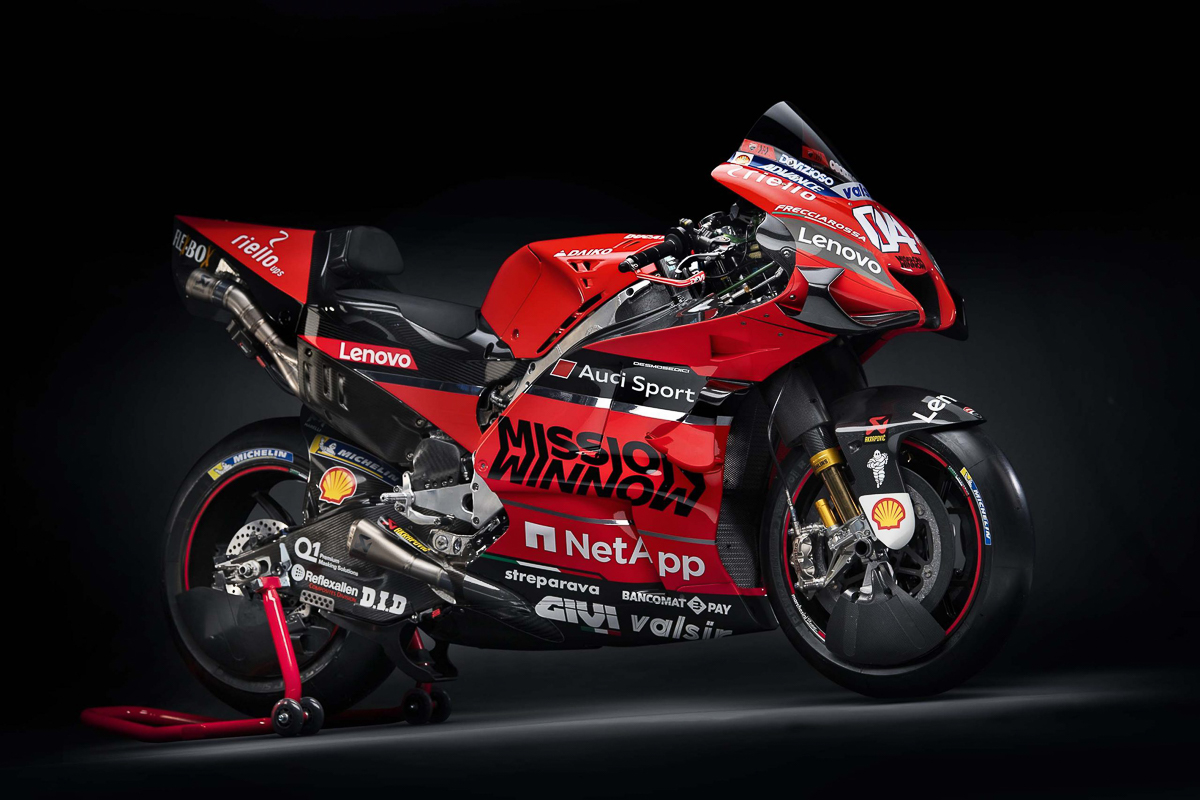
Ducati has unveiled their latest livery for their MotoGP race machine, the Ducati Desmosedici GP20 in Bologna, Italy last night. Dressed to impress, the new colour scheme presents the same bright red from the previous season but with more black and chrome details to make things pop even more. (more…)
The 2020 Honda CBR1000RR-R Fireblade shows the makers determination in winning the WorldSBK title.
Here are some photos of the bike courtesy of WorldSBK.com.
They show a complete departure from the old bike.
Here’s some bike porn courtesy of the 2020 Honda CBR1000RR-R Fireblade WorldSBK bike. Pictures are courtesy of WorldSBK.com.
The CBR1000RR-R signals Honda’s determination in recapturing the WorldSBK Championship title, after winning it only 6 times in 30 years. The previous CBR1000RR may be an easy bike to ride but it’s outgunned on the tracks.
Here we go.
Frontal shape
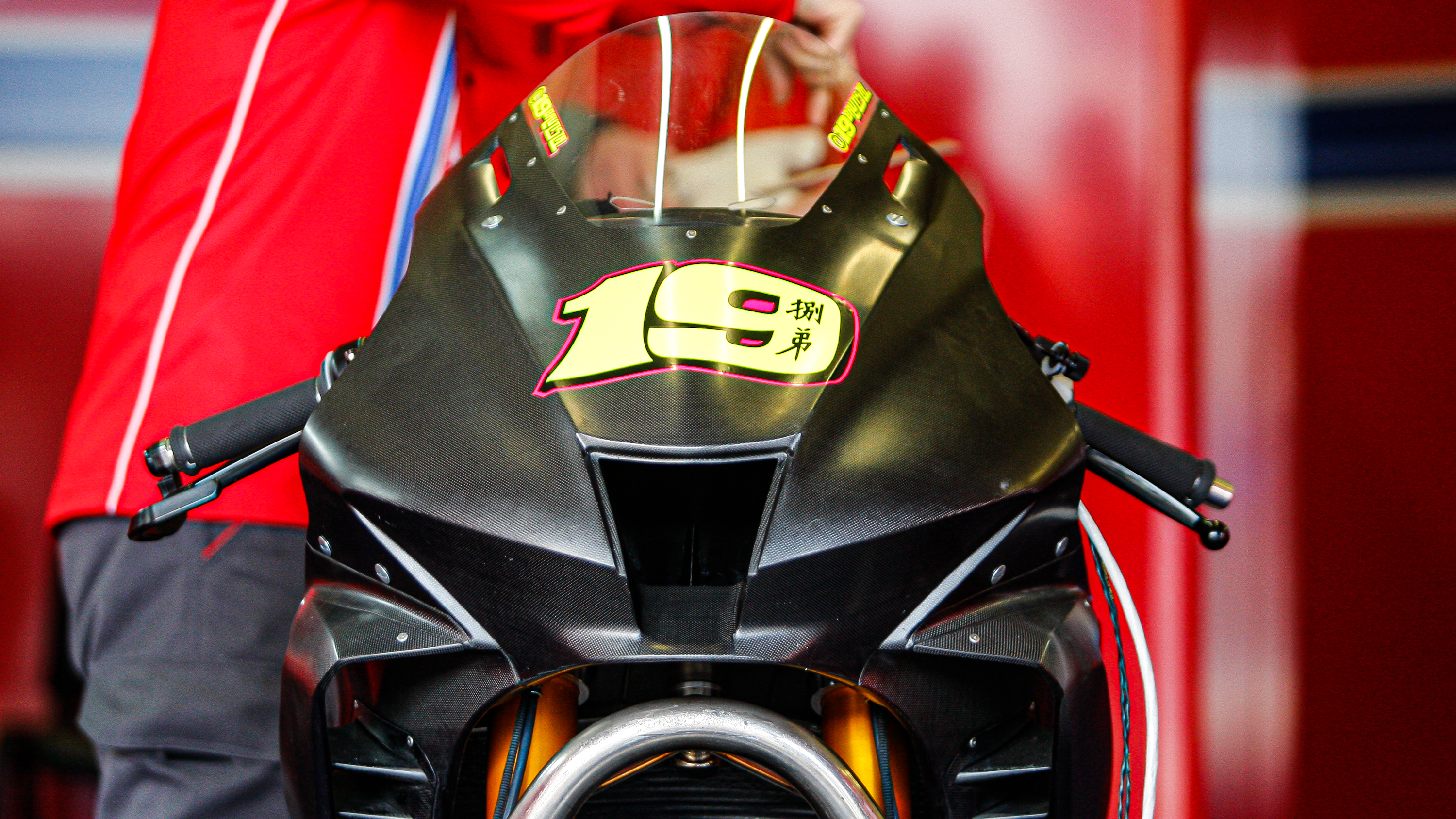
The first picture here is Alvaro Bautista’s bike. The Spanish rider will ride the bike after severing ties with Ducati. His teammate is Leon Haslam who was dropped by the Kawasaki works team. Both riders are astride the factory CBR1000RR-RW while Takumi Takahasi rides the semi-factory CBR1000RR-R.
From this angle, you could see how the bodywork was formed to channel air to give it a small frontal area. The air intake now resides front and centre in the top fairing for a straight Ram Air shot into the airbox.
Aerodynamics
WorldSBK rules allow aerobodies as long as 1) They are present on the road bike; and 2) They are not active aerodynamics (non-movable). Notice how the “lip” just in front of the intake blends into the lower bodywork.
Honda didn’t publish data on how much downforce the spoilers will provide.
Tailsection
The tailsection of the bike is also made from carbon fibre. You can see here that it follows the shape of the item on the roadgoing 2020 Honda CBR1000RR-R Fireblade as stipulated by WorldSBK rules. Anyway, the tail terminates at a sharp point to reduce wake (turbulence) behind the bike. A large wake (like behind a boat or ship) means the bike isn’t aerodynamically efficient and causes drag. The airflow must not only move efficiently around the bike and rider but needs to be so when it leaves the bike, too.
Forks, brakes and wheels
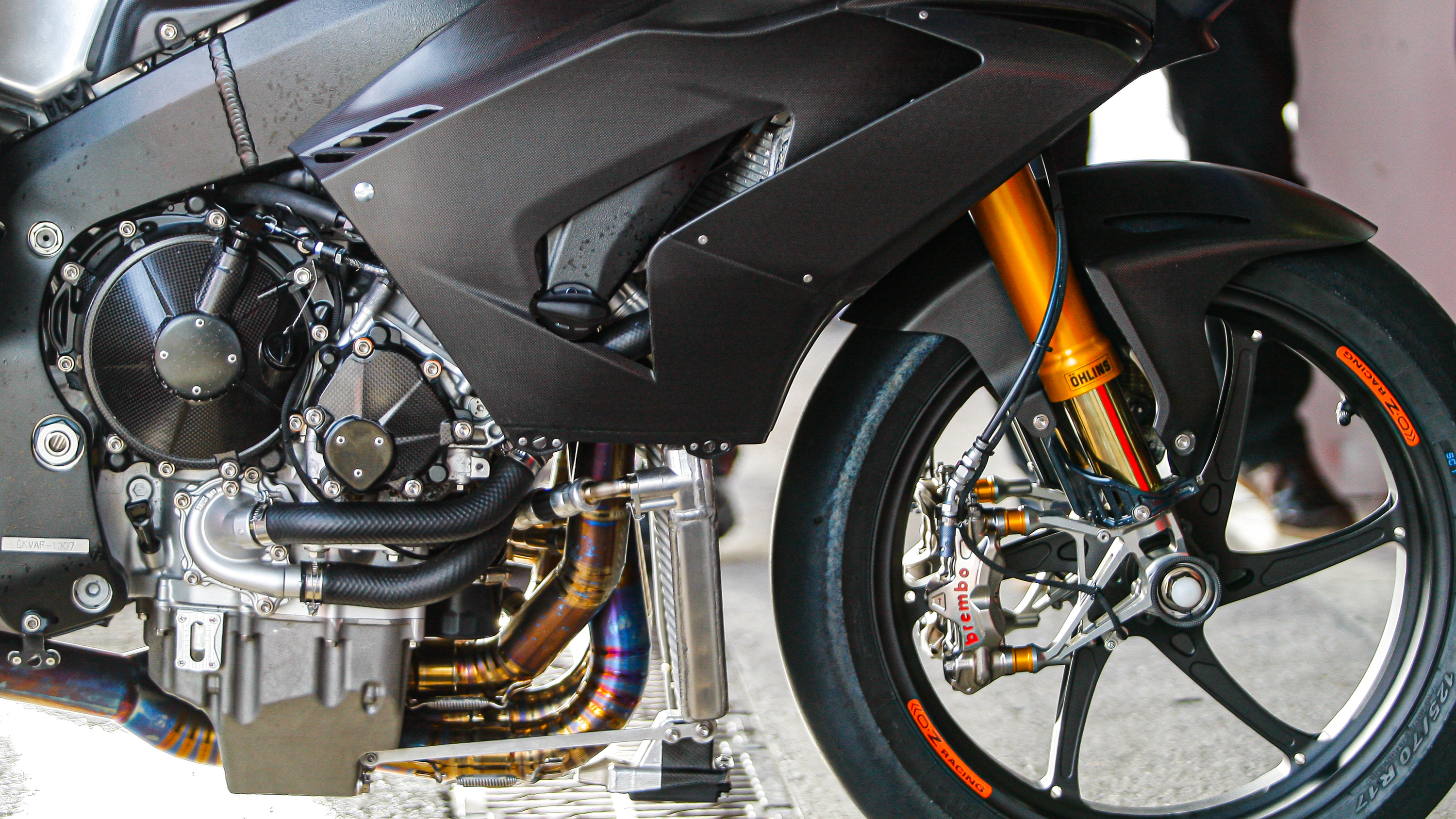
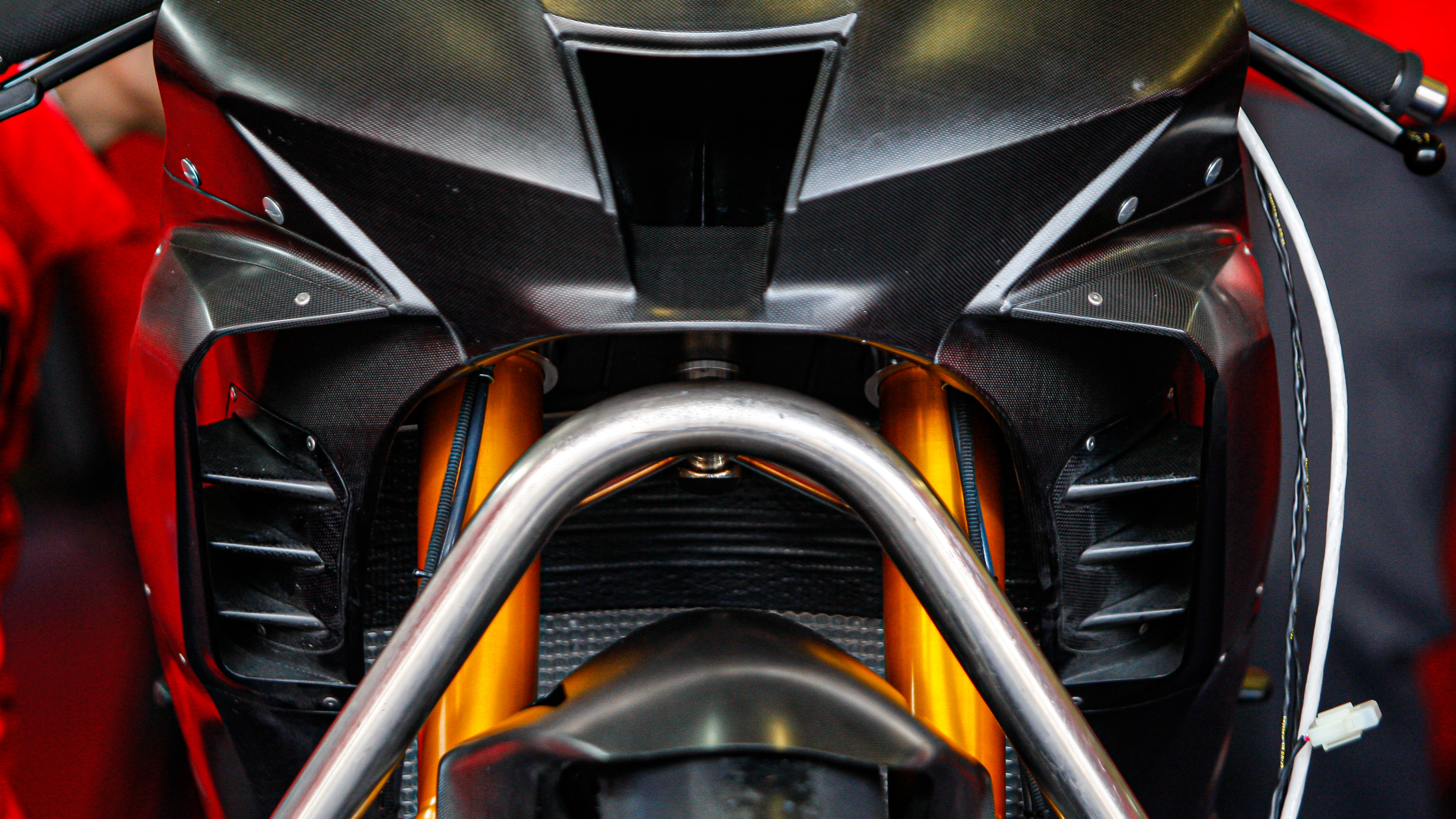
Check out the spindly brake caliper mounts on the fork legs – these are obviously machined from billet. The calipers are Brembo GP4-RX, also CNC-milled. The wheel is an OZ Racing magnesium item.
Besides those, notice the “radiator.” All these racebikes have extended radiators plus an oil cooler to deal with the extra heat. The top radiator (hidden by the fairing) is the same as the road bikes, the centre portion is the oil cooler, while the bottommost is the extra radiator.
Exhaust system
Here’s a better view of the titanium exhaust system. Notice that the header for cylinders 1 (at the far side) and 4 (closest to us) is bent further in as opposed to the other Numbers 2 and 3 in the interest of equal pipe length leading to the collector.
Also note the oxygen sensors on all headers. The sensors detect the amount of oxygen in the exhaust gas. Too little oxygen means the engine is burning rich (too much fuel, too little air); too much oxygen means the engine is burning lean (too much air, too little fuel). Data from the sensors will be referred to the engine’s mapping in the ECU, which will then determine the right amount of fuel and injection timing. The system works in tandem with the power settings chosen by the rider (more power, fuel conservation, etc.).
Rear shock
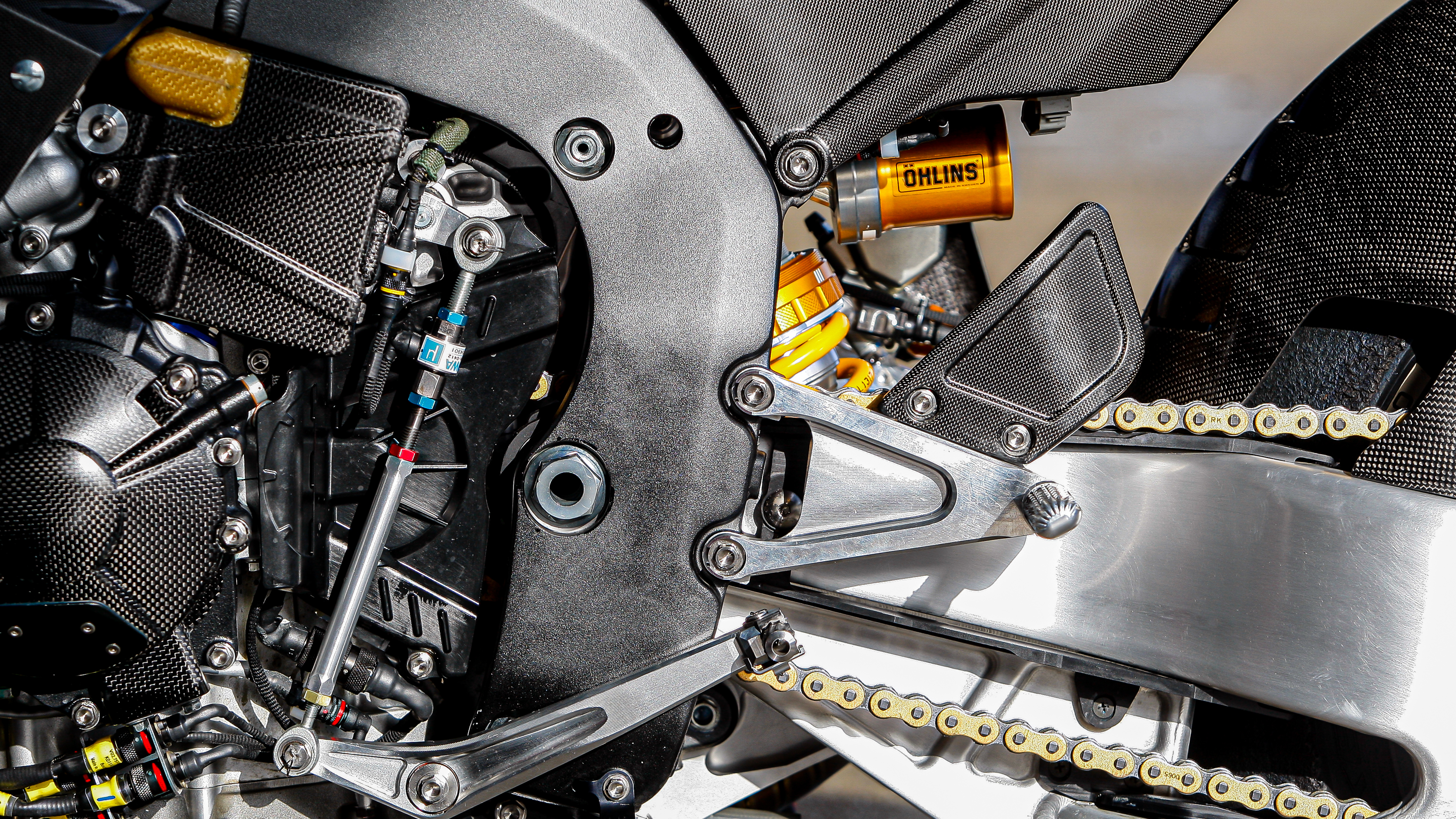
Look at the rear shock, especially those sensors and cables. Electronic suspension isn’t allowed in WorldSBK (and MotoGP) so those sensors and cables monitor the shock’s performance in terms of its movements and damping characteristics. The data can then be used for setting up the bike together with the rider’s input.
Upper triple clamp
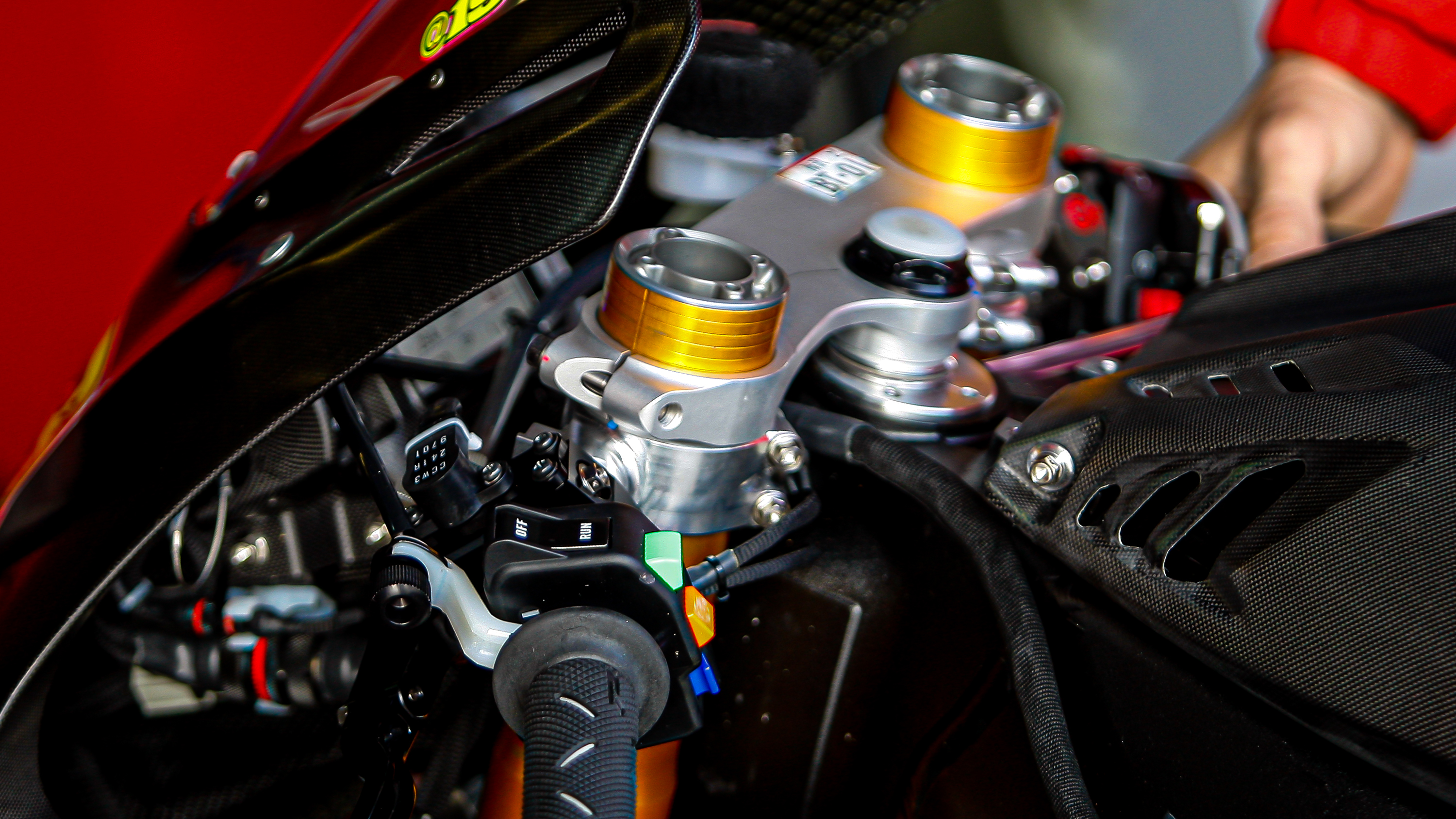
There’s almost nothing to look at here but this picture does tell a big story. Notice how thin is that top triple clamp and that’s just the edge! No, it’s not so for saving weight. Honda had recently done this to the 2019 RC213 MotoGP bike too. A thinner triple clamps allows more “play” and provides better front-end feedback to the rider.
The forks are also moved up the triple clamps since Jerez is a circuit which has plenty of corners that need late turn-ins, thus putting more emphasis on front tyre grip. Moving the forks up shifts more weight to the front tyre.
Conclusion
When this went to print, Leon Haslam put the 2020 CBR1000RR-R Fireblade in the top spot during the pre-season tests at Jerez. The session was held on a wet track and the rain is an equalizer, so we shall see if the bike continues to perform well.
Chinese New Year is happening this weekend and Petronas wants to make it extra special for everyone with their latest hashtag, #CelebrateLikeNeverBefore. From 23 January 2020, customers can enjoy great discount vouchers and promotions on Petronas merchandise, Kedai Mesra items, Setel, Tealive, Dunkin’, Shopee and Touch ‘n’ Go. (more…)
We often see the terms SOHC or DOHC in motorcycle spec sheets.
What do they mean?
And how do they influence engine performance?
The terms SOHC and DOHC are usually seen on spec sheets. Some car owners even stick large “DOHC” vinyl on their vehicles.
What’s a camshaft?
But before we go further, let’s understand the function of a camshaft.
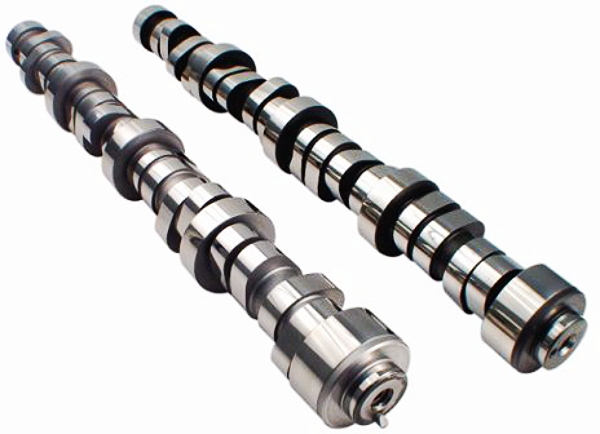
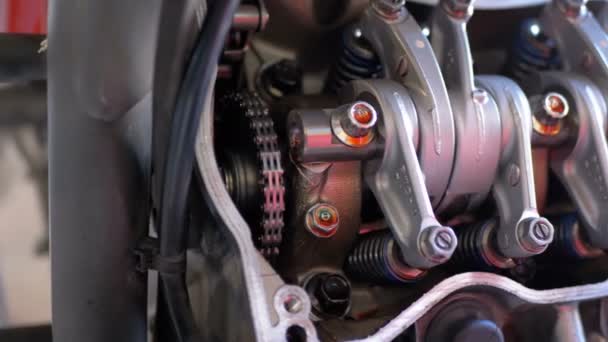
Camshafts are cylindrical shafts that carry oblong-shaped cam lobes in four-stroke engines. The lobes push on the poppet valves to open them in time with the engine’s intake and exhaust strokes. The valves are then closed by the valve springs when the taller cam lobes turn away. (NOTE: Desmodromic valve actuation don’t have return springs on the valves.)
Camshaft assembly – Credit depositphotos.com
The camshaft’s rotation is driven off the engine’s crankshaft via a chain, belt or gears. Road motorcycle engines usually employ the chain which is kept inside the engine block as it’s lubricated by the engine oil and quiet. Certain Ducati models still employ the belt cam drive (also called timing belt like in cars). Gear driven cams are usually used in racing motorcycles for their exactness in executing their timing, reliability in a high stress environment and being too loud for road bikes.
What are SOHC and DOHC?
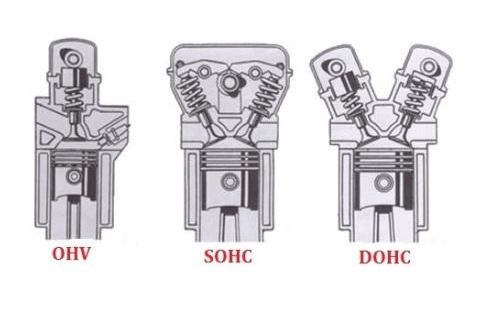
SOHC stands for “single overhead camshaft” while DOHC represents “double overhead camshaft.”
As the names suggest, an SOHC engine is served by a single camshaft which carries the intake and exhaust cam lobes. A DOHC engine, on the other hand, has one camshaft dedicated to intake and one for exhaust.
“Overhead” here means that the camshaft is located on top of the valves and certainly on top of the engine block.
Pros and Cons of SOHC
Since one camshaft carries all the lobes for intake and exhaust. However, do remember that the combustion chamber is round thus valve placement will be compromised. The best valve configuration keeps the valves closer together, but having four valves per cylinder with from one camshaft would mean spacing any two valves much further apart.
As such, an SOHC engine usually carries a maximum of three valves per cylinder (although there are four-valves-per-cylinder SOHC engines), but is usually limited to two valves.
An SOHC setup is much simpler and lighter as there are fewer parts. However, spark plug placement is compromised as the space directly on top of the combustion chamber has already been taken up by the valves. Therefore, the spark plug needs to be placed at the side of the combustion chamber. This puts a limit on high RPMs as the flame front could only reach so far before the piston moves down and the expanding gas losses its pressure. At higher RPMs, the piston is moving so fast that some of the air-fuel mixture isn’t fully burned and kicked out. Consequently, an SOHC engine could not produce higher horsepower due to lower engine revs.
As such, an SOHC engine is usually tuned for low-RPM and midrange torque.
Pros and Cons of DOHC
The intake and exhaust camshafts are placed further apart. All the valves could be kept closer together as the cam lobes can be placed closer to each other. It also means that the camshafts can be made shorter for a more compact engine block.
Since the two camshafts are spaced further apart, the spark plug can be placed between them and directly in the centre of the combustion chamber. As opposed to placing it at the side, a centrally located plug has the better chance of burning most if not all of the air-fuel mixture.
Consequently, DOHC engines can be revved higher and produce more horsepower in the process.
The two camshafts also give engineers more flexibility in spacing them to angle the valves for optimum combustion chamber shape, besides intake- and exhaust-tract designs.
But perhaps more importantly these days are variable valve timing (VVT) and variable valve lift (VVL) technologies. Utilizing them is easier, therefore virtually exclusive, to DOHC valvetrains (apart from SOHC VTEC).
The cons of a DOHC engine include higher maintenance as there are more parts involved.
Last note: OHV
There are also OHV (overhead valve) engines where the valves are on top of the combustion chamber, but the cams reside in the crankcase. The cam lobes push on thin cylindrical shafts called pushrods which in turn push on a rocker arms that actuate the valves.
This type of setup is usually used on low-revving engines due to the inertia of many moving parts. Also, it’s difficult to have more than one valve each for intake and exhaust, unless more cams are installed on the other side of the engine.
Therefore, the OHV setup usually resides in cruisers such as Harley-Davidsons and Indian Motorcycles.