Bikesrepublic

Wahid Ooi

  • Day 2 of the Triumph Motorcycles Malaysia London Adventure trip opened up a free day for this writer.

  • He decided to visit the famous tourist sites since it was his first ever visit to the city.

  • The places included Hyde Park, Buckingham Palace, Big Ben among others.

Dato’ Malique and the Tan family had to attend the Triumph Global Dealer Conference on Day 2 (23rdOctober 2018) of the TRIUMPH MOTORCYCLES MALAYSIA LONDON ADVENTURE trip. That meant a full day of excursions for me.

I sat up in my bed 4am and couldn’t go back to sleep. My temples pounded in excitement, adventure. I turned on the telly (TV). “It is going to be a blustery day but there’s plenty of sunshine. We should see 15oCelcius in the afternoon and dropping to 5oCelcius at night,” said the weatherperson.

15Celcius is like the weather up in Cameron Highland at night. I was thinking of just wearing a knit sweater and hoodie, but Dato’ Malique advised that I should put more layers on. He’s very well-versed with the city.

Asep had invited me earlier to visit the National Motorcycle Museum in Birmingham. It’s a 5-hour return trip by car, however. It pained me to refuse but I had to, since it was my first trip to London.

PLANS FOR THE DAY:
  1. Stroll under the canopy of yellowing leaves in Hyde Park;
  2. Witness Changing the Guard at Buckingham Palace;
  3. Head to Westminster Abbey to see where Sir Isaac Newton among others is interred;
  4. Visit Big Ben and the Houses of Parliament;
  5. Turn back towards St. Paul’s Cathedral;
  6. Head back to Tower Bridge to photograph it in evening sun and with the lights on at night.

Greedy? Not according to Google Map, anyway.

Okay, let’s be on our way. Chop chop!

GETTING THERE

Travelling in London is easy as the Underground train services (colloquially called “The Tube”) wind through the entire city like a spider’s web. Or how an earthworm digs through the soil.
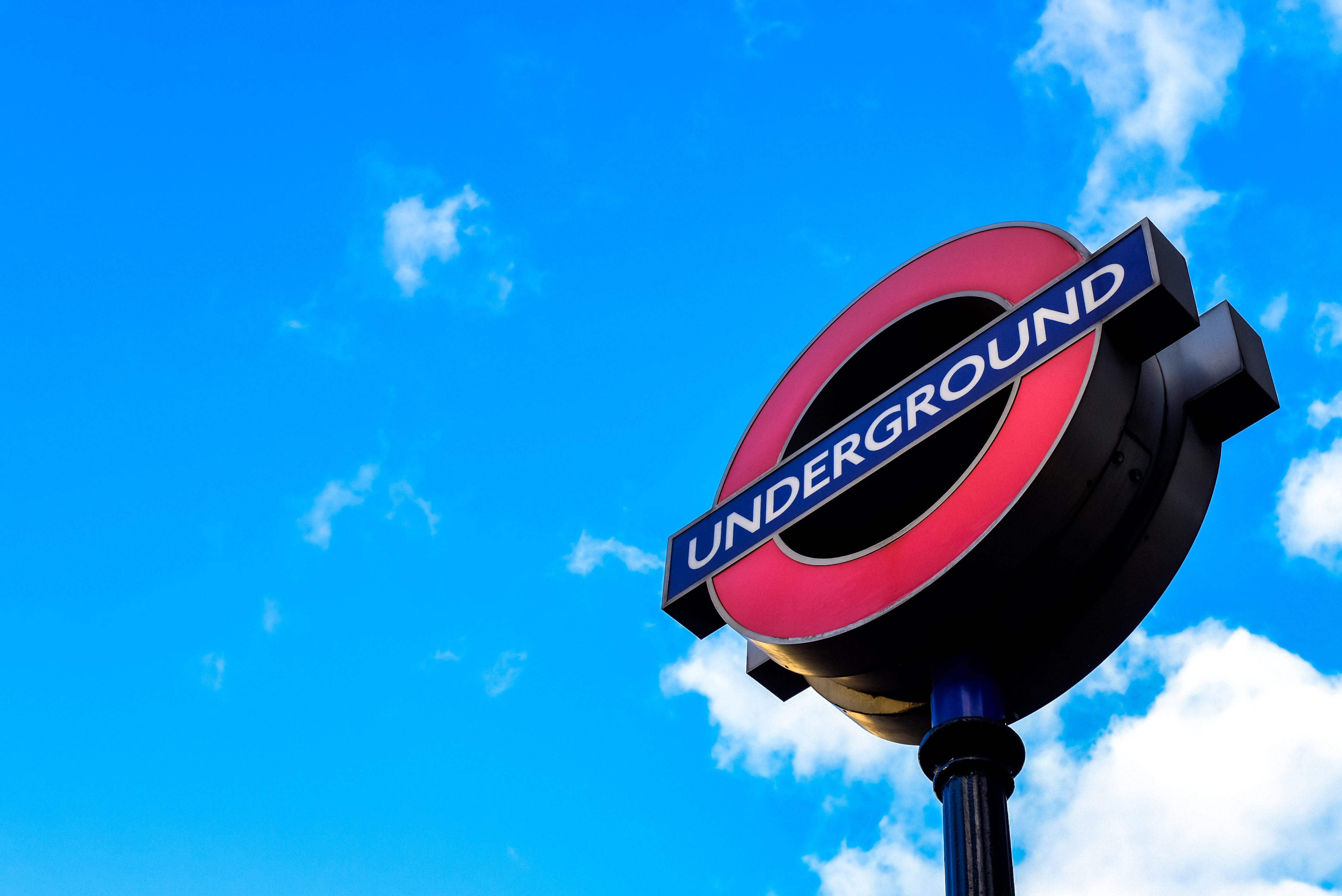
Photo credit: Rafique Muzaffar Razak

There’re also above-ground tains, busses, taxis, Uber, Santander bicycles besides The Tube. There’s even a River Thames ferry service. The best way of seeing the city is by these methods since you’re above ground, but the Tube is the fastest as you don’t have contend with traffic.

Google Map suggests which form of transport to take and it’s up to you to decide how quickly you want to get there, or if you’re willing to change trains or transports multiple times.

However, comfortable sneakers are a must since you’ll be doing lots of walking.

HYDE PARK

I left the Grange Tower Bridge Hotel at 7.30am and walked to the Tower Hill Underground Station for the train to Hyde Park Corner station.

30 minutes later, I entered the park from the south-eastern end and found what I had always wanted to see. Paths leading into the distance under canopies of trees with black trunks and yellow(ish) leaves.
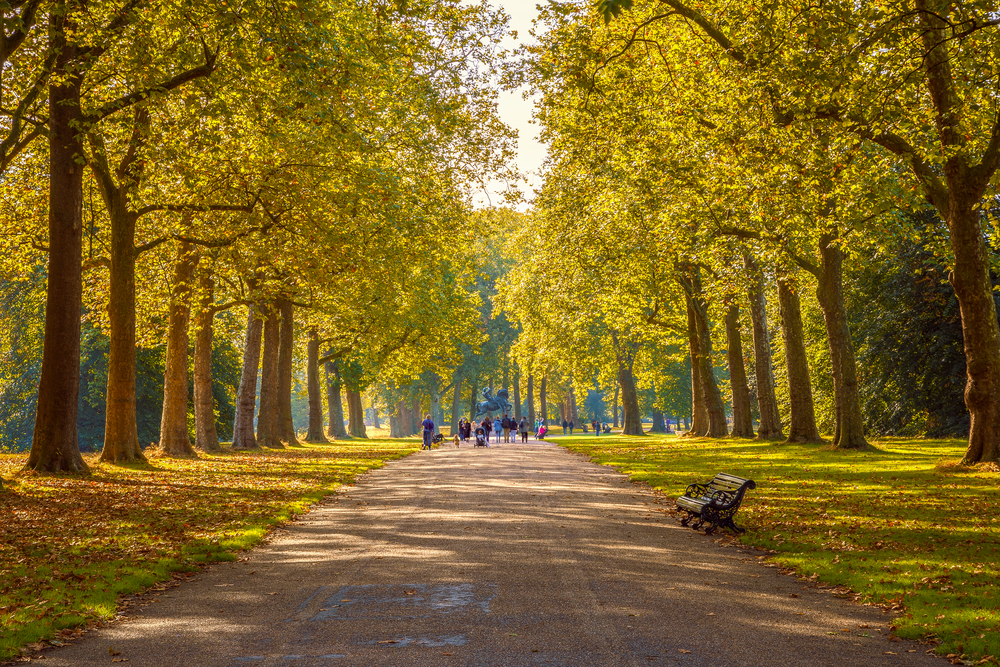
Hyde Park in late autum – Courtesy of montcalm.co.uk

The leaves were still greenish-yellow as the autumn weather hasn’t turned really cold. We would later learn that it’s the first time in 50 years.

To cut the story short, Hyde Park was massive! How huge? Try 350 acres. For a more relatable representation, the distance between Speaker’s Corner at the northeast end to Hyde Park Corner is 1.9km! Henry VIII established the park in 1536 as a hunting ground before it was opened to the public in 1637.

Hyde Park was recently named as the world’s fourth most valuable park at £19 million.

Deciding that Speaker’s was too far, I veered onto a side path ended up at the lake called “The Serpentine.” I’ve covered walked 1.93km (1.2 miles) in Hyde Park, so far.
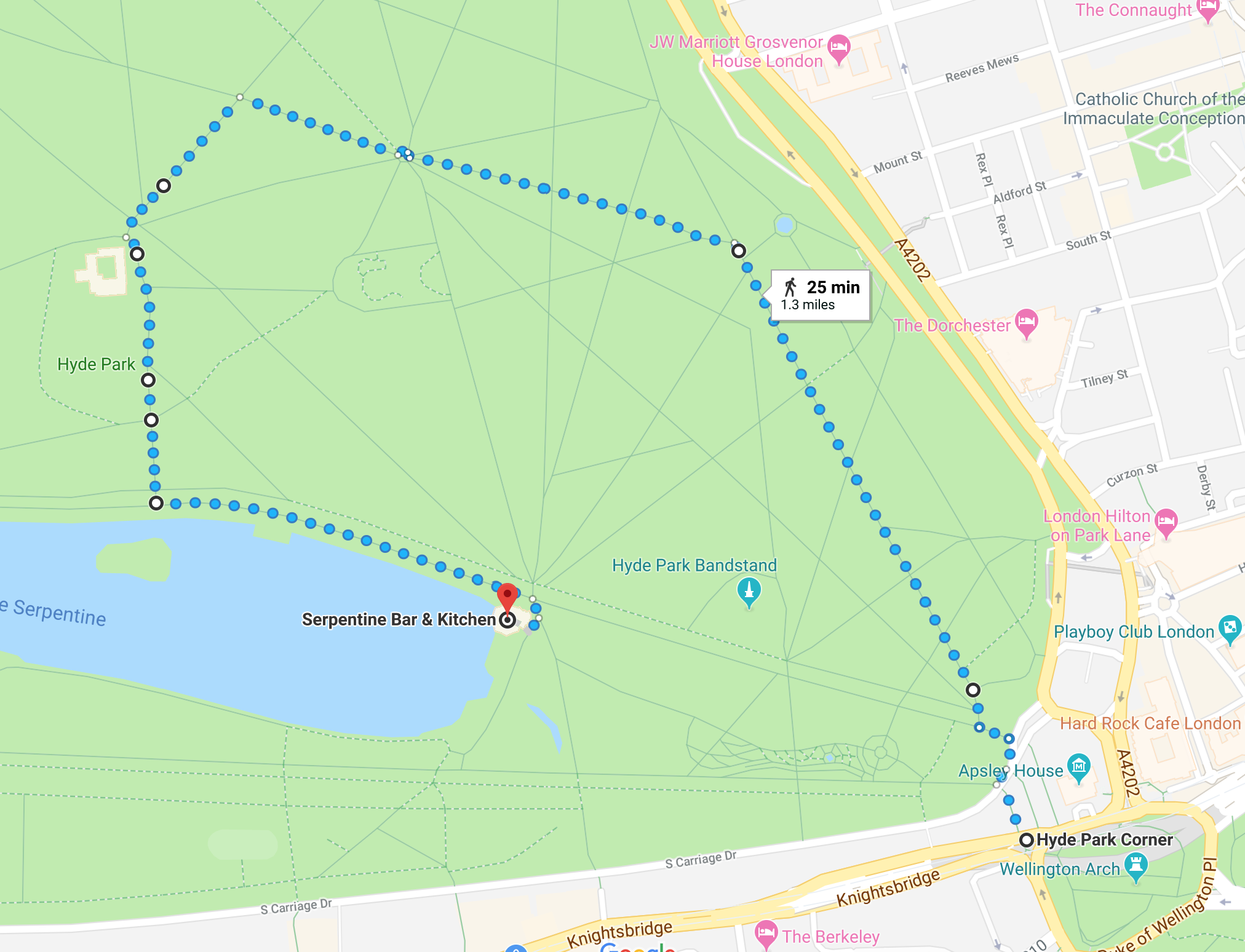

There was a light wisp of fog hanging over the lake when I got there. Geese, ducks, gulls, pigeons, besides many species of birds hung around.

I found a café called Surpentine Bar & Kitchen at the southern bank. Feeling pretty cold despite being wrapped in a t-shirt, knit sweater, hoodie and down jacket, I stopped for a hot latte. I went outside and took a bench to enjoy the view and cool air.

I suddenly realized I was this one crazy Asian sitting outside relishing the cold while all the Mat Sallehs were inside the heated café…

I continued my stroll through the park towards the Palace afterwards. Guided by Google Map, I was soon back at the arch where I first entered the park. Right at the moment, a mounted policewoman came through. She nodded at me and said, “Please stay where you are.” I nodded back.

Then, the first horse-mounted soldier rode up in ceremonial regalia.

Having researched about the royal troops prior to the trip, I identified him as part of the King’s Troop, Royal Horse Artillery. They’re a ceremonial unit of the British Army, created in 1946 as an homage to horse-mounted troops by King George VI. When his daughter, Queen Elizabeth II succeeded to the throne, she decided to retain the unit and its name in his honour.

More troopers followed behind, including six-horse units towing World War I 13-pound field guns (cannons).

The unit parades in such fashion only when there are state functions such as the monarch’s birthday, royal weddings or state visits. They’d ride to an area in Green Park and fire their cannons as a ceremony. I couldn’t believe my luck that I saw them!

WELLINGTON ARCH – CONSTITUTION HILL

Crossing the road brought me to the awe-inspiring Wellington Arch. It was built in 1826, but the current dark quadriga(four-horsed chariot) was installed in 1912. King George VI planned it (and the Marble Arch) to commemorate Britain’s victories in the Napoleonic Wars.
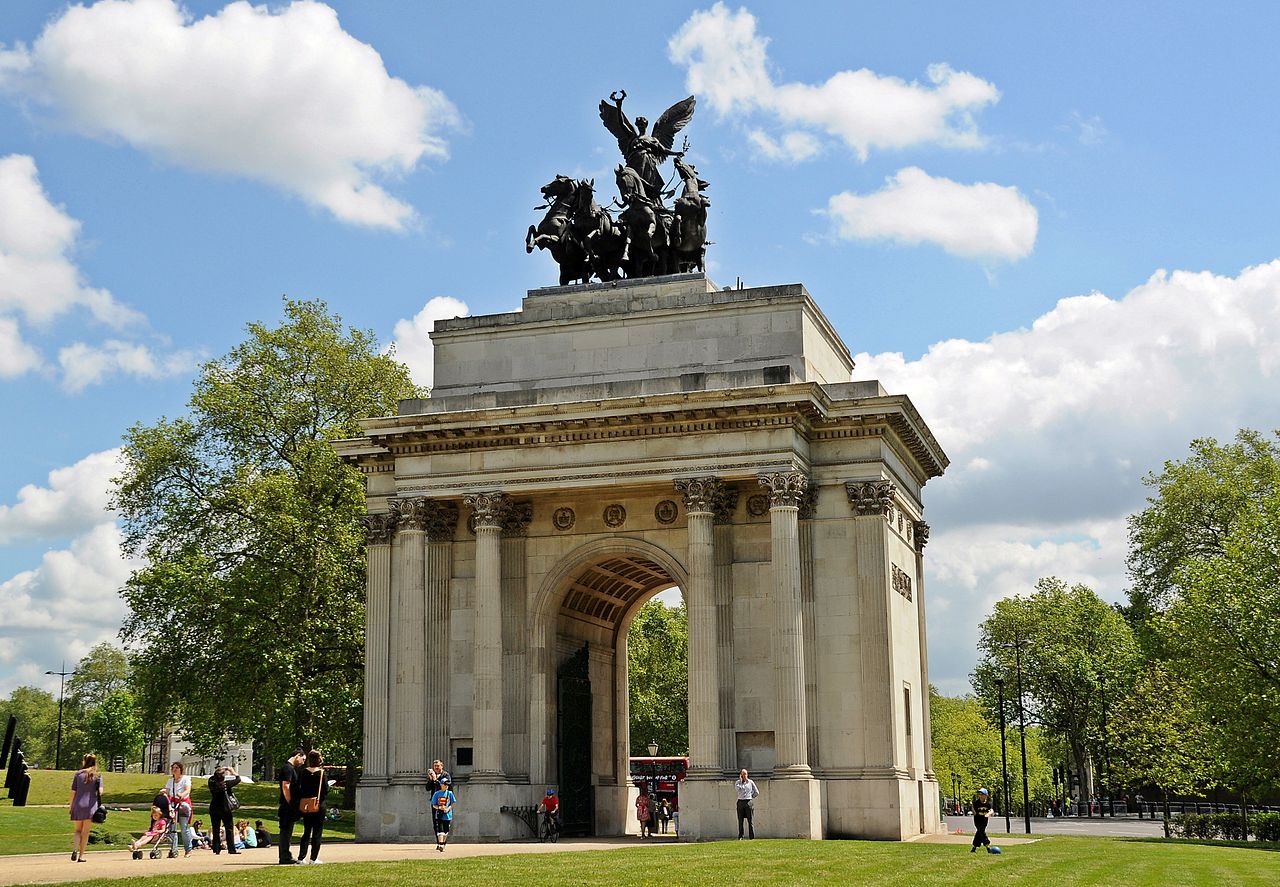
The arch used to be the outer gateway to the road leading from Buckingham Palace called Constitution Hill. It’s therefore the grand entrance into central London.
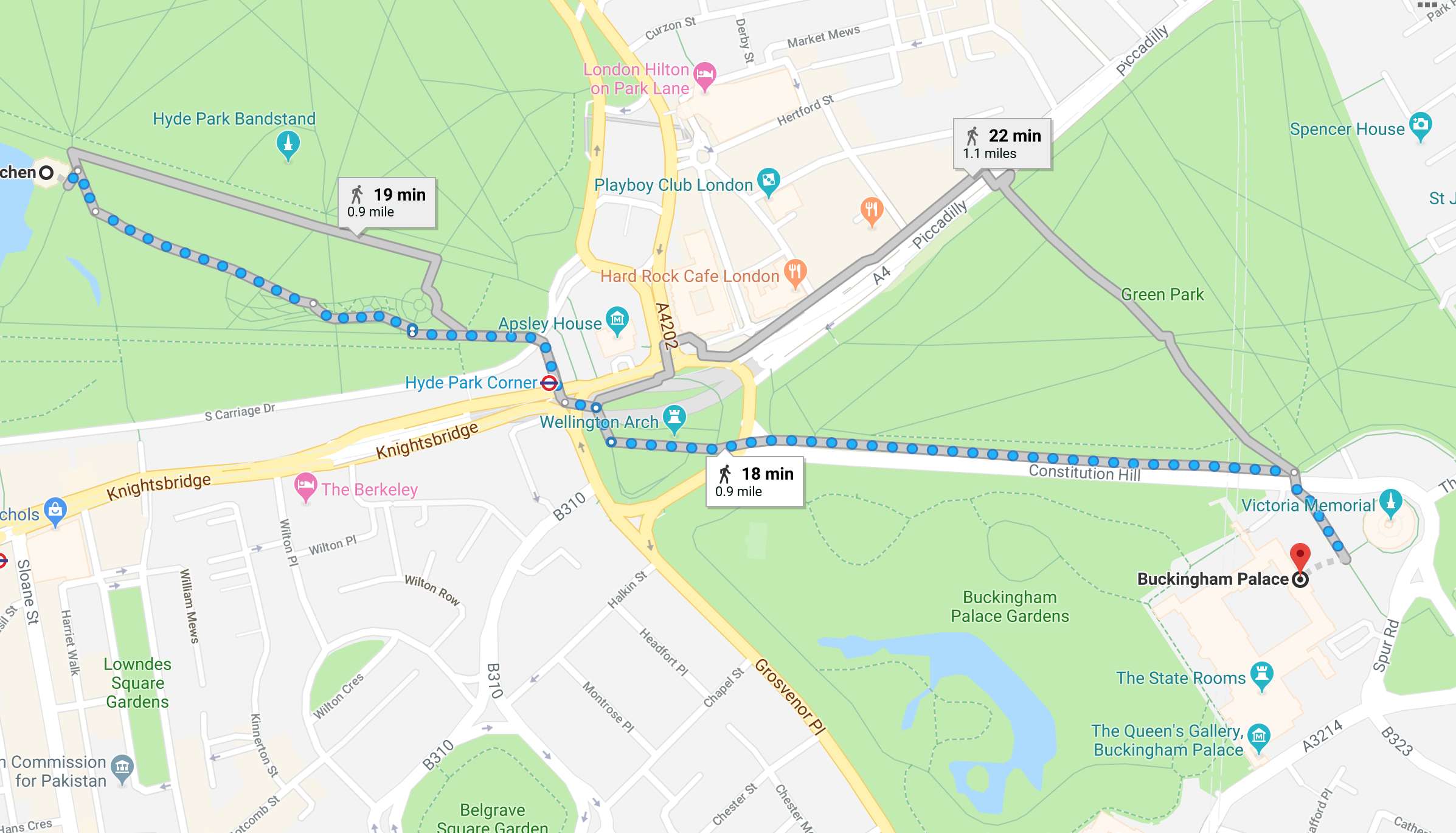
Next was the Commonwealth Memorial Gates. They’re monuments to pay tribute to armed forces of Commonwealth countries who served Great Britain during WWI and WWII, including those in the Battle of Malaya.

The main thruway along Constitution Hill was closed. More and more security personnel started to appear. I soon spotted a large signboard which announced the time of the ceremonial firings to be performed by the King’s Troops who I ran into earlier. It turned out that the King and Queen of The Netherlands were visiting England at that very moment. I almost slapped myself a few times to believe that I was really here!

BUCKINGHAM PALACE

It got more and more crowded the nearer I got to Buckingham Palace. Thousands were waiting to witness the Changing of Guard. There was no good vantage point, so I proceeded further up The Mall and staked out a position.

Just in time too! I heard a marching band from the Palace and there they were, the Queen’s Guards marching proudly by in their iconic red tunics and black bearskin hats.

Tourists may think of them as novelties, but they’re actually operational soldiers. Besides that, it’s a myth that the guards would not respond to provocations (as some uncouth Chinese tourists found out the hard way).

It’s too bad I didn’t have more time. I had to leave as soon as the Queen’s Guards passed and had to miss the Queen’s Life Guard cavalry.

ST. JAMES’S PARK

Google Map showed the fastest route as walking down Birdcage Walk, but St. James’s Park proved too beautiful to resist on this beautiful morning. I caught a glimpse of it from the embankment outside the Palace earlier.
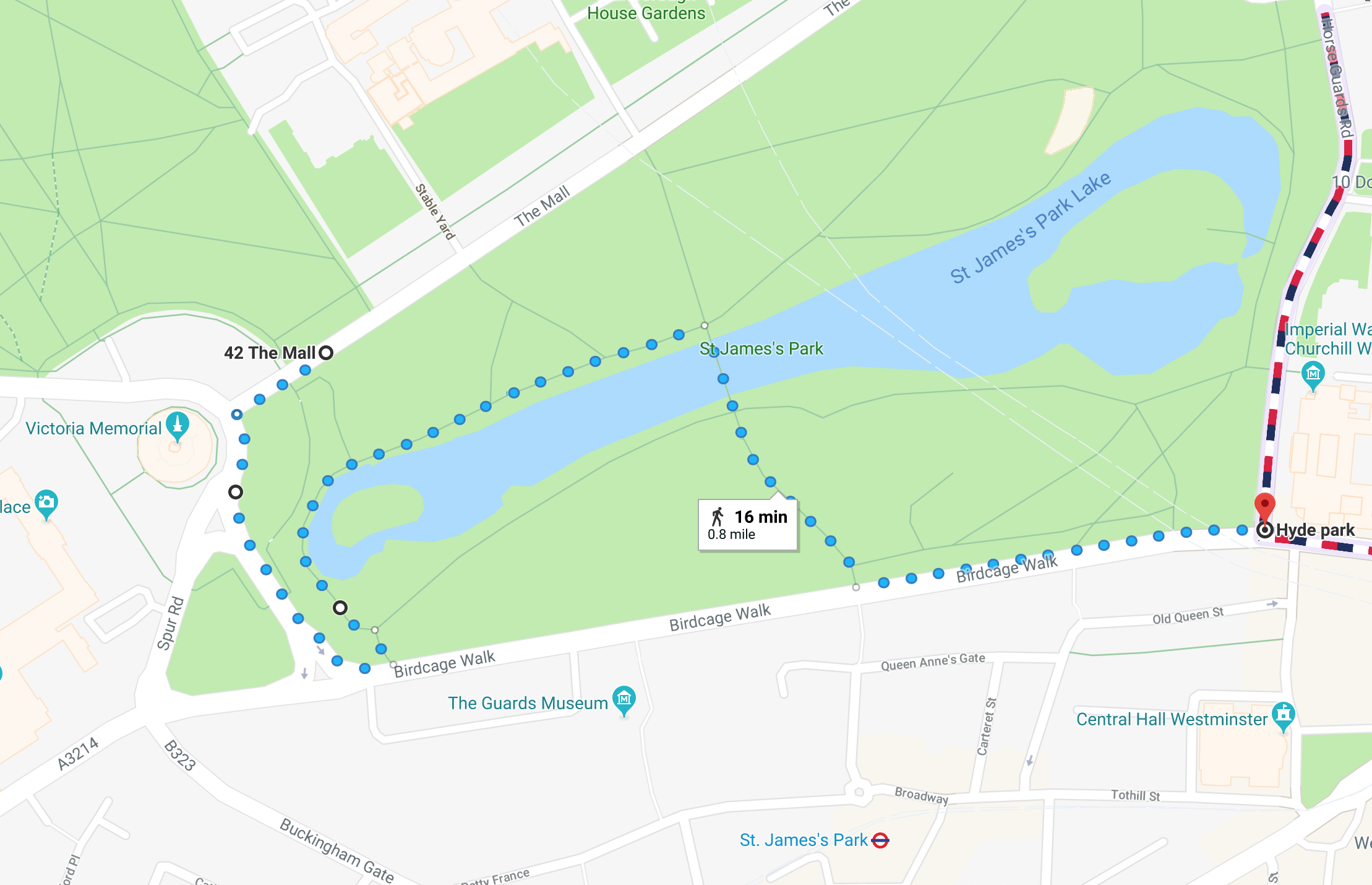
I’m glad I gave in to my heart. Pathways wind romantically through the park, flanking a lake. This 57-acre site was established in 1603 (415 years ago!), although not its present form.

There were birds everywhere, but the pelicans were the most notable. These’re the descendants of those presented to King Charles II by a Russian Ambassador in 1664.

I’m starting to love London. It’s as if I was breathing in history everywhere I went.

Crossing the Blue Bridge which straddles both sides of the lake afforded a great view of the Horse Guards, HMS Finance Ministry, the London Eye, The Shard to the east and Buckingham Palace to the west. A large island called “Duck Island” on the eastern bank obscured the view to Downing Street where the Prime Minister’s official residence is located.

INTERLUDE

We’ll stop here for Part 1 as the article is getting too long. Next up are Westminster Abbey, Big Ben, the Houses of Parliament.

Please do check out our coverage of the Triumph Motorcycles Malaysia Visit to London (Day 1) report.

Triumph Motorcycles Malaysia Visits London – Day 1 “Game of Crowns”
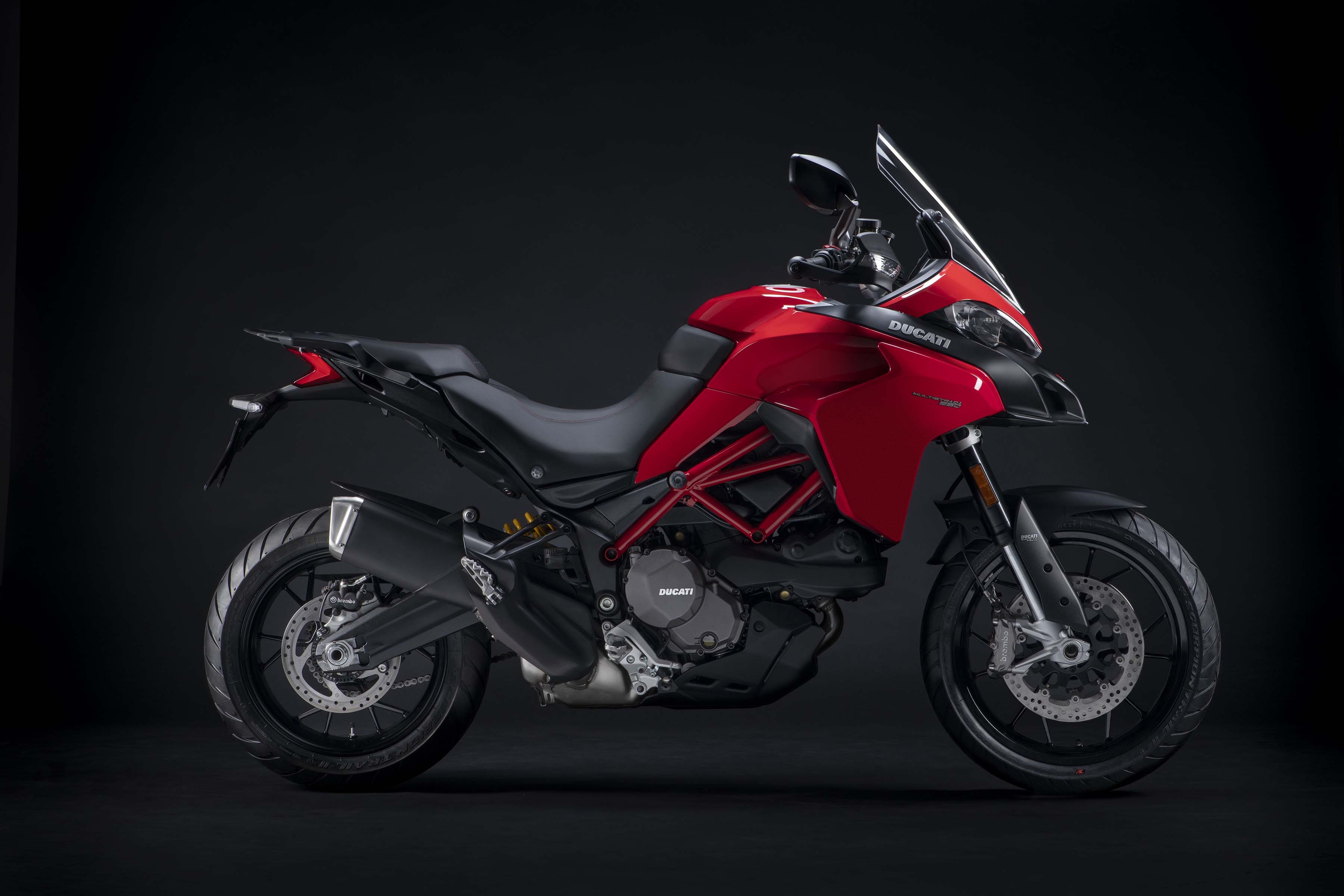
  • The 2019 Ducati Multistada 950 S and 2019 Ducati Multistrada 950 have been launched at EICMA 2018.

  • Both are updated with new features, but the “S” model has a higher specification.

  • The 950 S closes the gap to the Multistrada 1260.

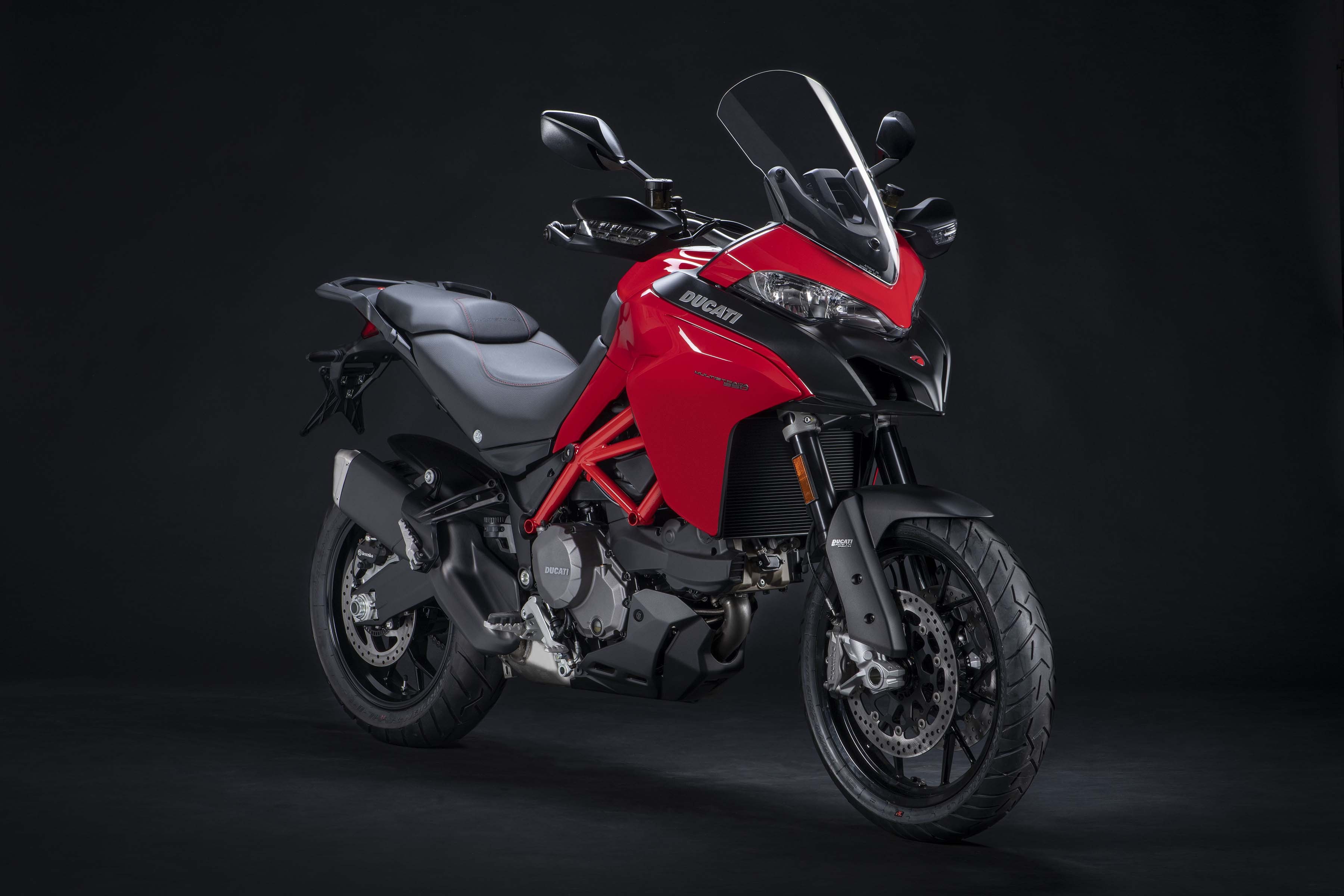
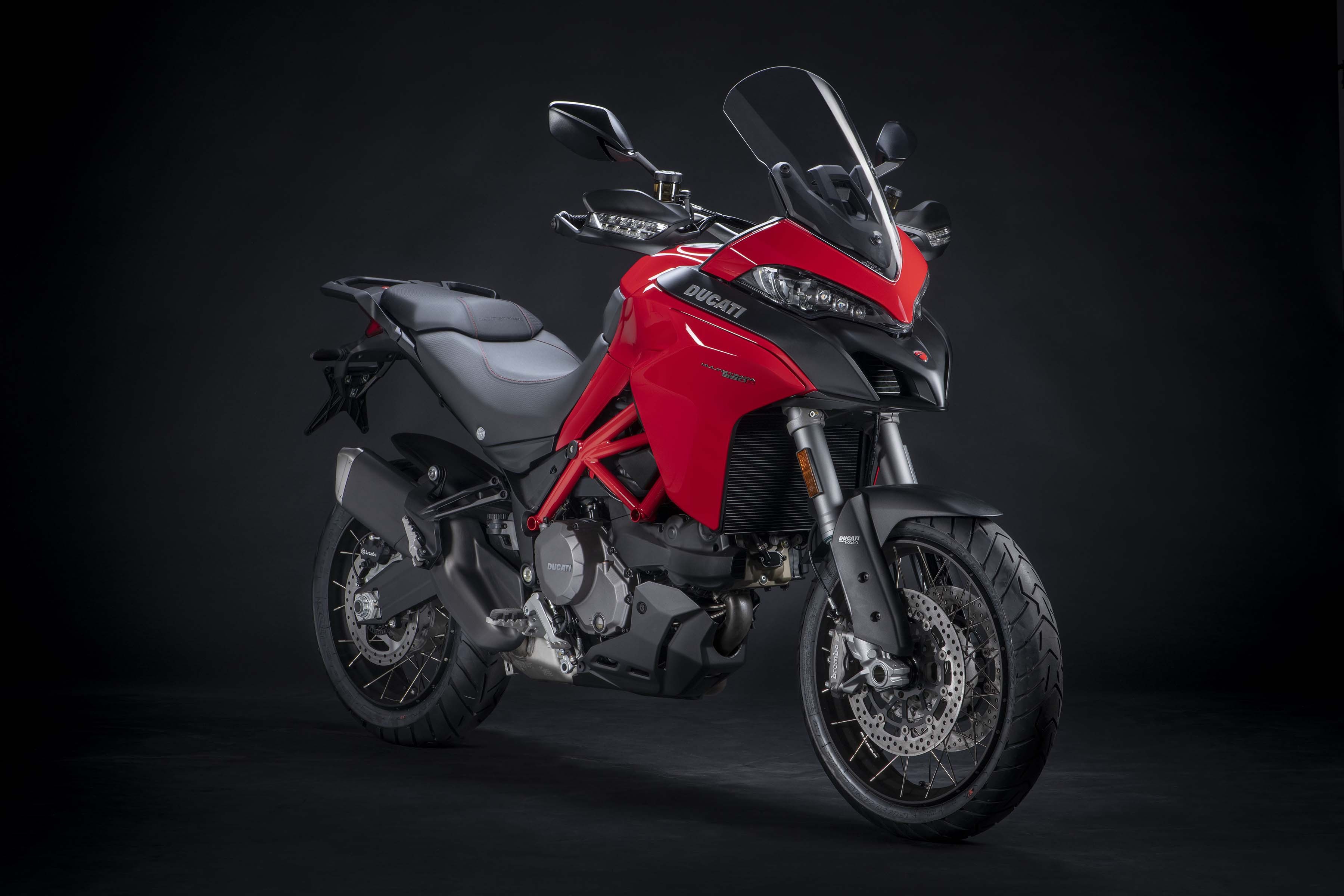
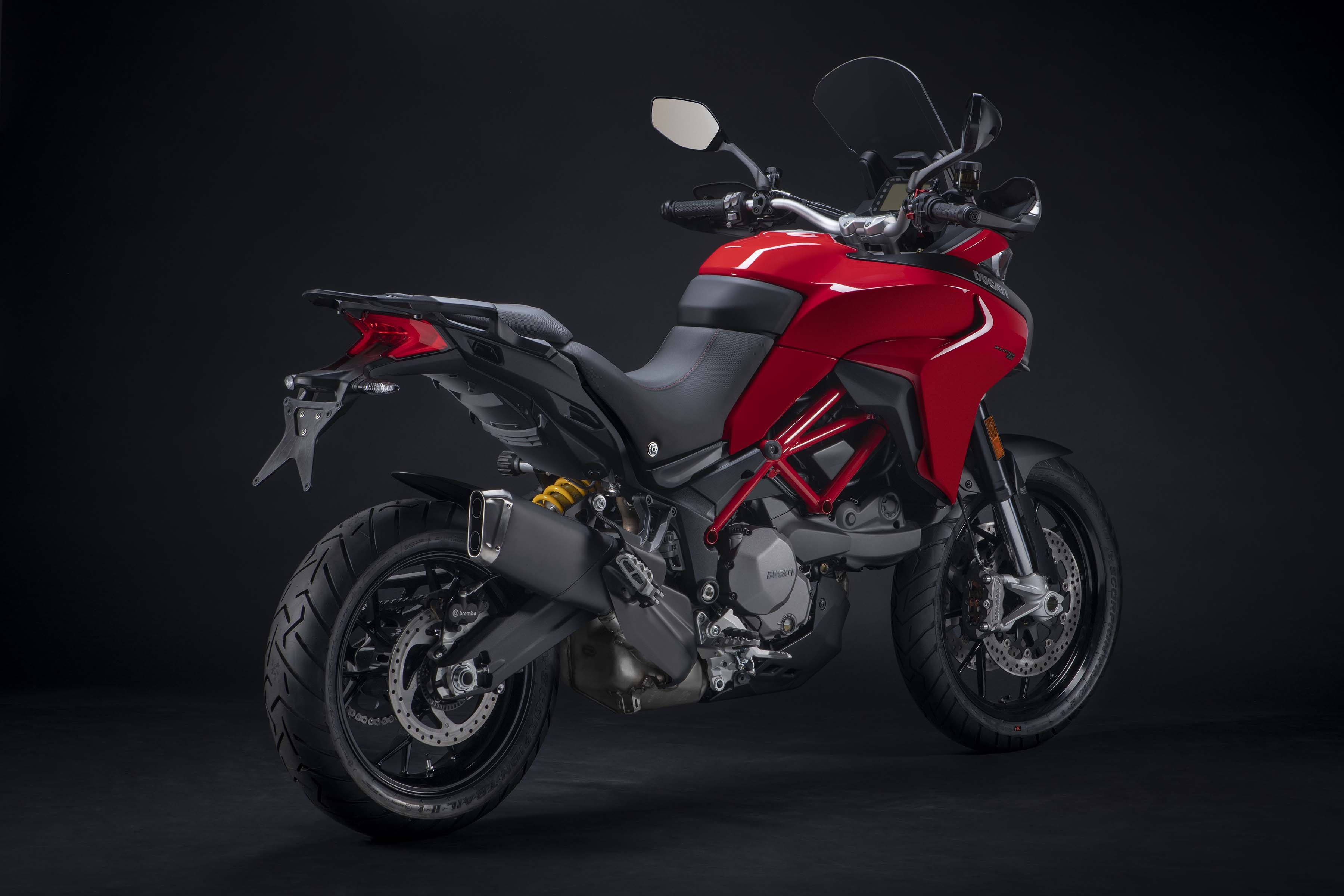
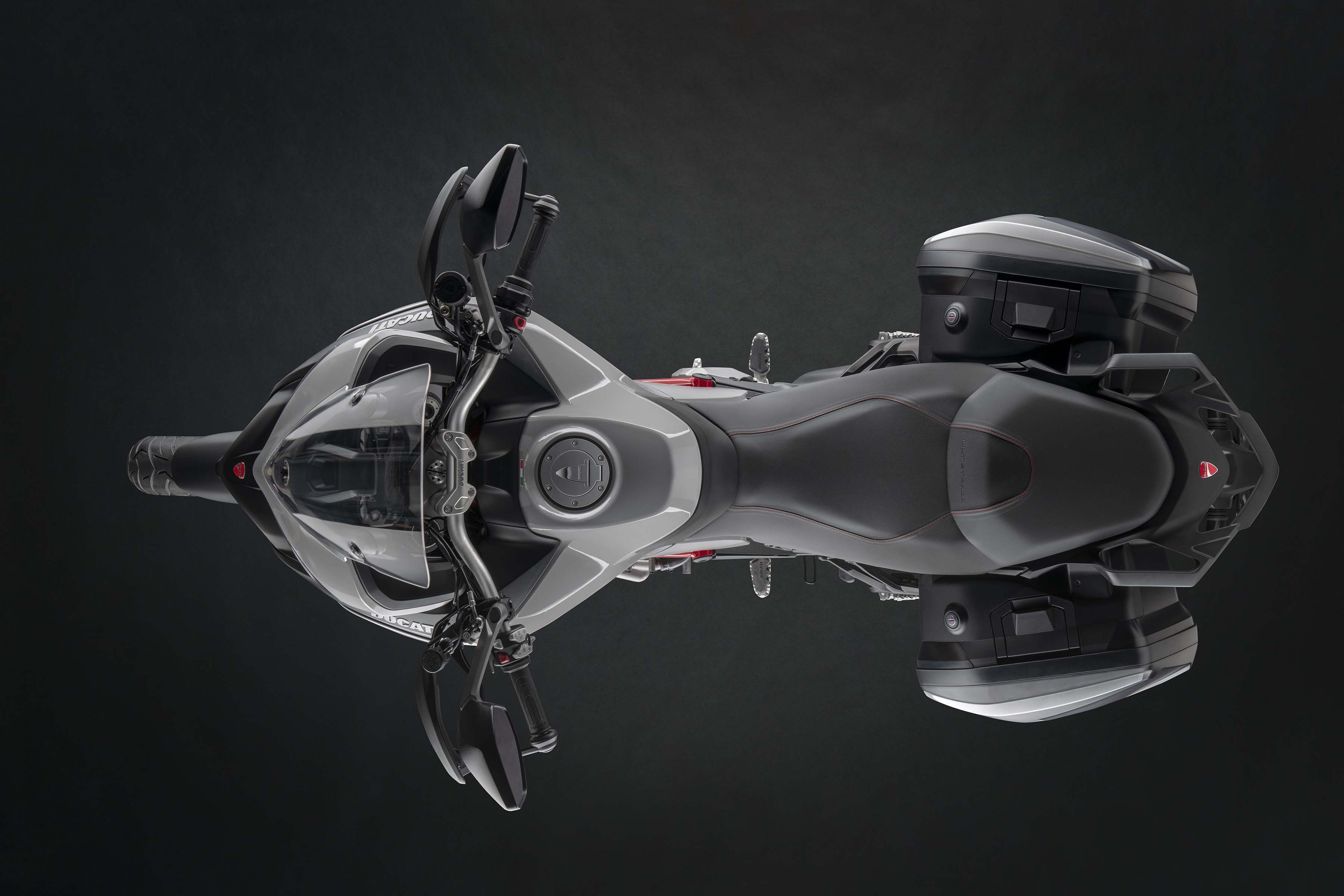
We reported earlier that Ducati was seen testing a new Multistrada 950 and the rumour turned out be true. Ducati has launched the both 2019 Ducati Multistrada 950 S and base 2019 Ducati Multistrada 950 have been launched at EICMA 2018.

Updated Ducati Multistrada 950 Spotted Testing

True to the “S” designation, the 2019 Ducati Multistrada 950 S offers more features. It will be the model that closes the gap between the base Multistrada 950 and the big bore Multistrada 1260. The base Multistrada 950 will remain the entry-level option but it too, will include a number of new features.

New features for both Multistrada 950 S and Multistrada 950 are:

  • Vehicle Hold Control for uphill starts;
  • Hydraulic clutch;
  • Auto-off turn signal;
  • Bosch Cornering ABS.

In addition to the above, the Multistrada 950 S is equipped with:

  • Sach semi-active “Skyhook” electronic suspension;
  • Up and down quickshifter;
  • Full LED headlight;
  • TFT display;
  • Backlit switchgear.

The IMU-based Cornering ABS is part of Ducati’s move to arm all their 2019 models with the feature.

Additionally, the 2019 Multistrada 950 S has a new fairing burrowed from the Multistrada 1260. The swingarm has also been painted black.

Customers may opt for wire spoke wheels should they want to take the bike off-road (read: Rimba Raid).

The engine remains unchanged from the based Multistrada 950. The 937cc 90o V-Twin (Ducati calls it “L-Twin”) produces 111 bhp (83 kW) and 96 Nm of torque. The 950 S weighs 230 kg with a full 20-litre tank. The base 950 weighs 223 kg, on the other hand.

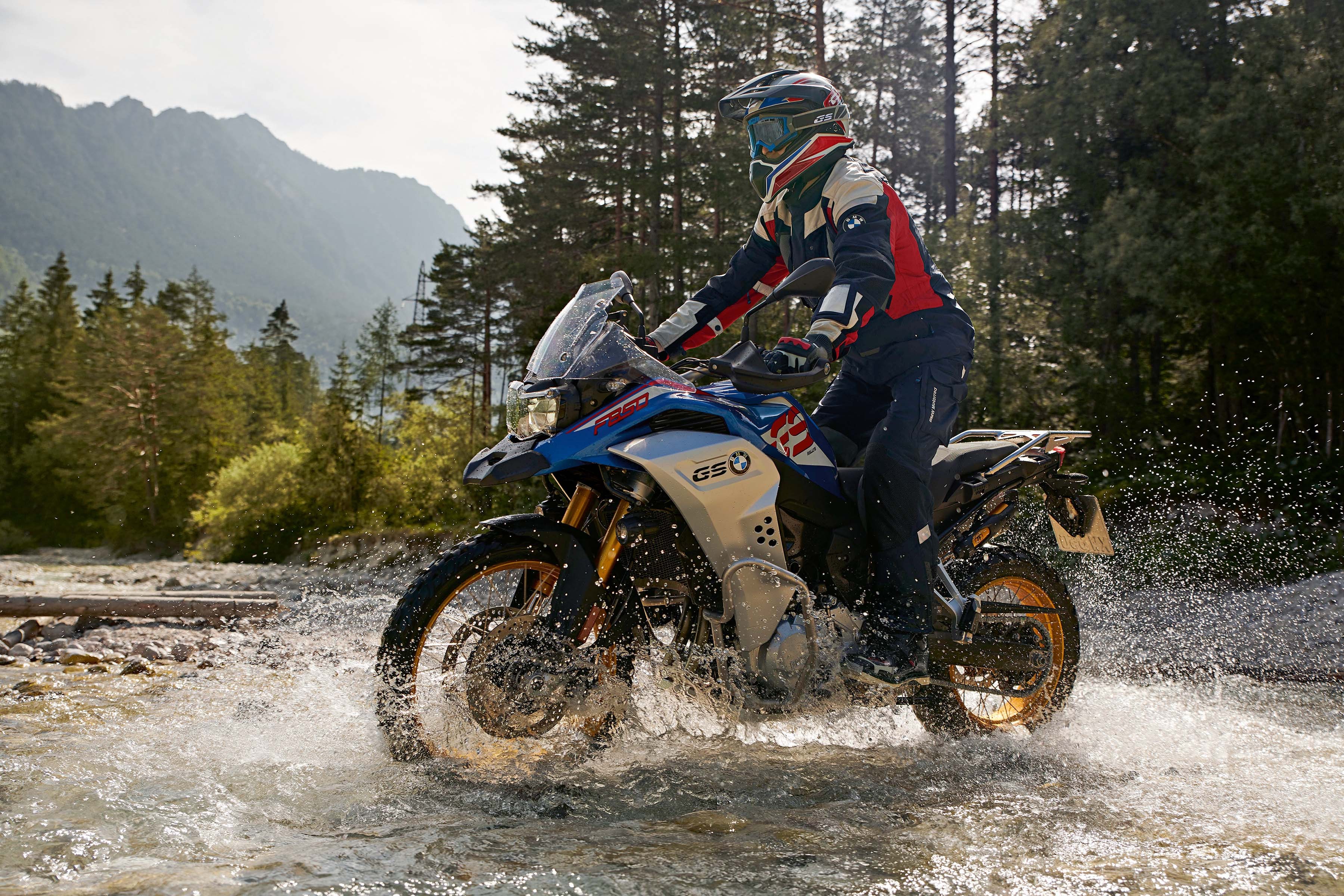
  • The 2019 BMW F 850 GS Adventure has been launched at EICMA 2018.

  • It has the same specs as the standard model except for its 23-litre fuel tank.

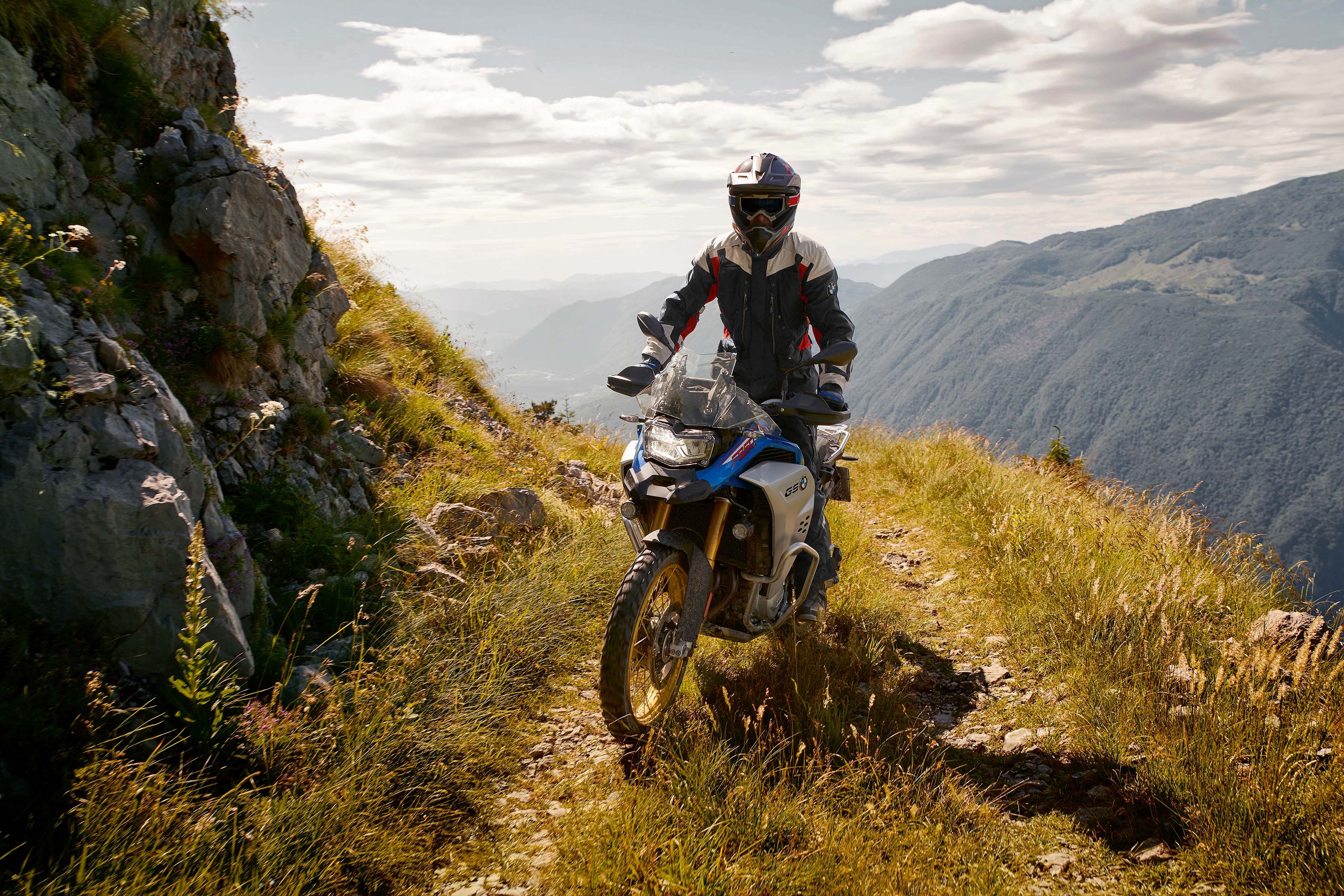
  • The F 850 GSA is geared towards off-road riding.

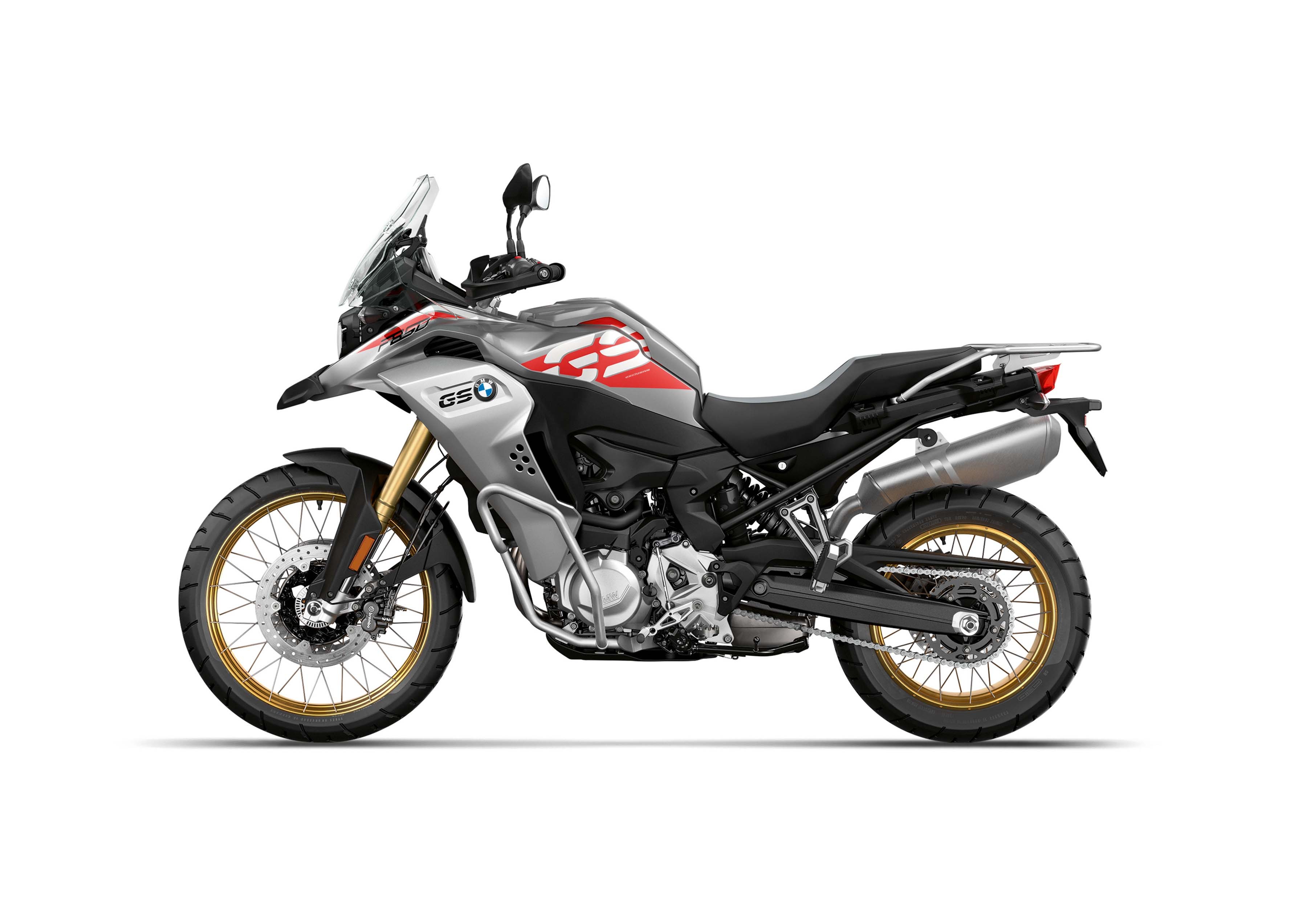
The 2019 BMW F 850 GS Adventure made its debut at EICMA 2018 as expected.

Its introduction is hot on the heels of the F 850 GS. BMW Motorrad now have four adventure motorcycles on offer.

The F 850 GS Adventure or just “F 850 GSA,” is the German brand’s assault on the middleweight adventure segment and takes off-road capability to a higher level.

Its engine is the same 853cc, parallel-Twin which also powers its F 850 GS sibling. It produces 95 bhp and 92 NM of torque. However, the GSA’s weight made a jump to 244kg wet and ready to ride. Much of that gain results from the 23-litre fuel tank.

Most riders would probably not complain as the fuel capacity allows for a range of 550km.

The GSA has a larger touring windscreen, adjustable gear shifter and brake lever.

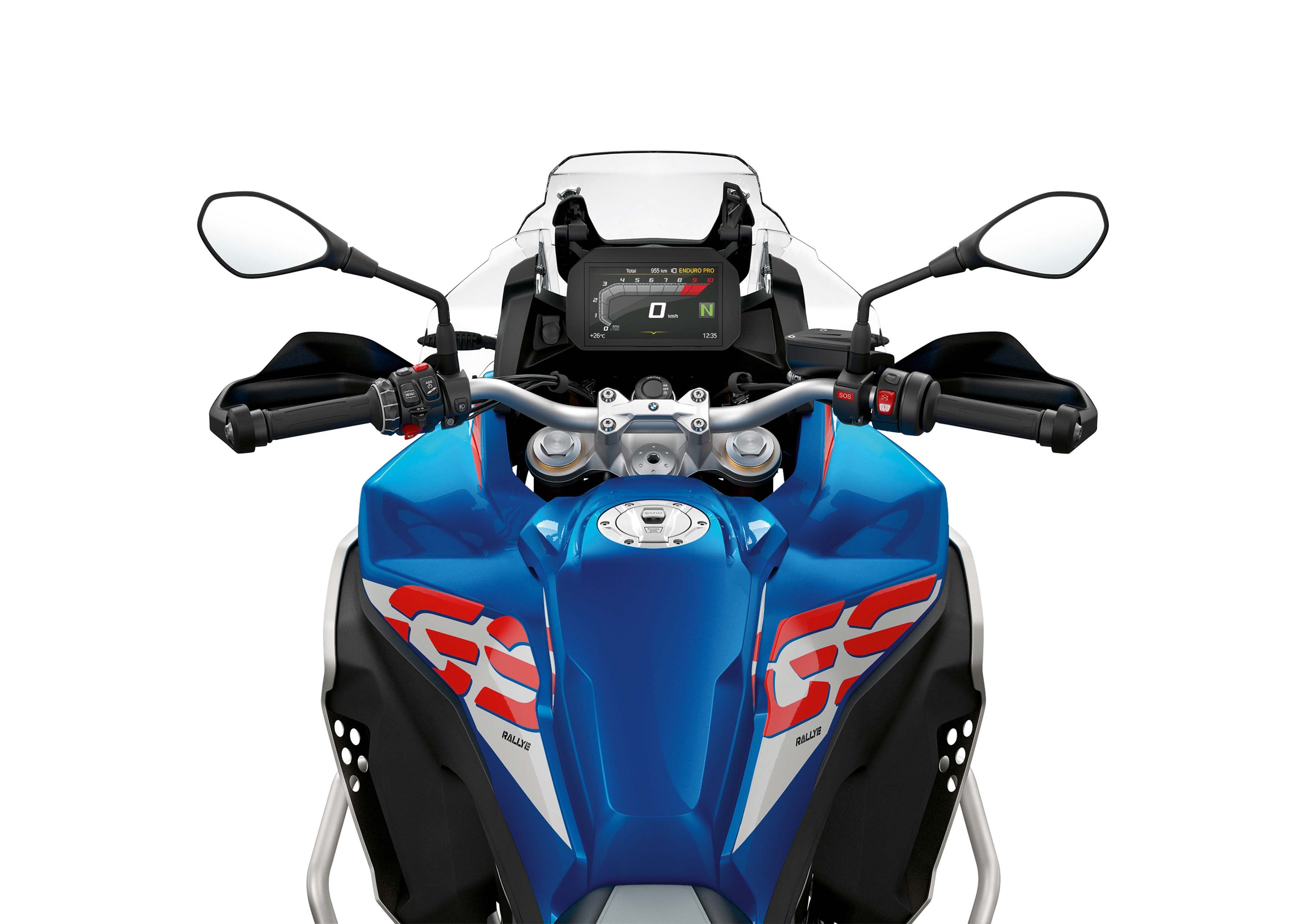
Electronics include ABS and stability control as standard. Standard riding modes are “Road” and “Rain.” Customers may opt for the Riding Modes Pro option which adds “Dynamic,” “Enduro,” and “Enduro Pro” besides dynamic brake light and Dynamic Traction Control. BMW Motorrad also offers electronic suspension. LED headlight is standard.

The 2019 BMW F 850 GS Adventure will be equipped with the 6.5” TFT instrument display.

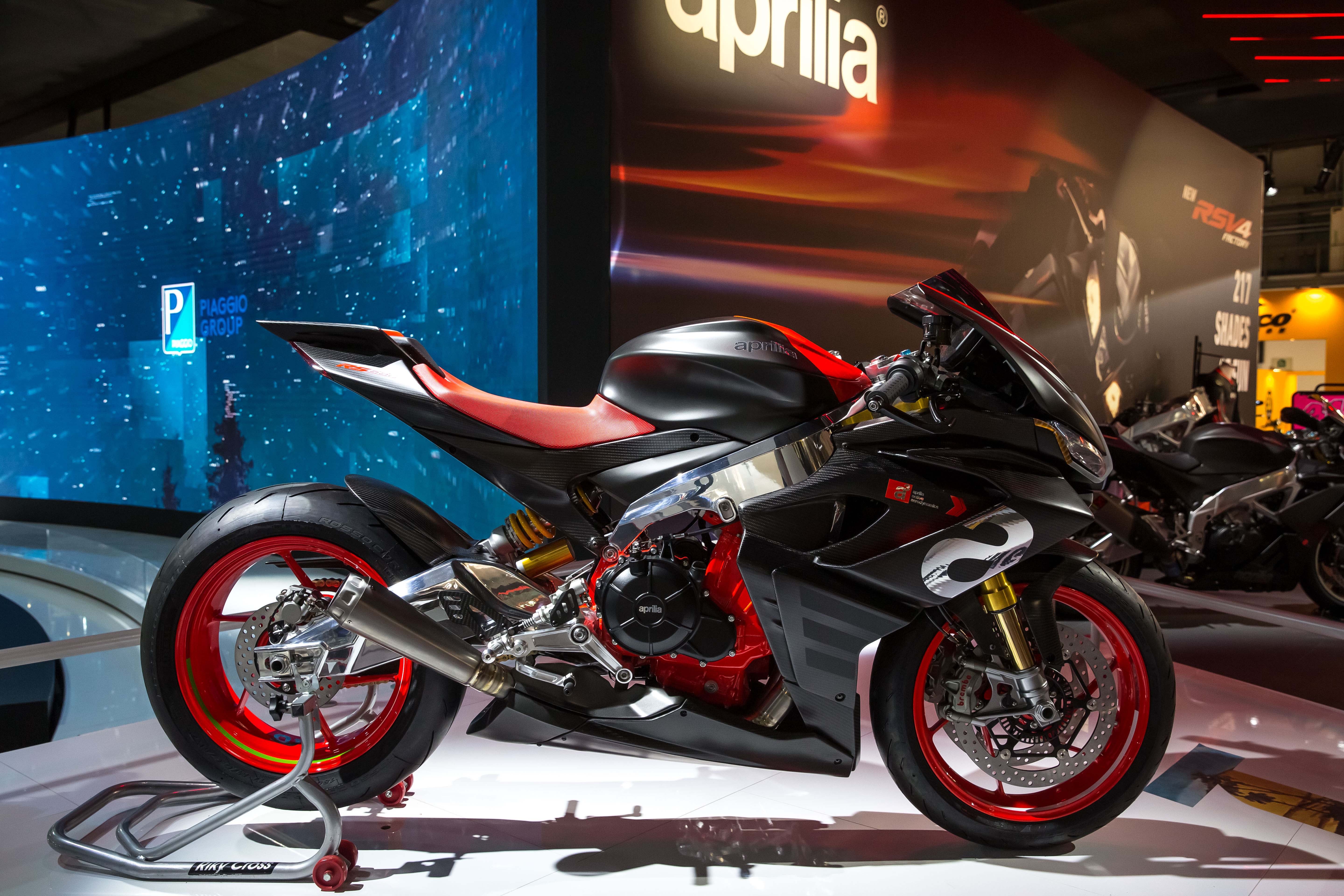
  • We published the rumor of Aprilia working on a two-cylinder middleweight.

  • The Aprilia RS 660 concept was unveiled at EICMA 2018.

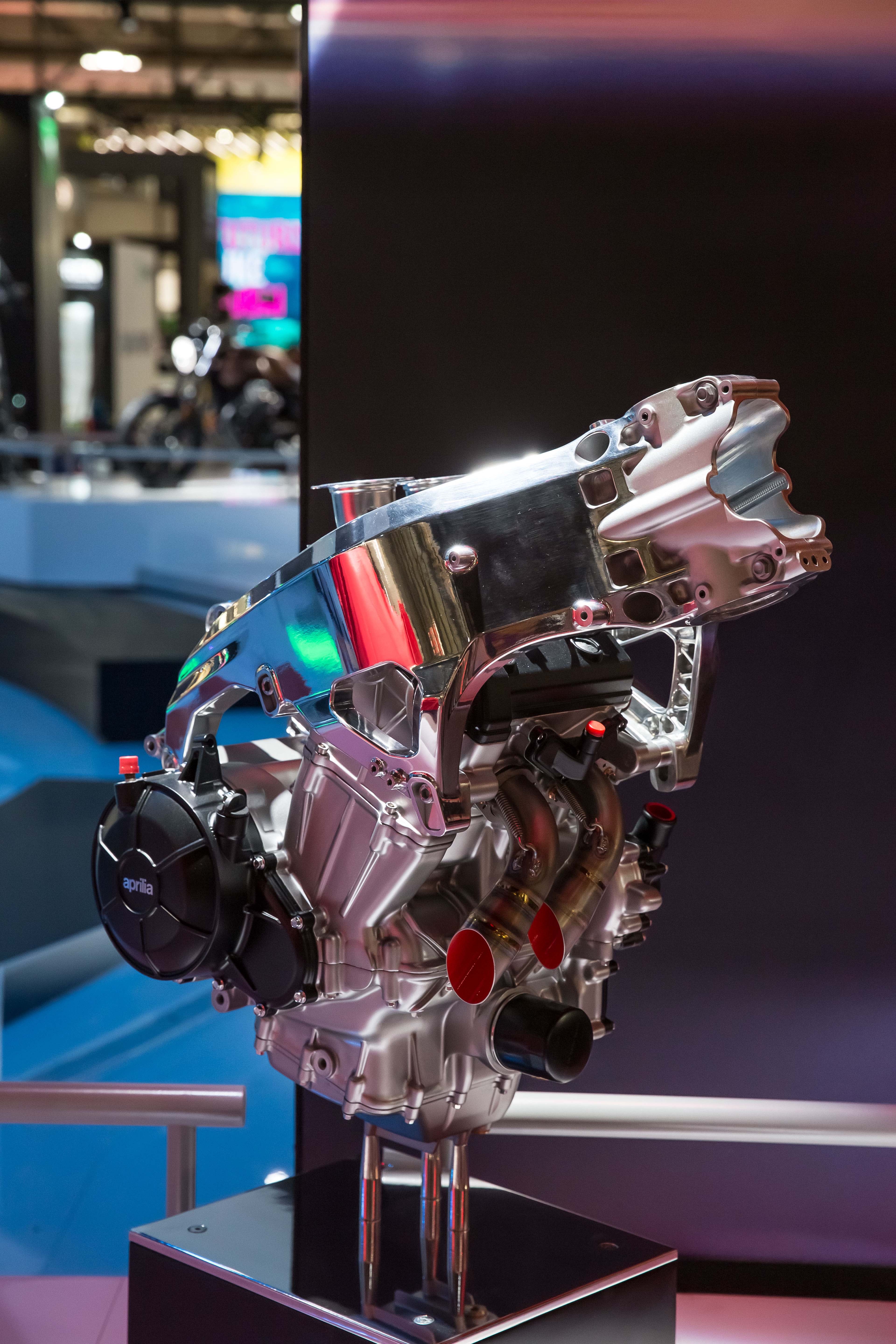
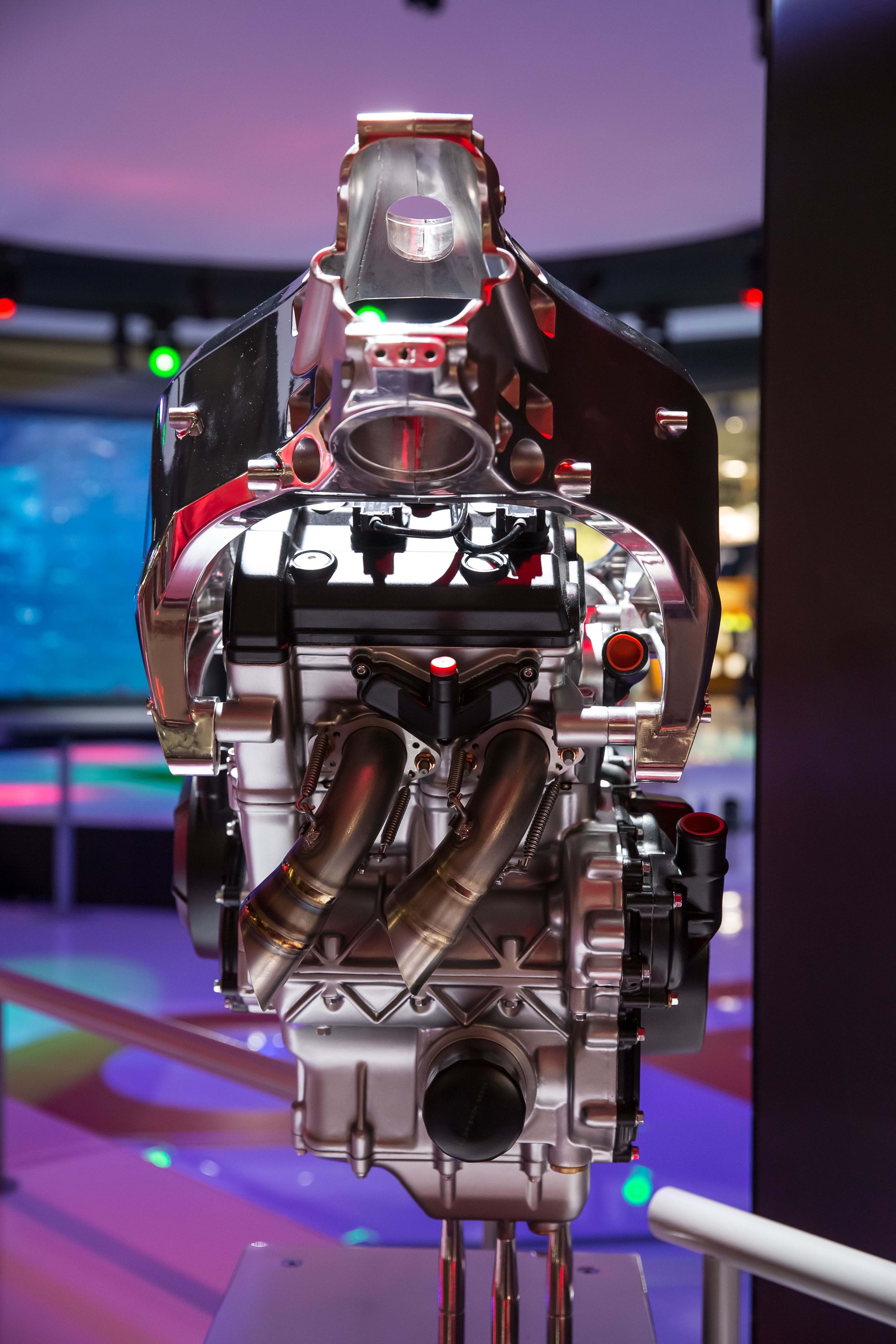
  • The engine is a parallel-Twin based on the RSV4 1100/Tuono 1100 V4.

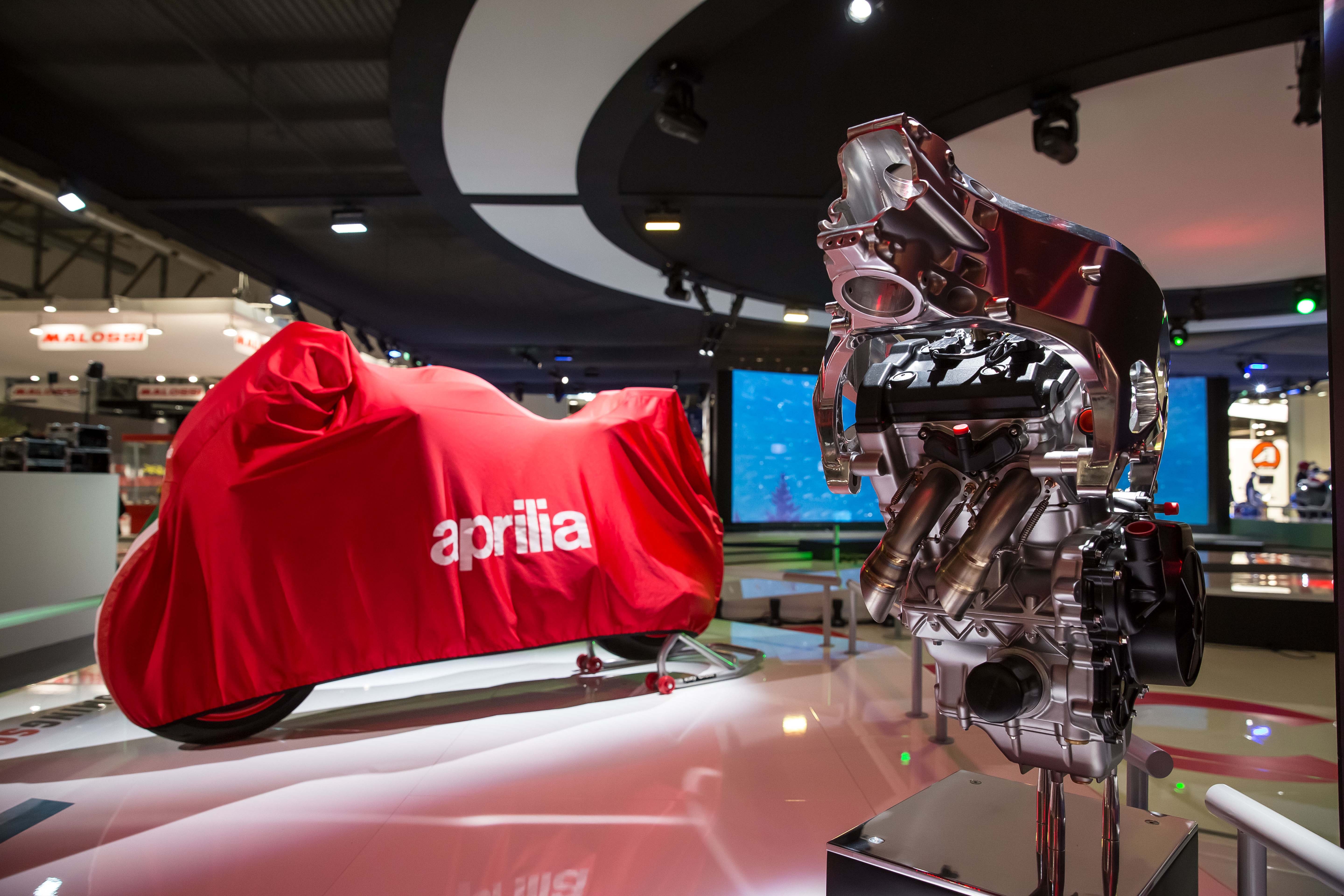
We published a report on the rumors of Aprilia working on a two-cylinder middleweight model back in August, based on Asphalt & Rubber’s report. Well, it turned out that they’ve got a pretty good intelligence network; because Aprilia has unveiled the Aprilia RS 660 Concept EICMA 2018.

Rumours of Two-Cylinder Aprilia Middleweight Supersport Gaining Momentum

As per the rumours, the engine is based on the long-running RSV4 1100/Tuono 1100 V4 engine minus the two rear cylinders. The exclusion of the rear bank of cylinders turns the RS 660’s engine into a parallel-Twin.

The Truth About Parallel-Twins

Our market may frown upon the “bad perception” over the parallel-Twin in the previous Kawasaki ER-6 and Versys 650 models. However, the parallel-Twin engine is more compact and less complex than a V-Twin. It is also cheaper to produce.

A V-Twin needs a lot of space front-to-aft in the frame, thus necessitating a shorter swingarm to achieve a correspondingly short wheelbase. But a shorter swingarm begets more tangential forces from the chain which in turn causes the rear end to squat under acceleration and lift the front wheel. This means the rider cannot open the throttle early to avoid pushing the bike wide in corners. Look at how stubby is the Ducati Panigale’s swingarm.

Besides that, if you locate the front cylinder of a V-Twin closer to the front to put more weight on the front wheel, you may not be able to employ a steep steering angle. As you know, a steeper steering angle is necessary for agility. Sure, you can tilt the cylinders upwards. But now you don’t have enough weight on the front wheel. Besides that, the bike becomes taller to clear the top of the cylinder head covers.

A parallel-Twin (or any inline-engine), on the other hand, solves lots of packaging headache. There’s lots of room behind the cylinders to pack in the throttle bodies and shock absorber. You can tilt the cylinders towards the front wheel.

The benefits are:

  1. More weight on the front wheel.
  2. A longer swingarm still allows for a short wheelbase and less rear end squat.
  3. The rear shock absorber is not exposed to heat from exhaust header(s) like on a V-Twin or V-Four.
  4. Throttle bodies can “shoot” the air/fuel mixture straighter into the combustion chambers.
  5. More efficient cooling.

A parallel-Twin has more efficient cooling as both cylinders face the airflow. That’s why the riders of V-Twins and V-Fours feel as if their inner thighs are being roasted to perfection.

Back to the RS 660, we hope Aprilia uses a different crankshaft spacing than the traditional 180o. The 270ocrank like that on the Triumph Bonneville mimics a 90oV-Twin in both engine vibration and torque characteristics.

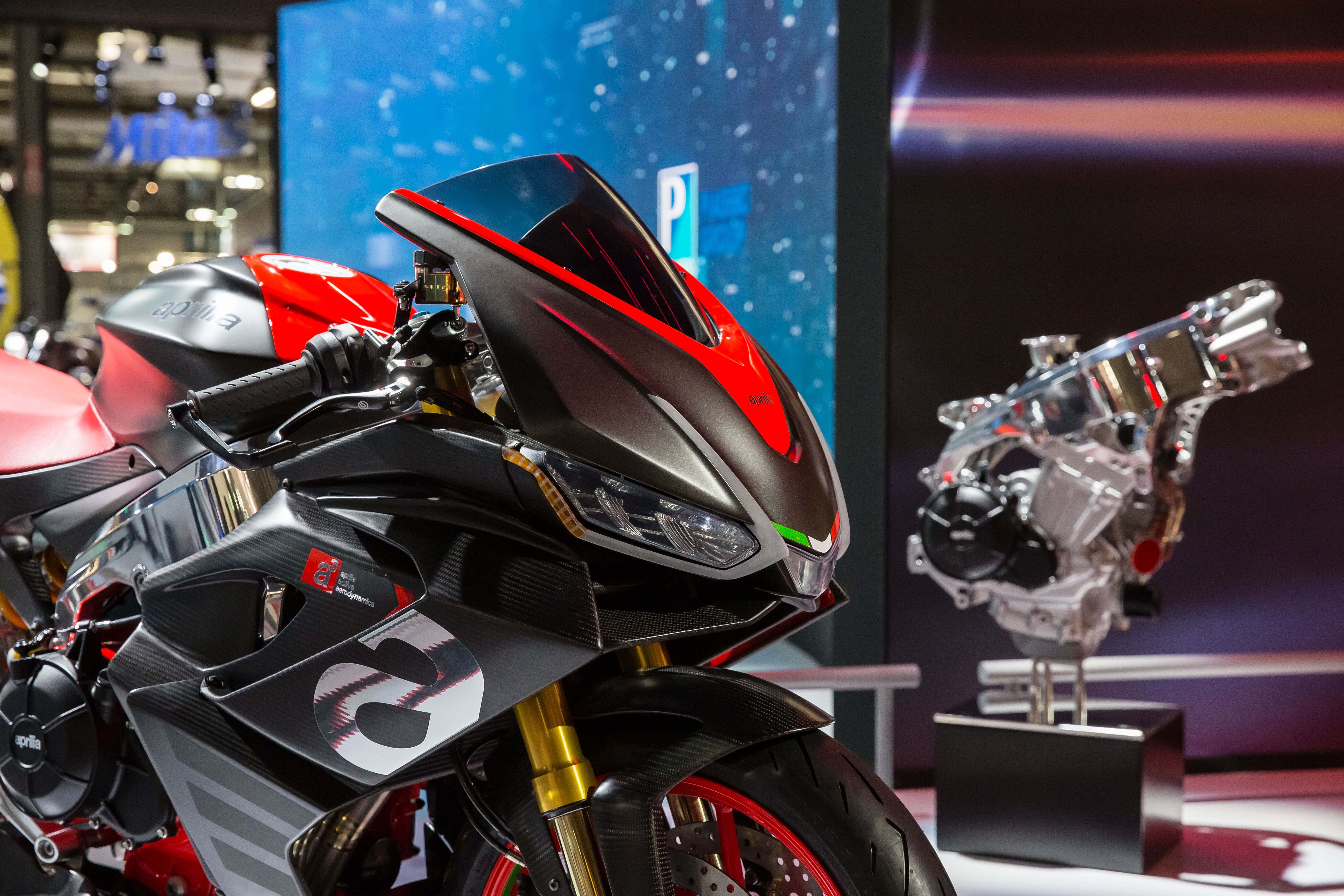
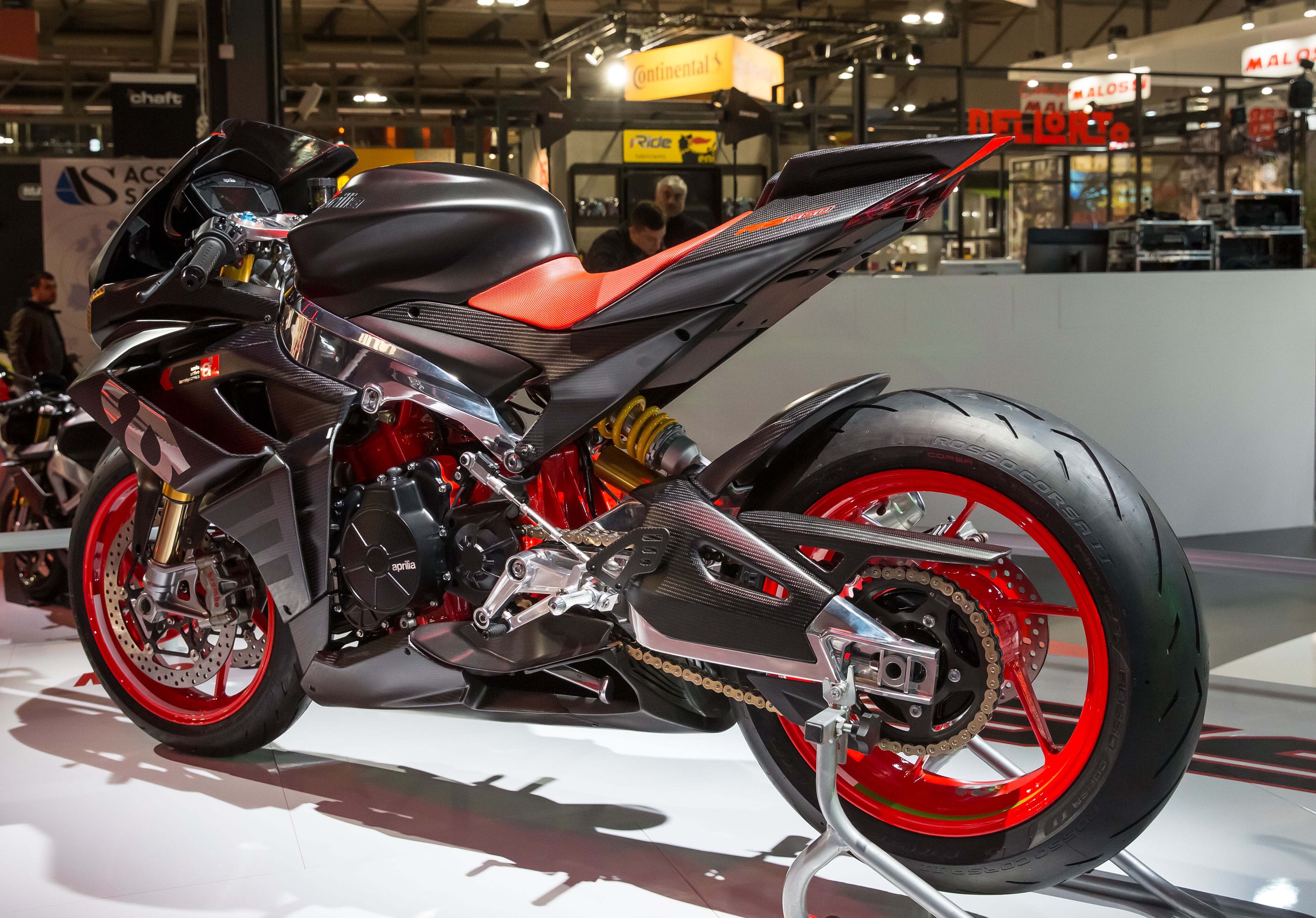
Aprilia wanted a middleweight that is compact, light and agile hence a parallel-Twin makes perfect sense. Aprilia designed the RS 660 concept like their 250cc race bike. The (polished) aluminium frame uses the engine as a stressed member. The swingarm is also aluminium and curves over the exhaust on the right side. There is space for the rear shock to mount directly to the swingarm in the central position.

Aprilia also introduced the Aprilia Actice Aerodynamics (A3) concept on the RS 660. As the name suggests, the bike has the ability to change its front aerodynamic profile for the amount of downforce.

Aprilia says that the RS 660 will be produced for Europe, America and Asia.

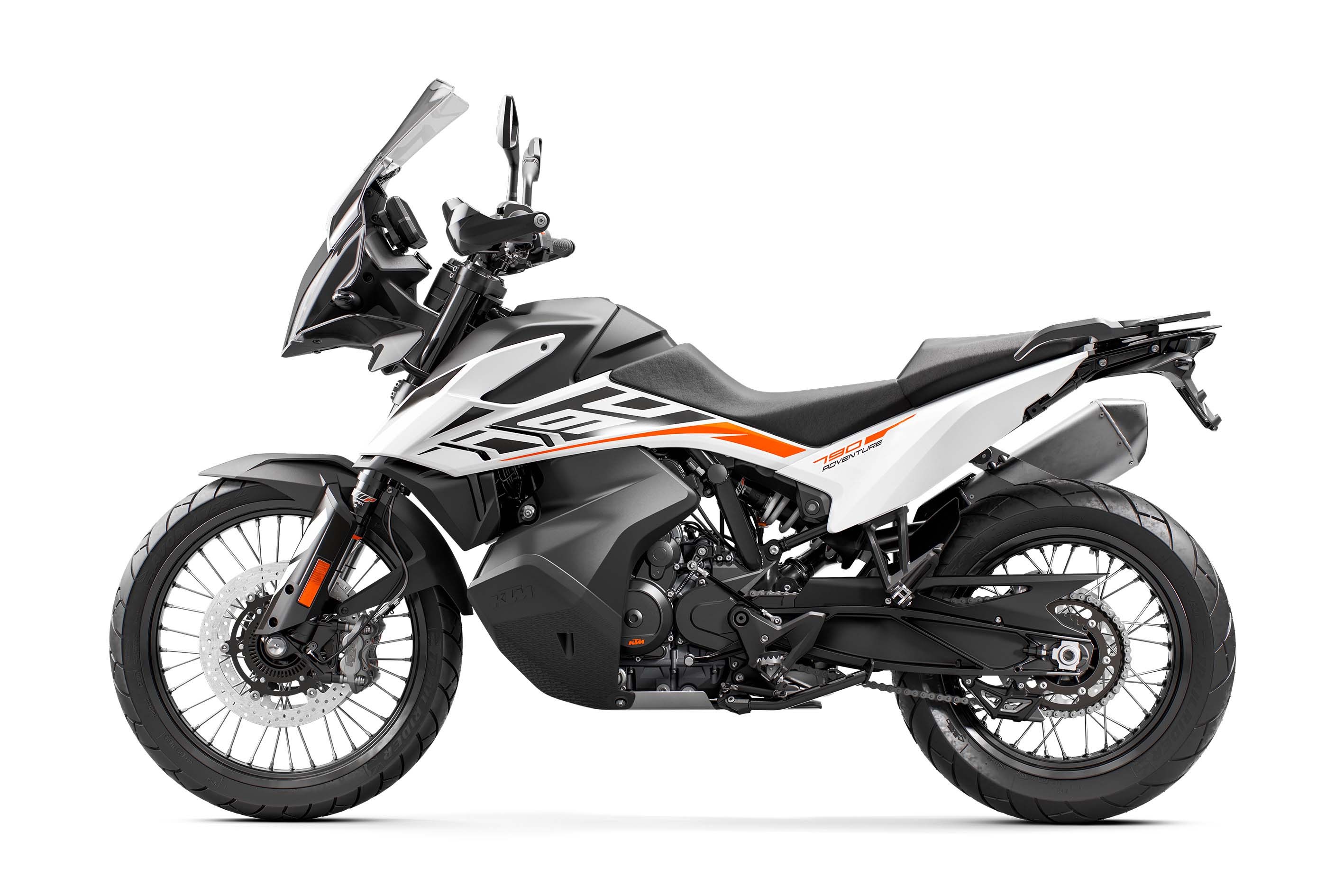
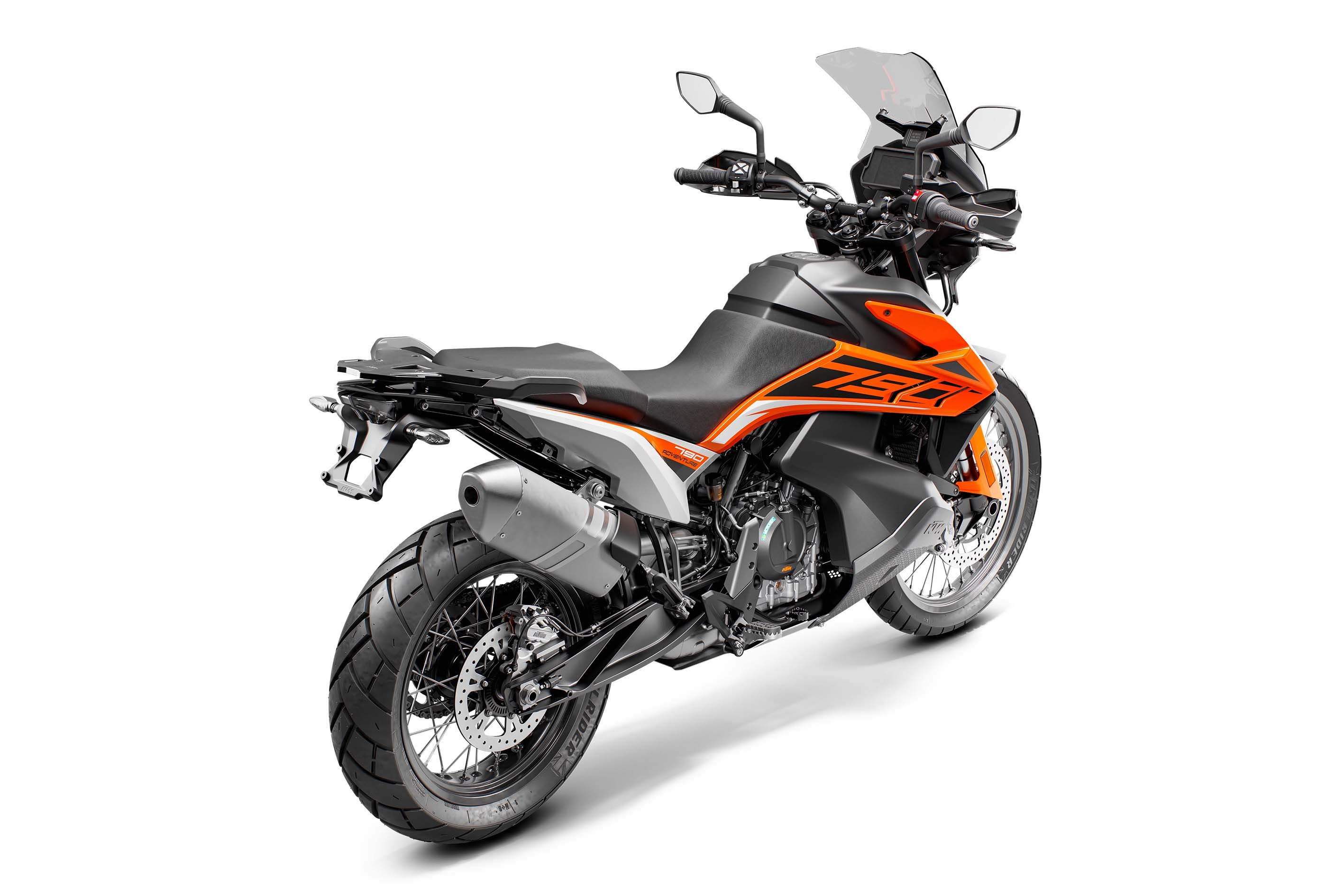
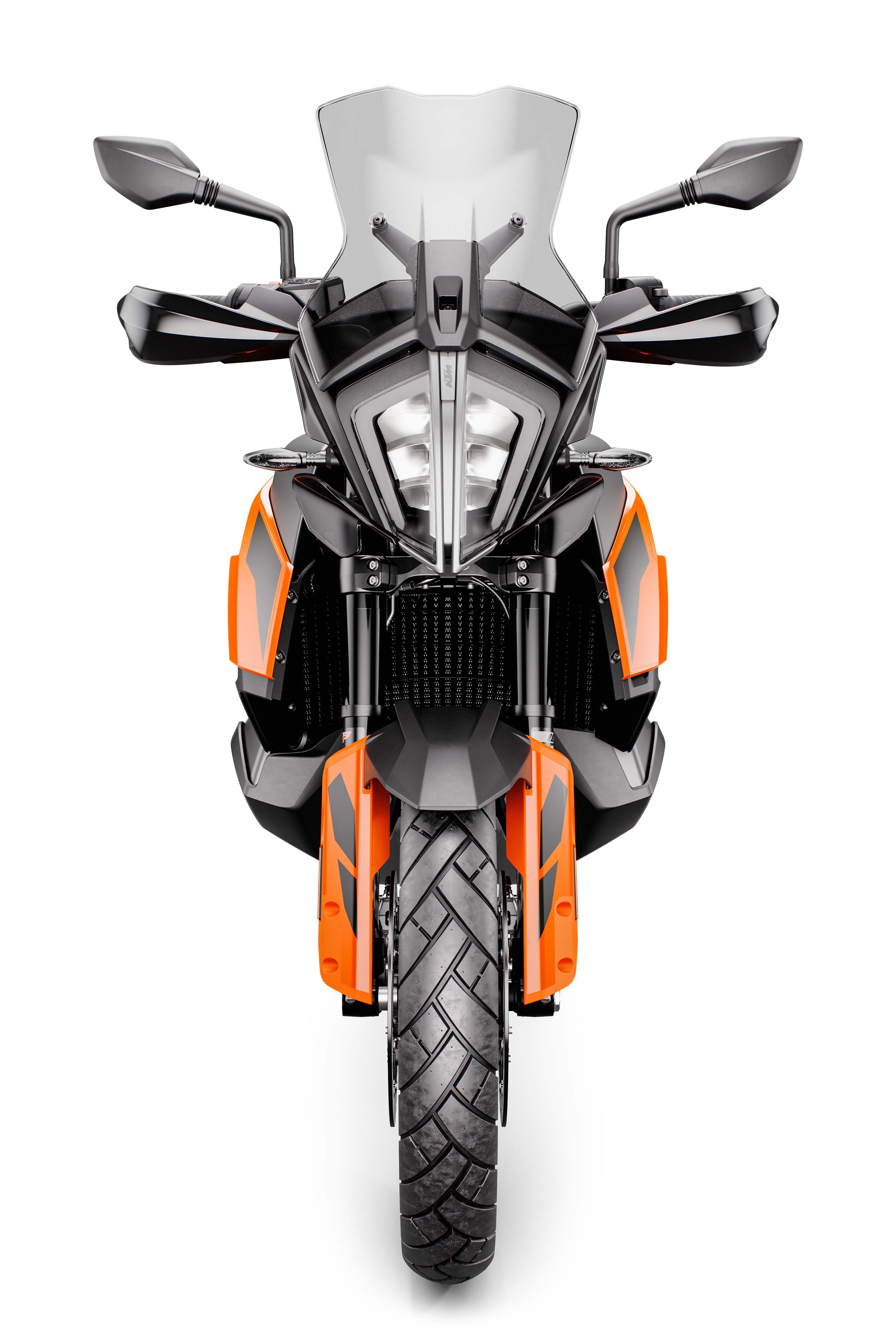
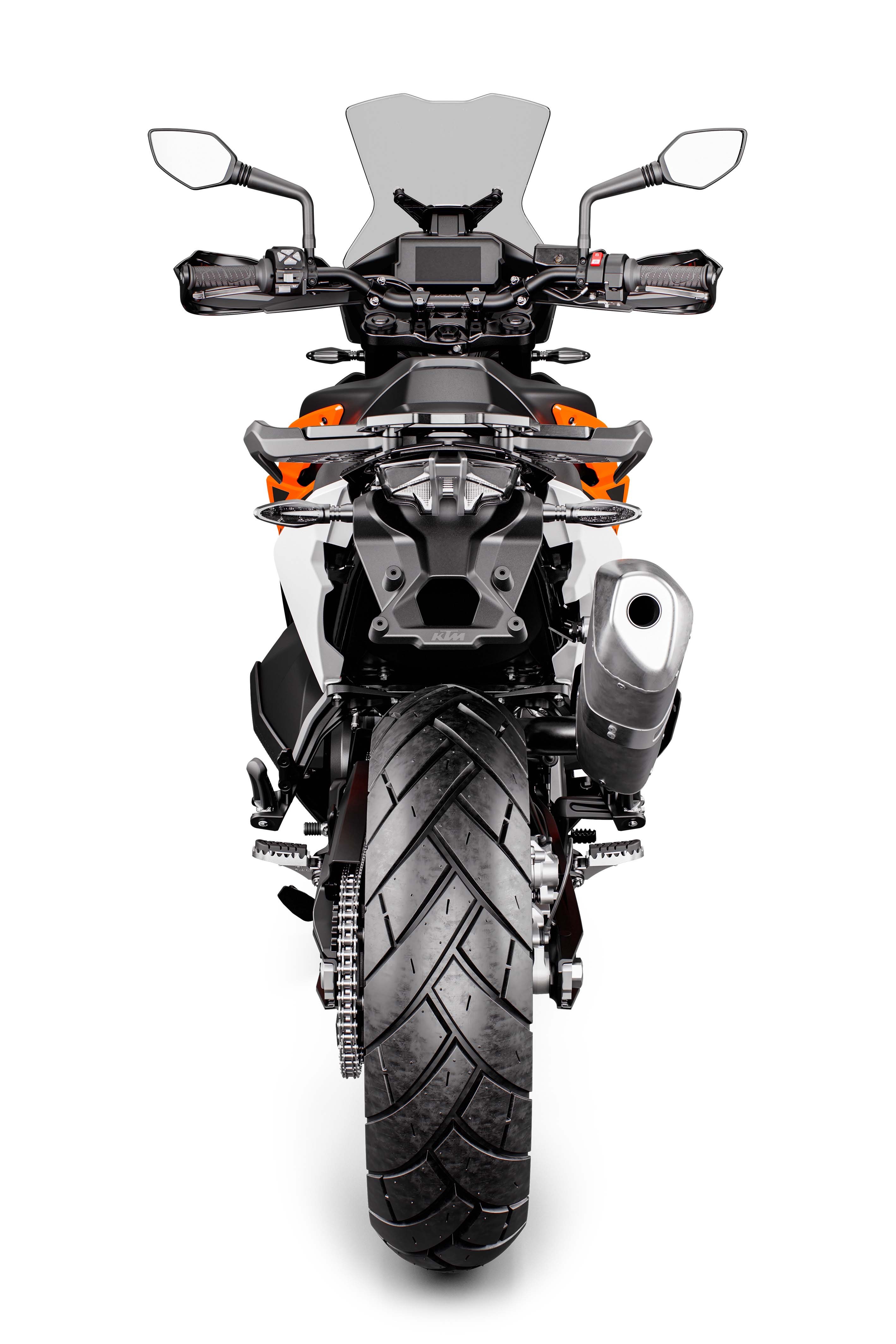
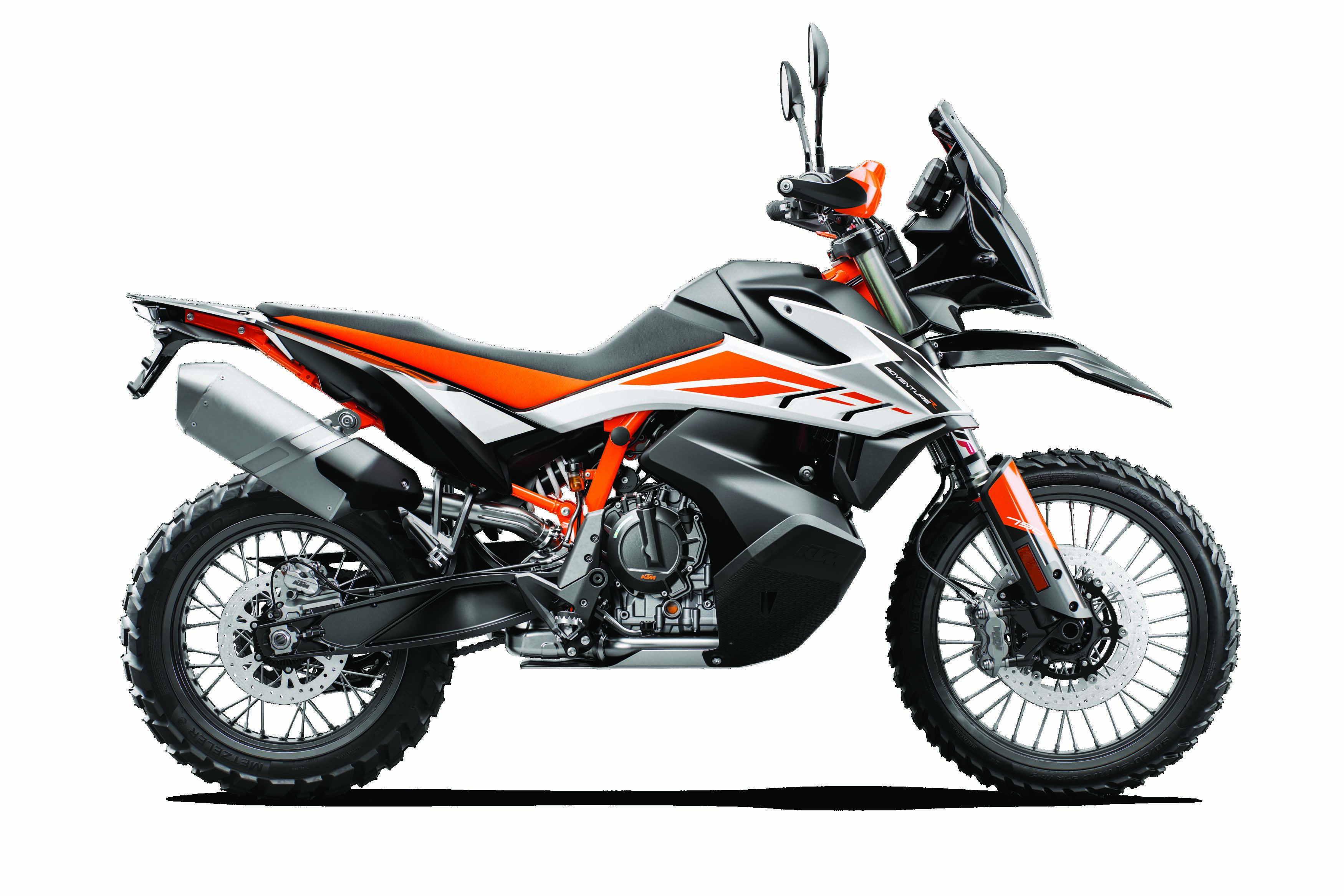
  • The 2019 KTM 790 Adventure and 2019 KTM 790 Adventure R have finally been launched.

  • The base model is more road-centric while the R version is for off-roading.

  • They were unveiled at EICMA 2018.

The 2019 KTM 790 Adventure and 2019 KTM 790 Adventure R have been finally unveiled at the EICMA show.

The two models have spent much time in development, while KTM launched the 790 Duke first.

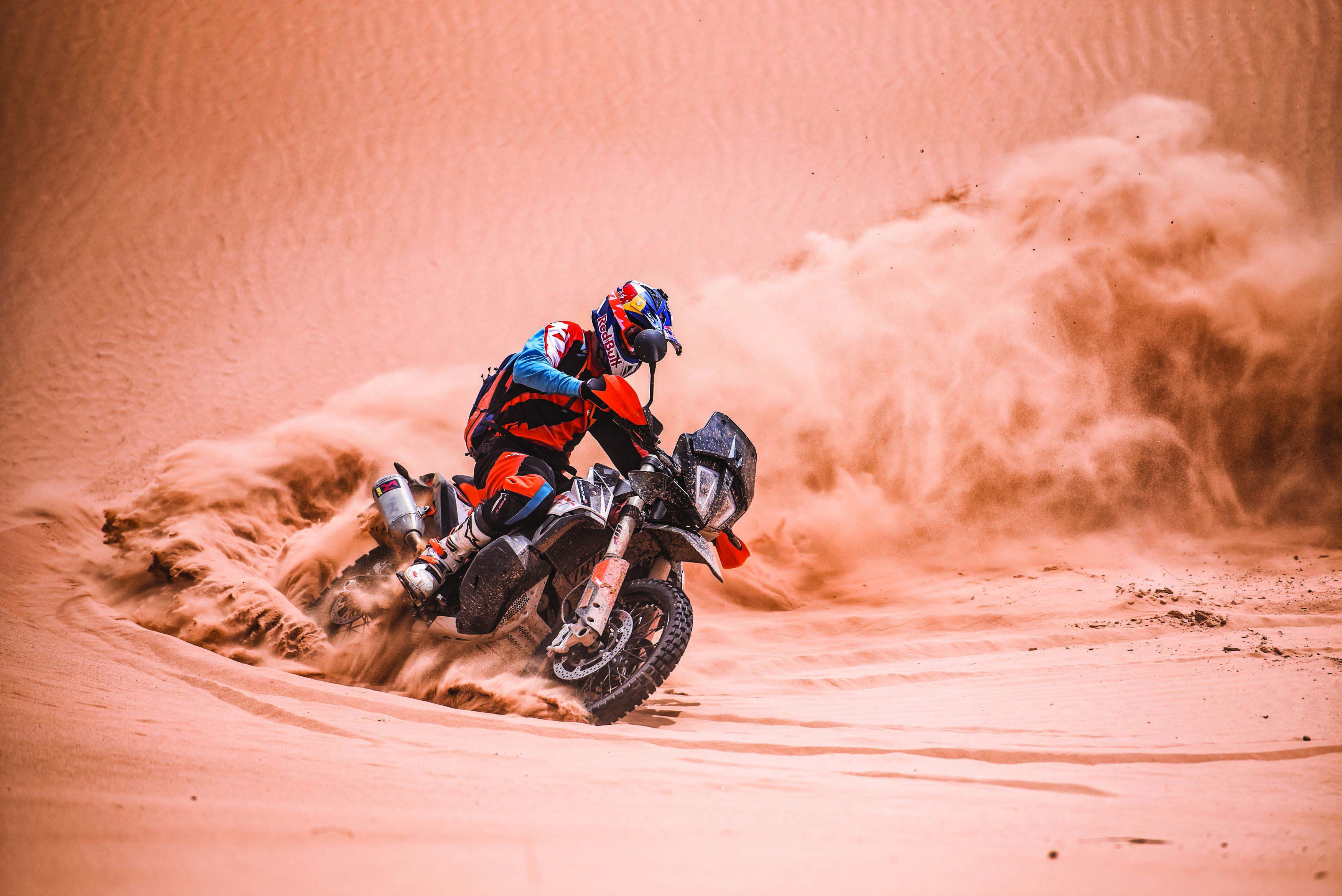
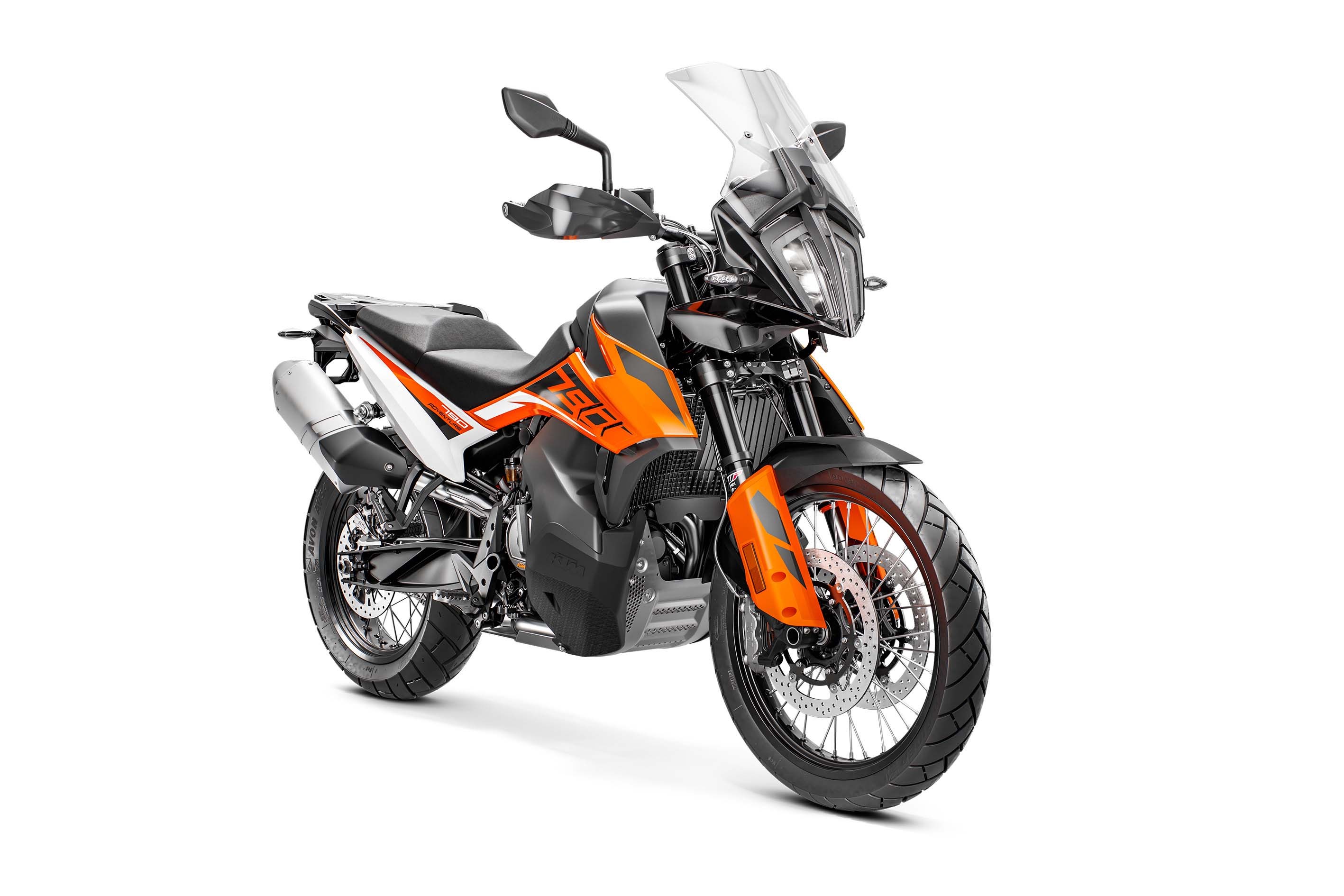
There are two versions with both sharing the same basic specs. However, the base 790 Adventure is biased more for road use, while the 790 Adventure R is for hardcore off-roading.


As with any KTM, there are a bucket load of features, but we’ll cut to the chase. The engine produces 94bhp and 88 Nm of torque. The engine power is down by 11bhp from the 790 Duke’s engine, as it tuned for a broad spread of torque rather than outright speed.

The base 790 Adventure uses the WP APEX 43mm forks and WP rear shock, providing 200mm of travel on both ends. On the other hand, the 790 Adventure R is equipped with WP XPLOR forks and WP rear shock, both with 240mm travel for more ground clearance. Both models use 21” front and 18” rear wheels.

Besides that, the base model’s seat is a flat 2-seater, while the R has a stepped dual-seat arrangement.

As for electronics, both bikes utilize an IMU (inertial measurement unit) for lean-sensitive Cornering ABS and traction control. The ABS can be turned entire off or just for the rear wheel.

There are three standard riding modes in addition to an extra “Rally” mode. Rally modes is optional for the base model and standard on the R.

The styling gives the bike the look of a Dakar Rally race bike and utilizes the split LED headlamp.

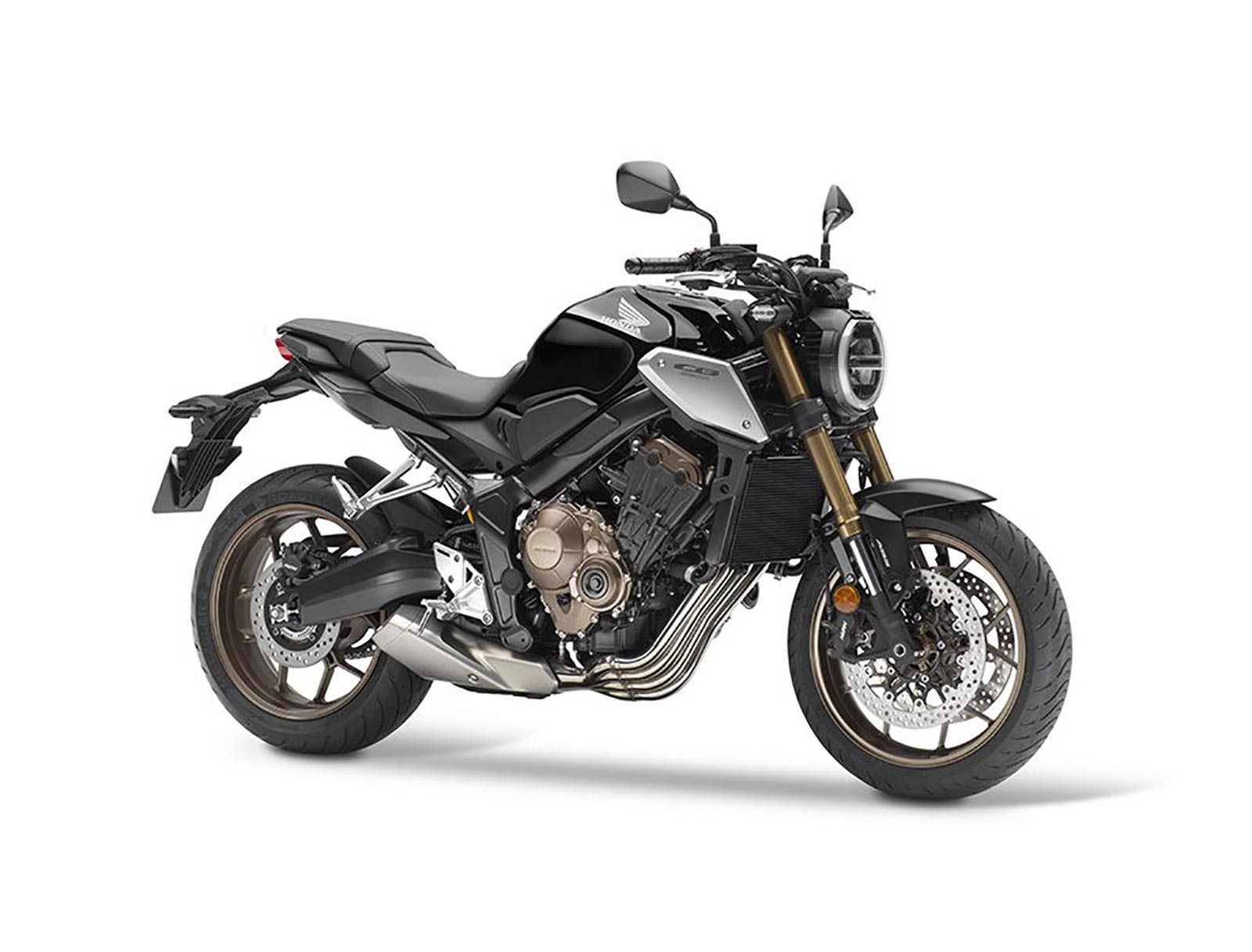
  • The 2019 Honda CB650R was unveiled at EICMA 2018.

  • It is built on the Honda CB650F platform.

  • It completes Honda’s Neo Sports Café range.

Honda had teased with a 650cc Neo Sports Café concept back at the Paris Motorshow last month. The design had won many praises, prompting the manufacturer to unveil the 2019 Honda CB650R Neo Sports Café at the EICMA show.

Honda Neo Sports Café 650 Concept Breaks Cover

As we have mentioned before, the CB650R is built upon the Honda CB650F and CBR650F platform. The inline-Four engine and frame are easily apparent in the photos of the new bike. Honda gave the CB650F a retro-modern treatment, like the CB1000R and CB250R. The Neo Sports Café line-up is now complete.

Boon Siew Honda Launches CB1000R and CB250R

Please click here for our review of the Honda CBR650F.

2018 Honda CBR650F Test & Review – “Between Two Worlds”

Please click here for our review of the Honda CB650F.

2018 Honda CB650F Test & Review: The All-Rounder

However, Honda didn’t just build a new styling on top of the CB650F. Instead, they revised a number of features on the bike.

For example, the forks on the CB650R Neo Sports Café are 41mm Showa Separate Function Forks (SFF). The CB650F and CBR650F utilize Showa Bending Valve Forks, on the other hand. Additionally, the CB650R’s front brake discs are gripped by radially-mounted four-piston calipers.

On the electronics side, the CB650R features Honda’s “Selectable Torque Control” system (first seen on the Africa Twin), assist and slipper clutch and what Honda calls “ultra-modern” instruments.
The engine has been uprated, likewise. There is a 5% power boost, bringing its output to 95bhp. Honda also claims a 6kg weight reduction over the CB650F.

When will this hit Malaysia? Soon enough, we hope!

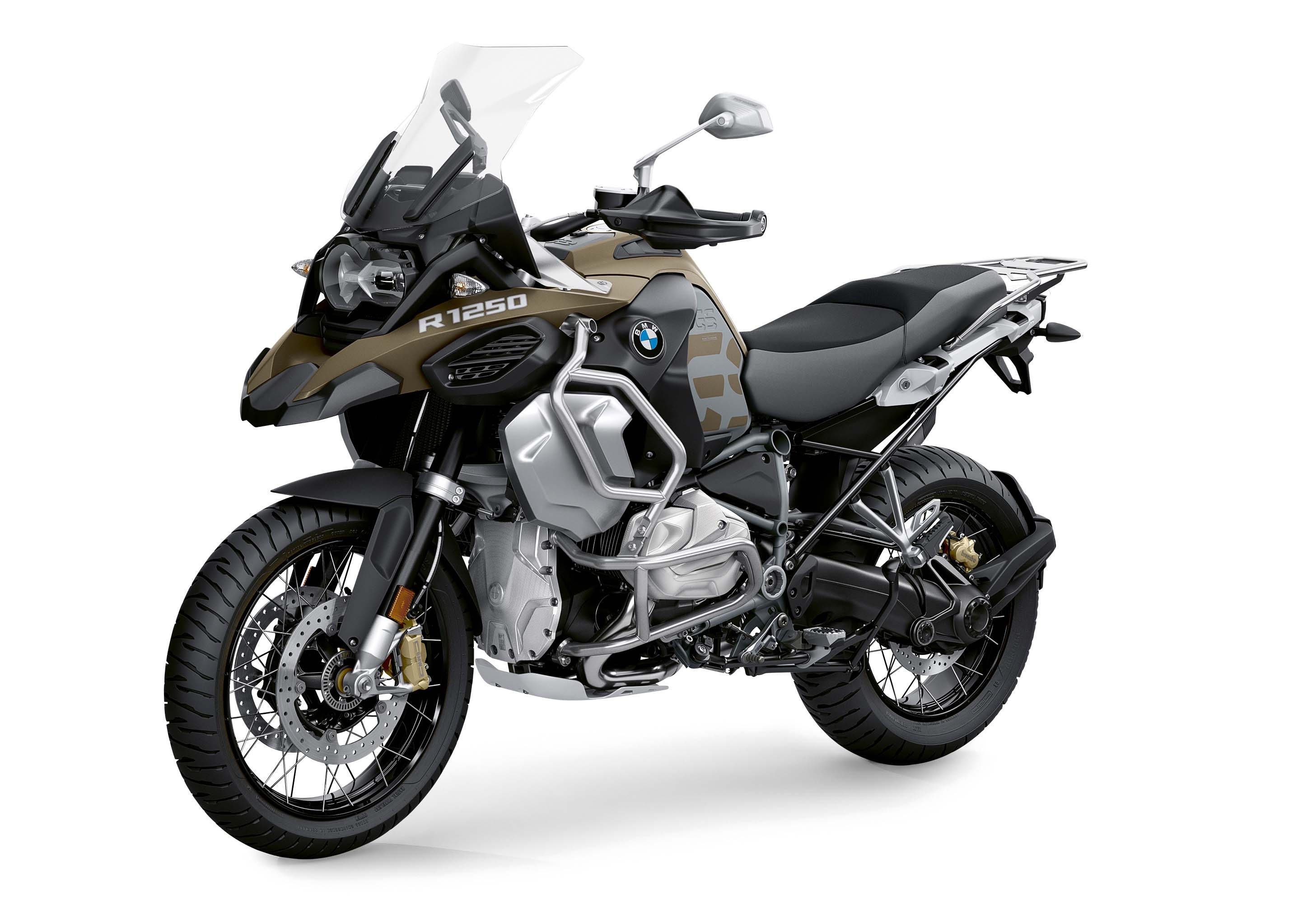
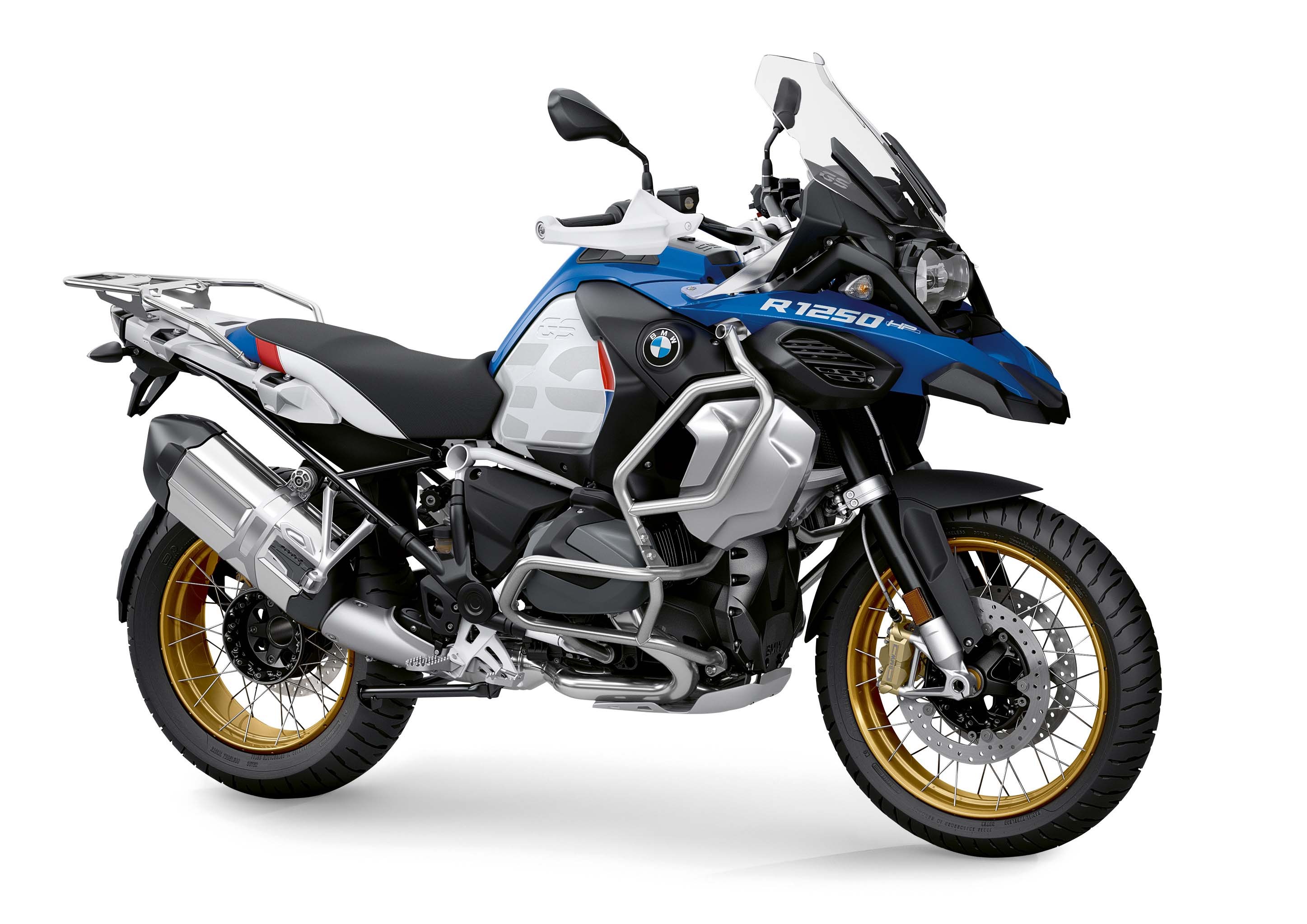
  • The 2019 BMW R 1250 GS Adventure has been officially launched.

  • It will also feature the new 1254cc ShiftCam engine.

  • LED lights and 6.5″ TFT screen are standard standard.

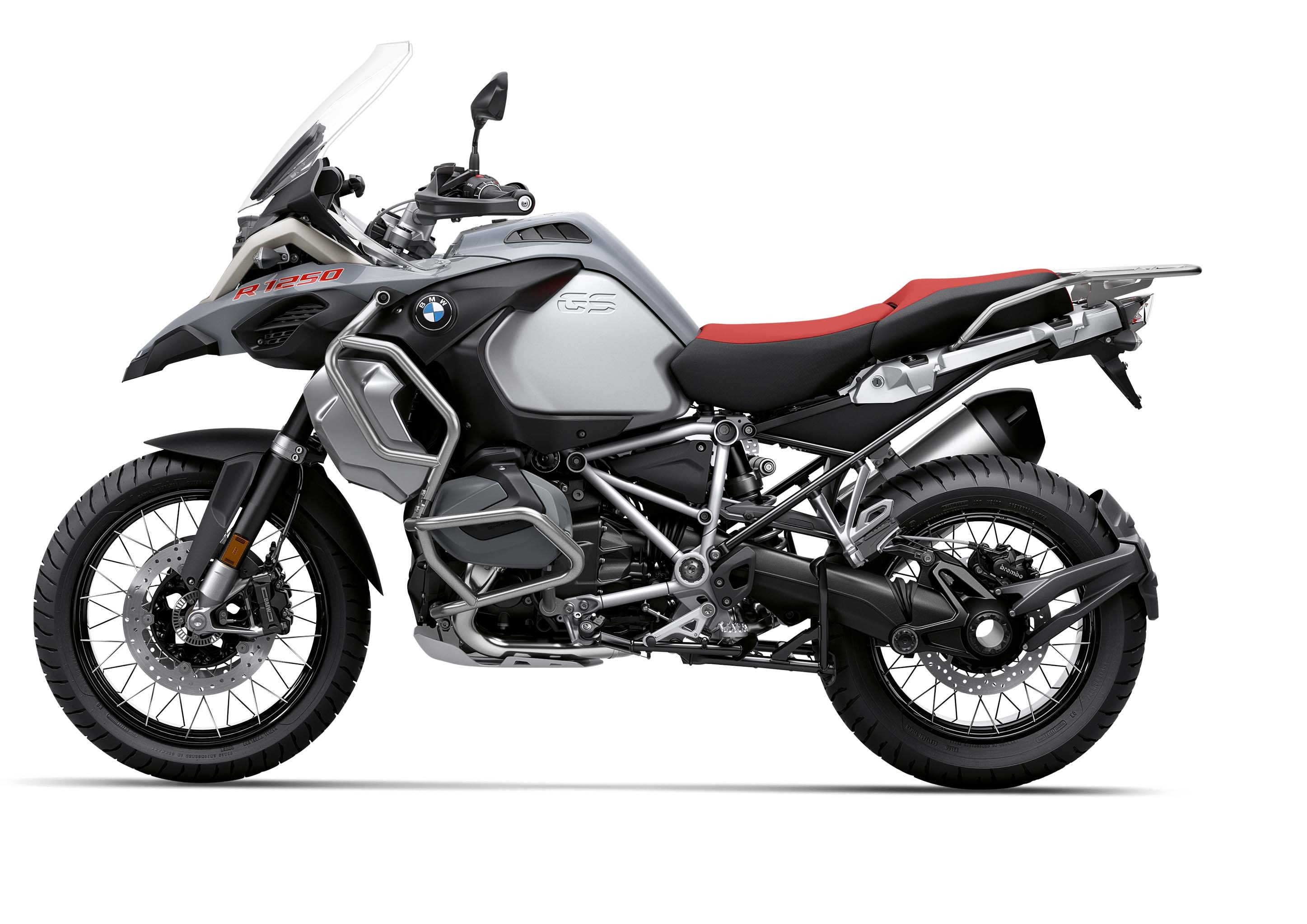
The 2019 BMW R 1250 GS Adventure may not be a big surprise after the launch of the 2019 BMW R 1250 GS in September.

BMW Motorrad Officially Unveils New 2019 R 1250 GS and R 1250 RT

However, the Adventure version (popularly called “GSA”) is an important variant for the Bavarian motorcycle manufacturer. The GSA is the long-distance adventure tourer of the two.

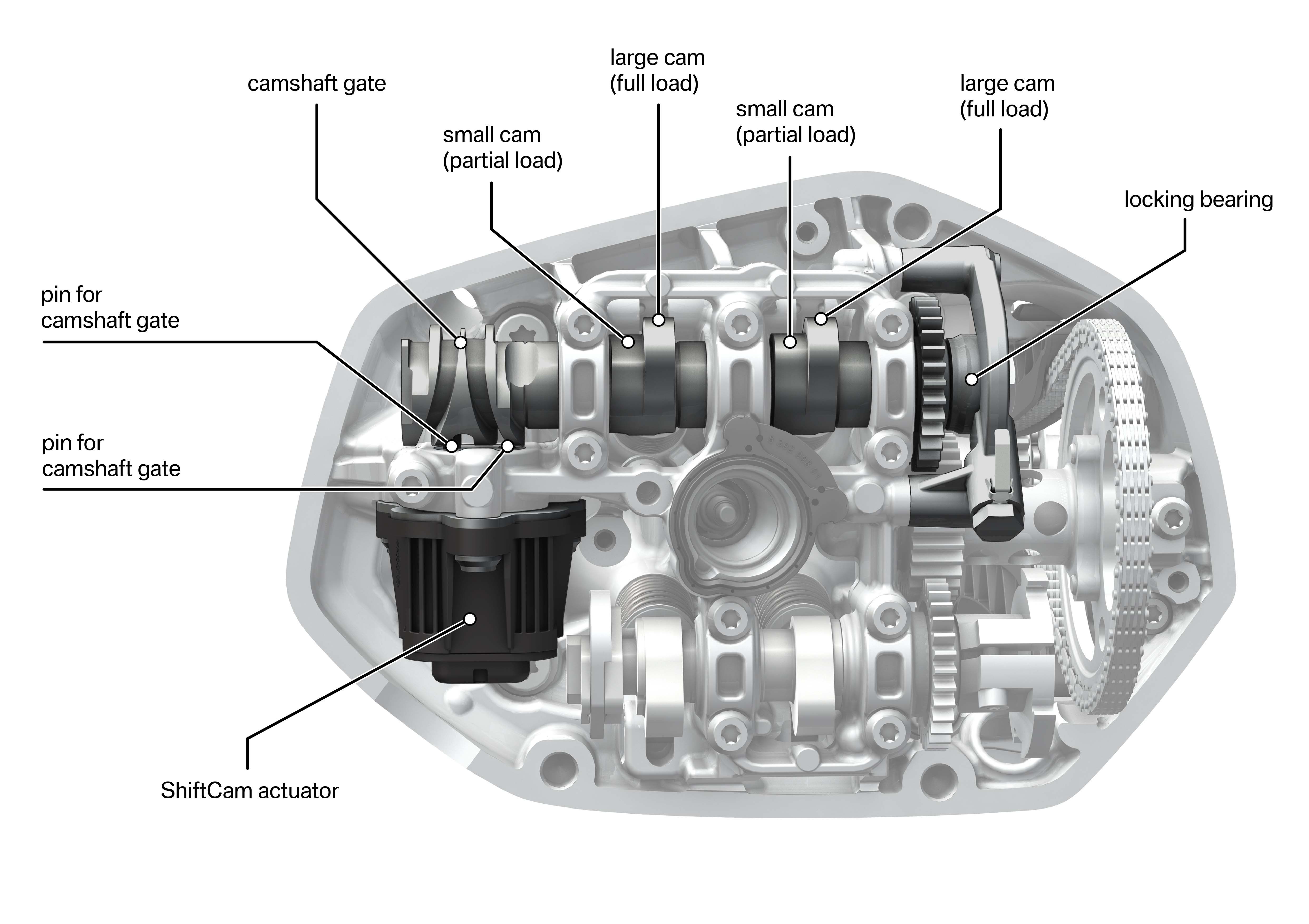
Also as expected is the use of the new 1254cc Boxer with ShiftCam engine. The new brings power output to 136 bhp and 143 Nm of torque, as compared to the 1198cc Boxer which produced 125 bhp and 125 Nm.

Please click on the link below to learn more about the BMW ShiftCam engine. in a nutshell, the ShiftCam technology uses two cam lobe profiles to manage power output and fuel usage according to engine load and throttle application.

BMW Motorrad Officially Unveils new 1250cc Boxer Engine

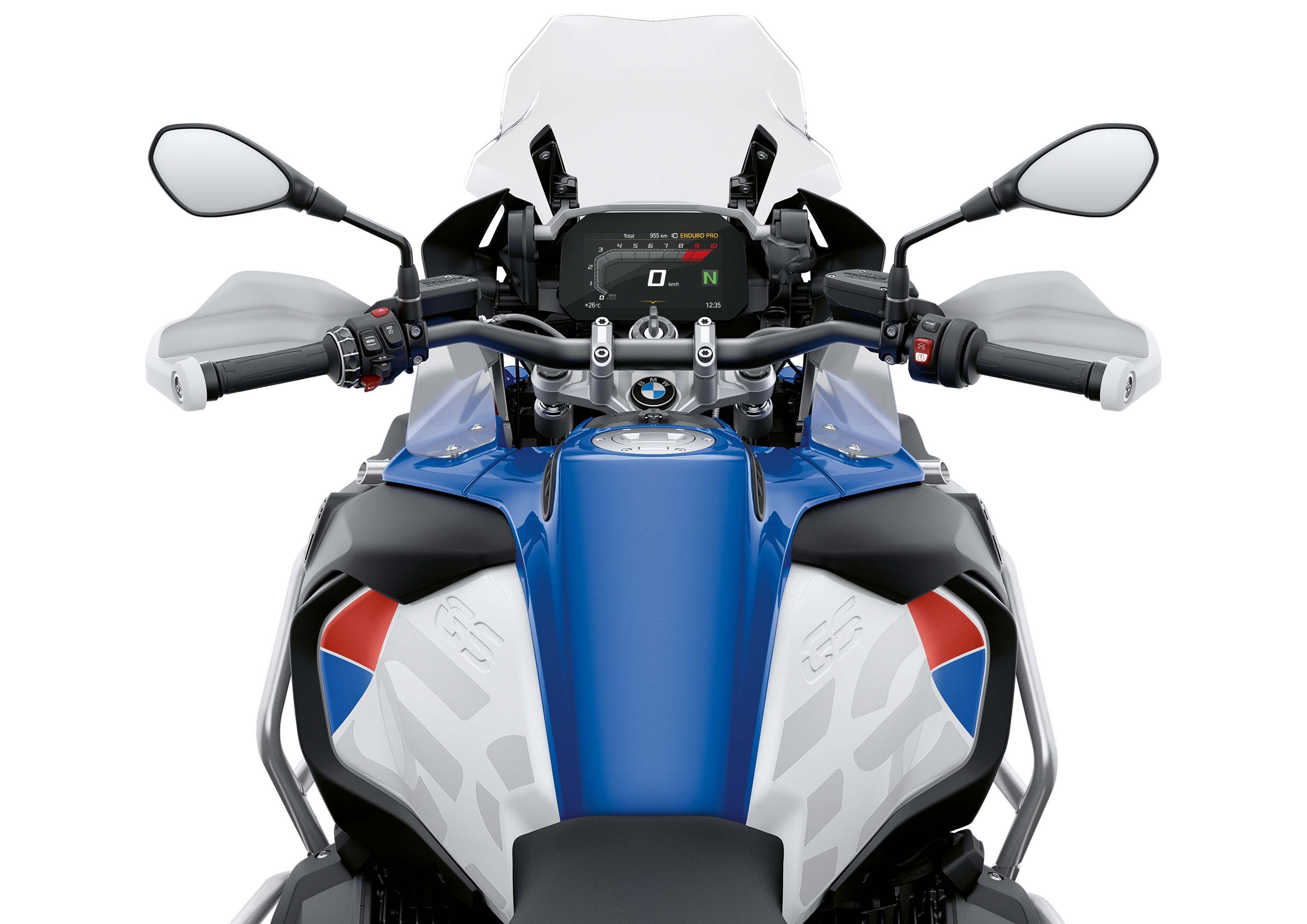
As for the electronics, the 2019 R 1250 GS Adventure will be equipped with Hill Start Control (HSC) and Automatic Stability Control (ATC) as standard. The optional “Riding Modes Pro” package adds two extra riding modes (Enduro and Enduro Pro), plus Dynamic Traction Control (DTC).

Cornering ABS is also an option called ABS Pro. A new option called Dynamic Brake Control (DBC) is available to customers. It automatically modulates the throttle so the drive torque utilizes the torque at the rear wheel for more stability while braking.

There are many more add-on options but LED lighting is now standard. Additionally, the GSA gains the 6.5” TFT screen.

The main difference between the GSA and GS versions is the former has a larger fuel capacity. The new GSA carries 30 litres.

On the flip side, all the upgrades come with an 8kg weight penalty. The 2019 BMW R 1250 GS Adventure weighs a hefty 268kg with 90% fuel, ready to ride.

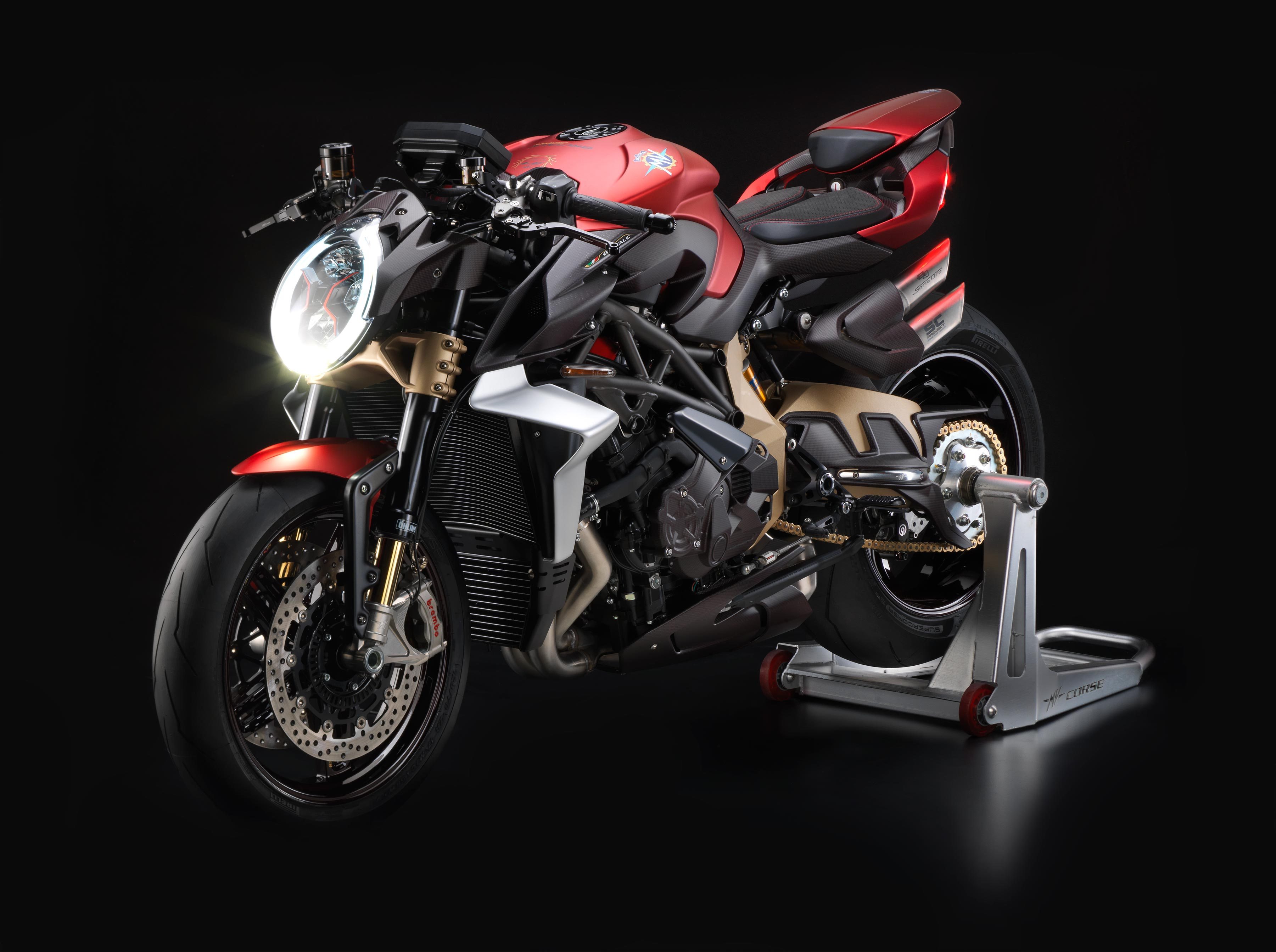
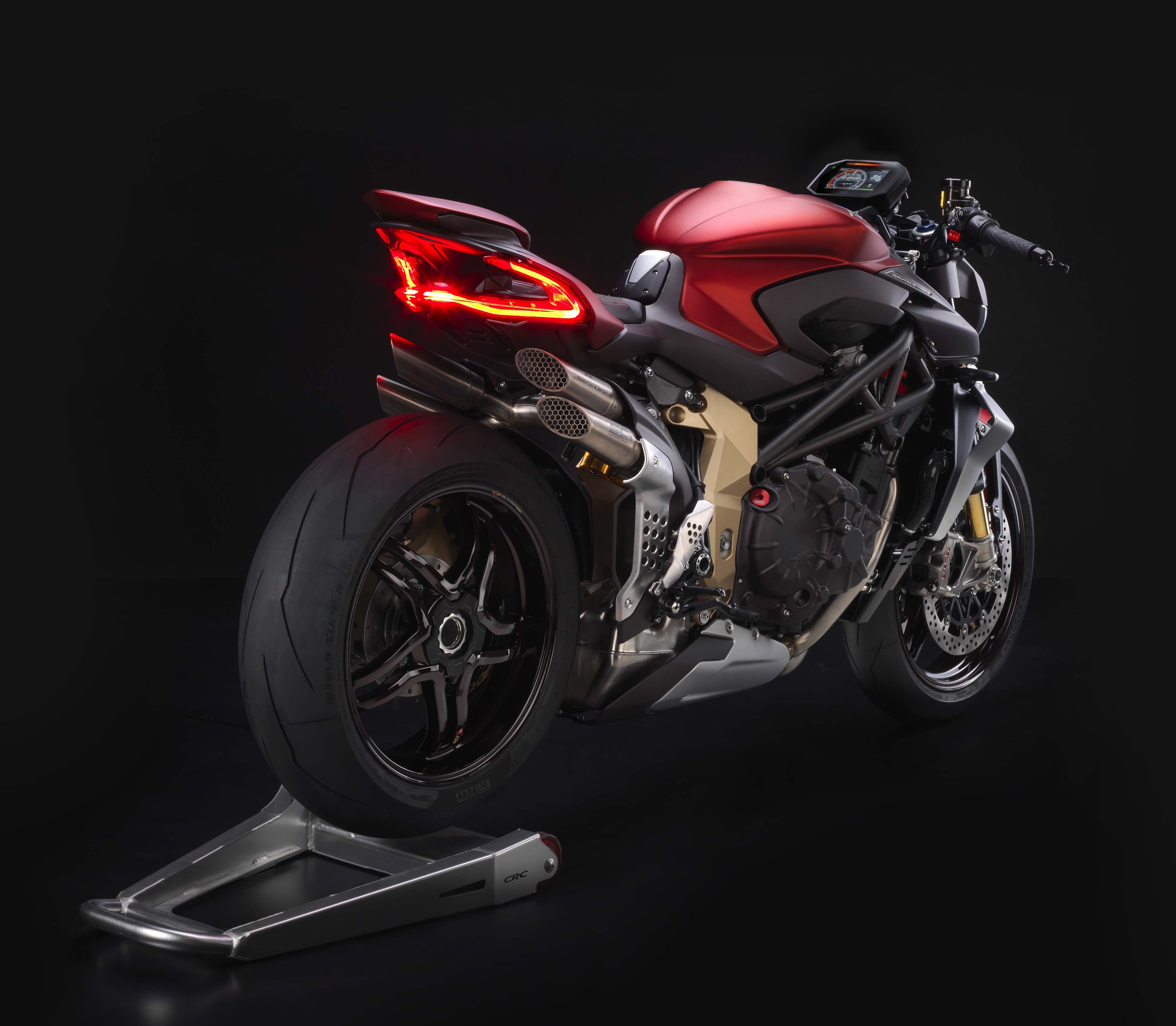
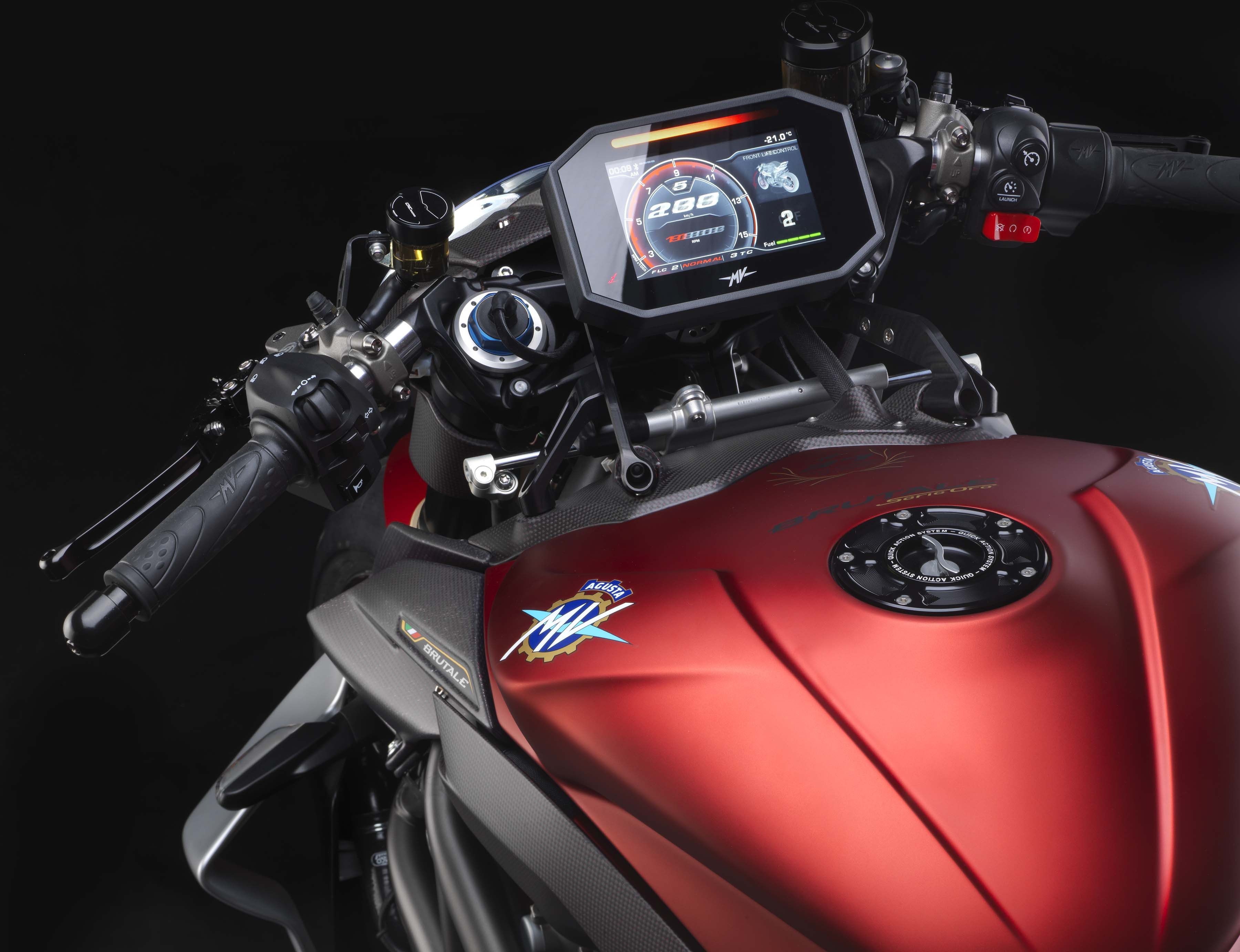
  • The 2019 MV Agusta Brutale 1000 Serie Oro is now the most powerful super naked with 205 bhp.

  • MV Agusta worked on reducing friction in the engine and reducing weight.

  • Only 300 will be built.

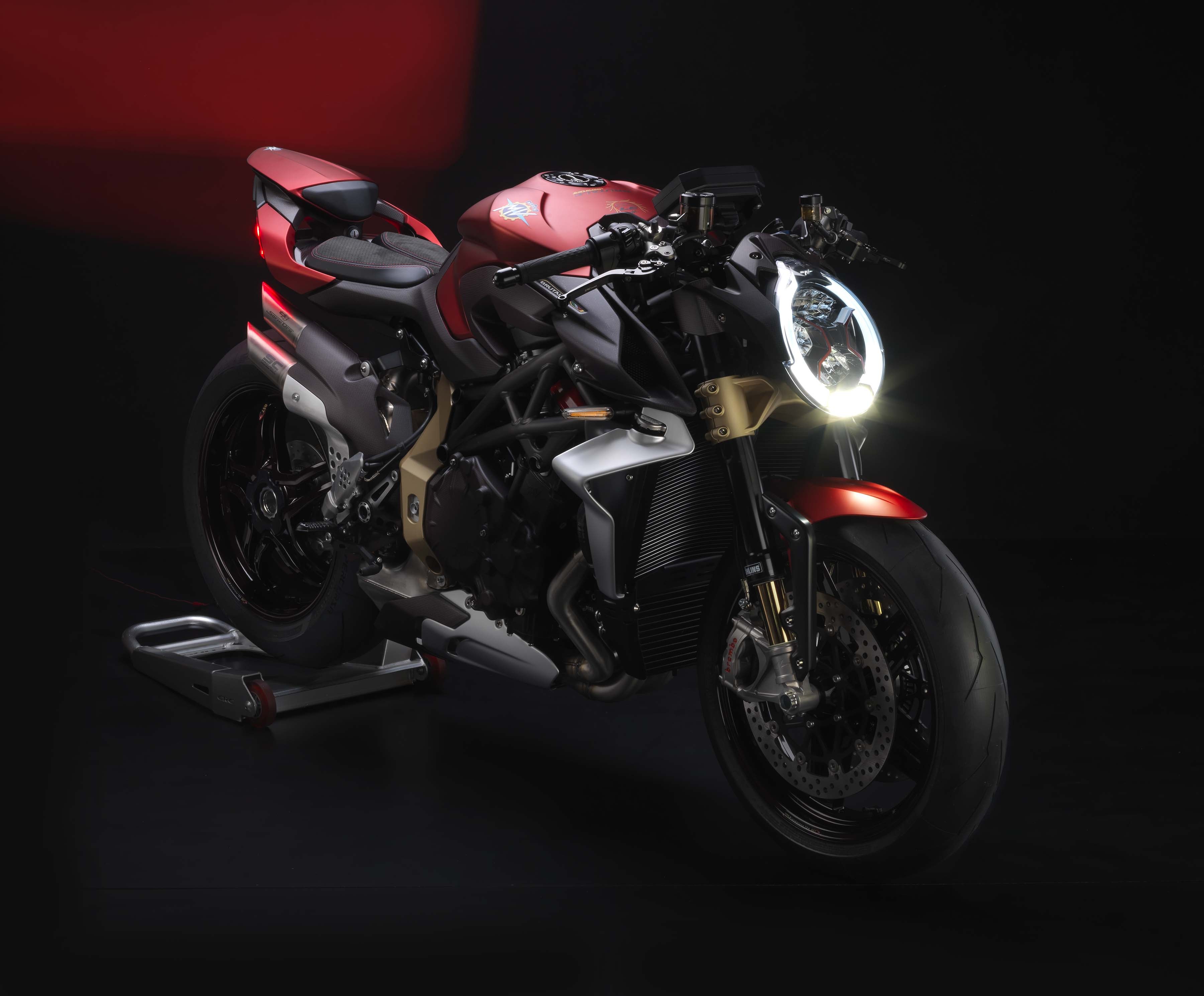
Has MV Agusta’s Brutale finally lived up to its name? It has now with this 2019 MV Agusta Brutale 1000 Serie Oro.

The MV Agusta Agusta Brutale line-up has always looked awesome but let’s face it, they were never truly that fierce. It is especially true when compared to its contemporaries in the shape of the Ducati Monster 1200 S, BMW S 1000 R, Aprilia Tuono 1000 and 1100, Triumph Speed Triple, and the completely mental KTM 1290 Super Duke R. But it had a great name: “Brutale” which means brutal in Italian.

Well, it’s time MV steps out of the closet and create the most powerful Brutale and most powerful super naked, yet.

For starters, the MV Agusta Brutale 1000 Serie Oro (Italian for Golden Series) is endowed with 205 bhp. That’s put it way out of the ballpark of current super nakeds that produce 160 to 180 bhp.

But if 205 bhp isn’t enough to blow you backwards off the bike, you can try it with 209 bhp by bolting on the SC Project 4-1-4 titanium exhaust system.

MV Agusta achieved this by drawing on their experience in the WorldSBK and WorldSSP Championships. Their overriding objective was friction reduction.

The Brutale 1000 continues MV’s four-cylinder heritage. The 998cc engine employs 79mm bore and 50.9mm stroke, with a 13.65:1 compression ratio, which are identical to the F4 superbike race machine. The valves are still titanium but the guides are now sintered. The combustion chamber has been redesigned. Camshaft timing is revised, besides changes to the intake and exhaust lobes. The pistons employ low friction Asso compression rings. The crankshaft is all-new.

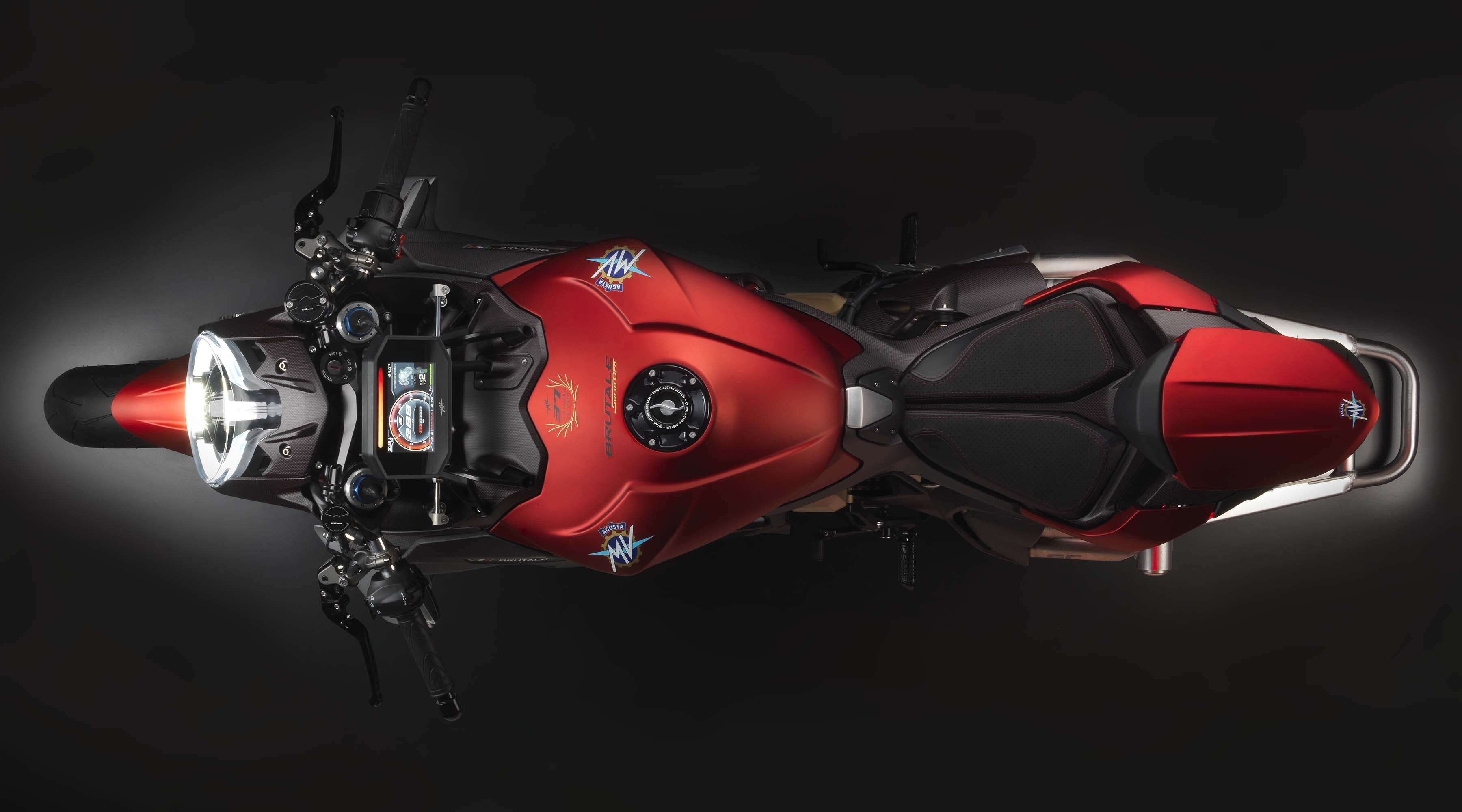
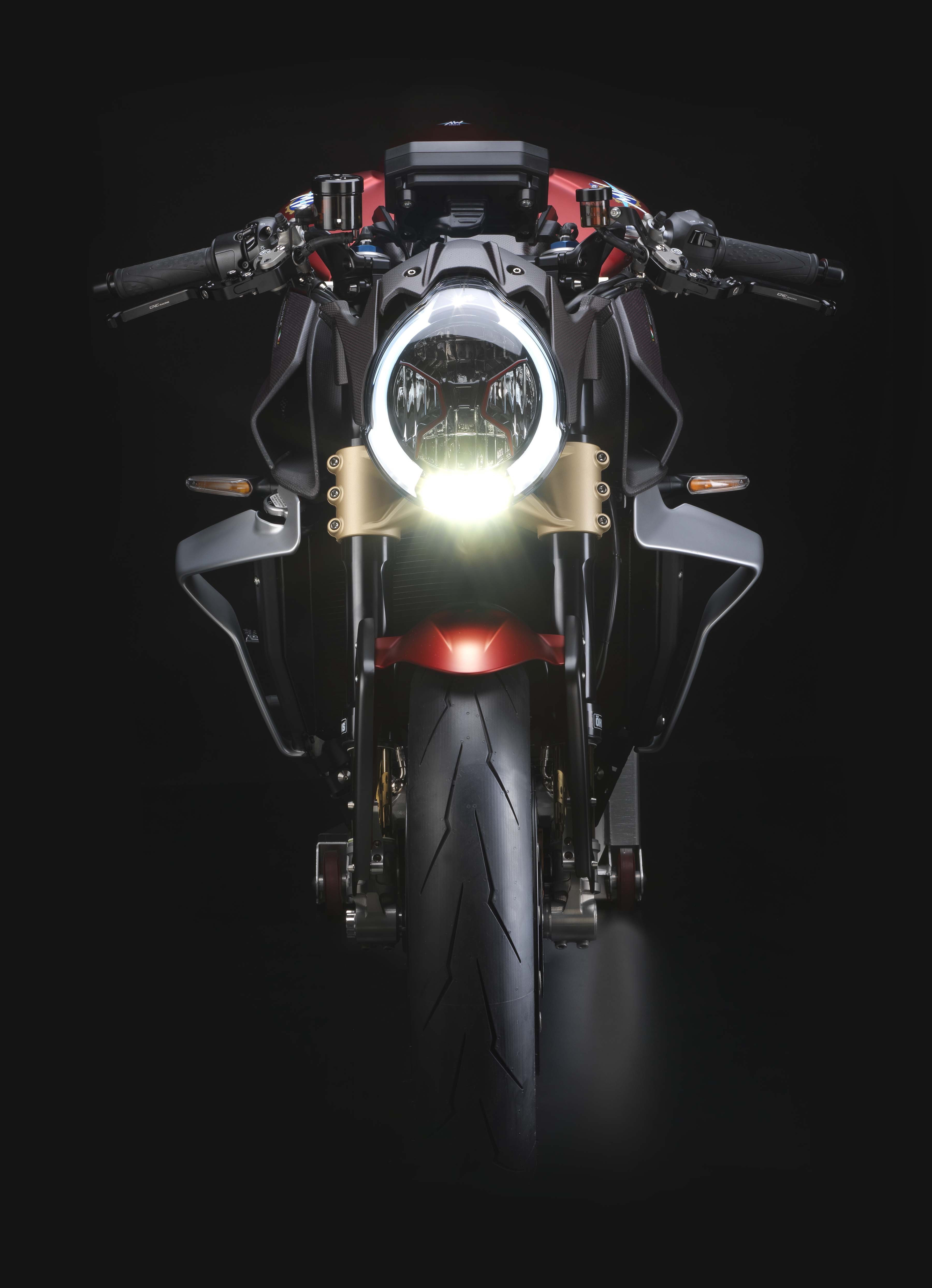
What sets the Serie Oro apart are the details. The wheels are carbon fibre. However, the radiator shrouds out to capture your attention quickly. They are shaped like aerobody winglets. They start creating downforce from 200 km/h and above. The bodywork is entirely carbon fibre.

Other smaller details include carbon fibre clutch cover and phonic wheel covers. Note also the clip-on handlebars instead of a tapered bar like on all other naked bikes.

The use of carbon fibre brings down the bike’s weight. The MV Agusta Brutale 1000 Serie Oro tips the scales at 186 kg dry. Using the race kit sheds another 2 kg.

Suspension is electronic Ohlins on both ends, featuring NIX forks and TTX36 rear shock. Brembo Stylema calipers anchor the front.

Another bit of wonderful news: MV Agusta has moved to a 5” TFT rather than retaining the old LCD screen.

Bad news is the MV Agusta Brutale 1000 Serie Oro is a limited production model. Only 300 will be built.

  • The GIVI Malaysia MotoGP Convoy 2018 continues with GIVI Asia’s annual tradition.

  • The National Museum was chosen as the starting point this year.

  • Participants received many great gifts including a ticket and special parking.

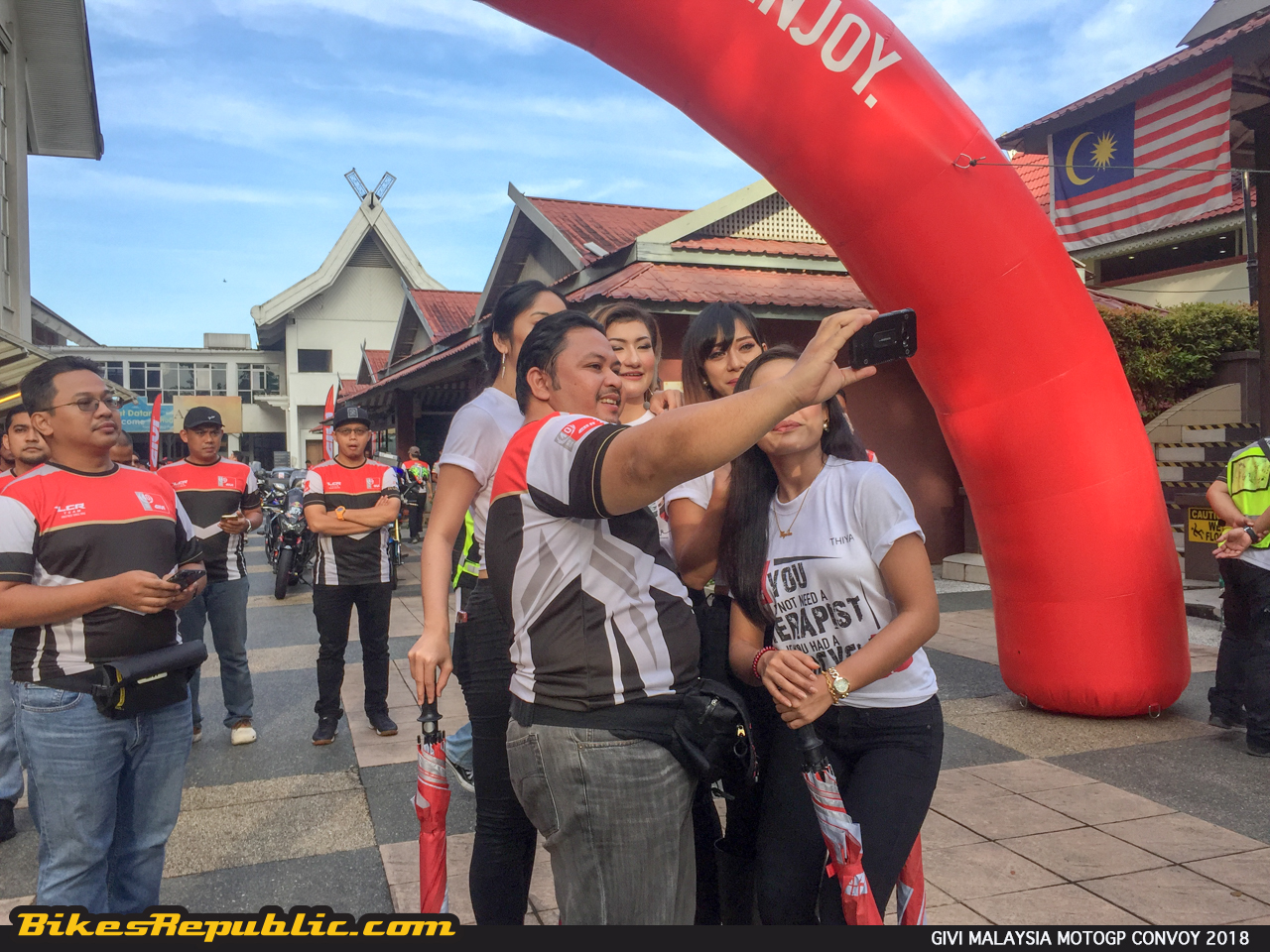
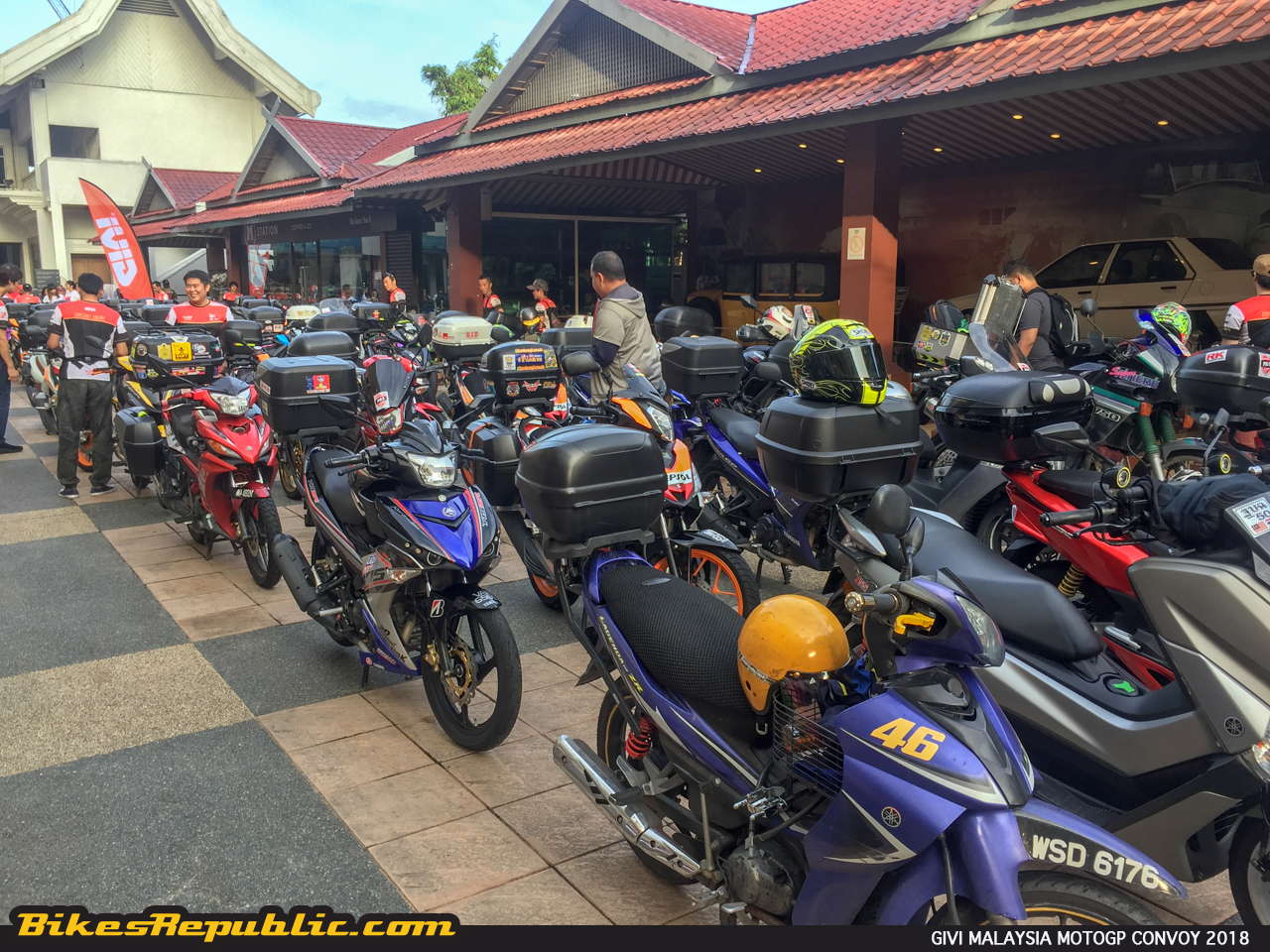
The GIVI Malaysia MotoGP Convoy 2018 continues on GIVI’s tradition of organizing a convoy to the Malaysia MotoGP every year.

GIVI Asia picks a prominent setting as the rendezvous (RV) point for the convoy each year. The National Museum got the pick for 2018. The museum’s mall area provided ample space for the bikes and registration desk.

Each participant had registered himself online when the convoy was announced last month. He then received a confirmation through his email. Lastly, he would show the confirmation to the registration desk at the start of the convoy to confirm his attendance.

He received upon confirmation:

  • A GIVI goodie bag;
  • A Castrol goodie bag;
  • One PA1 motorcycle parking sticker; and
  • One grandstand ticket.

Registration began at 7.30am. A light breakfast was provided at the museum’s cafeteria. Soon it was time to head out as the races have been moved earlier by two hours to avoid the forecasted rain later in the afternoon.

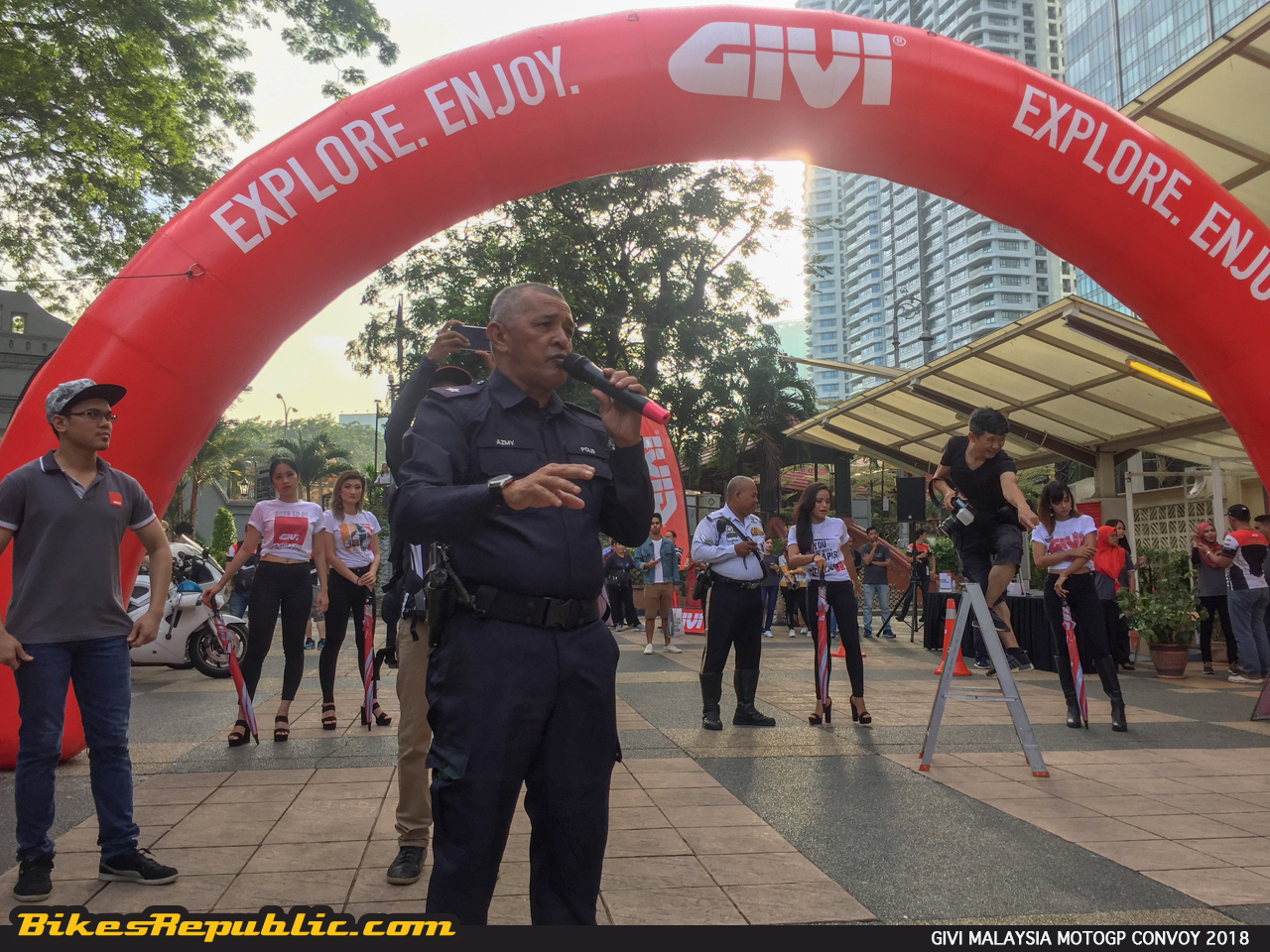
But first, GIVI’s representative welcomed everyone to the convoy. The Traffic Police officer in charge of the escorts gave his safety briefing afterwards.

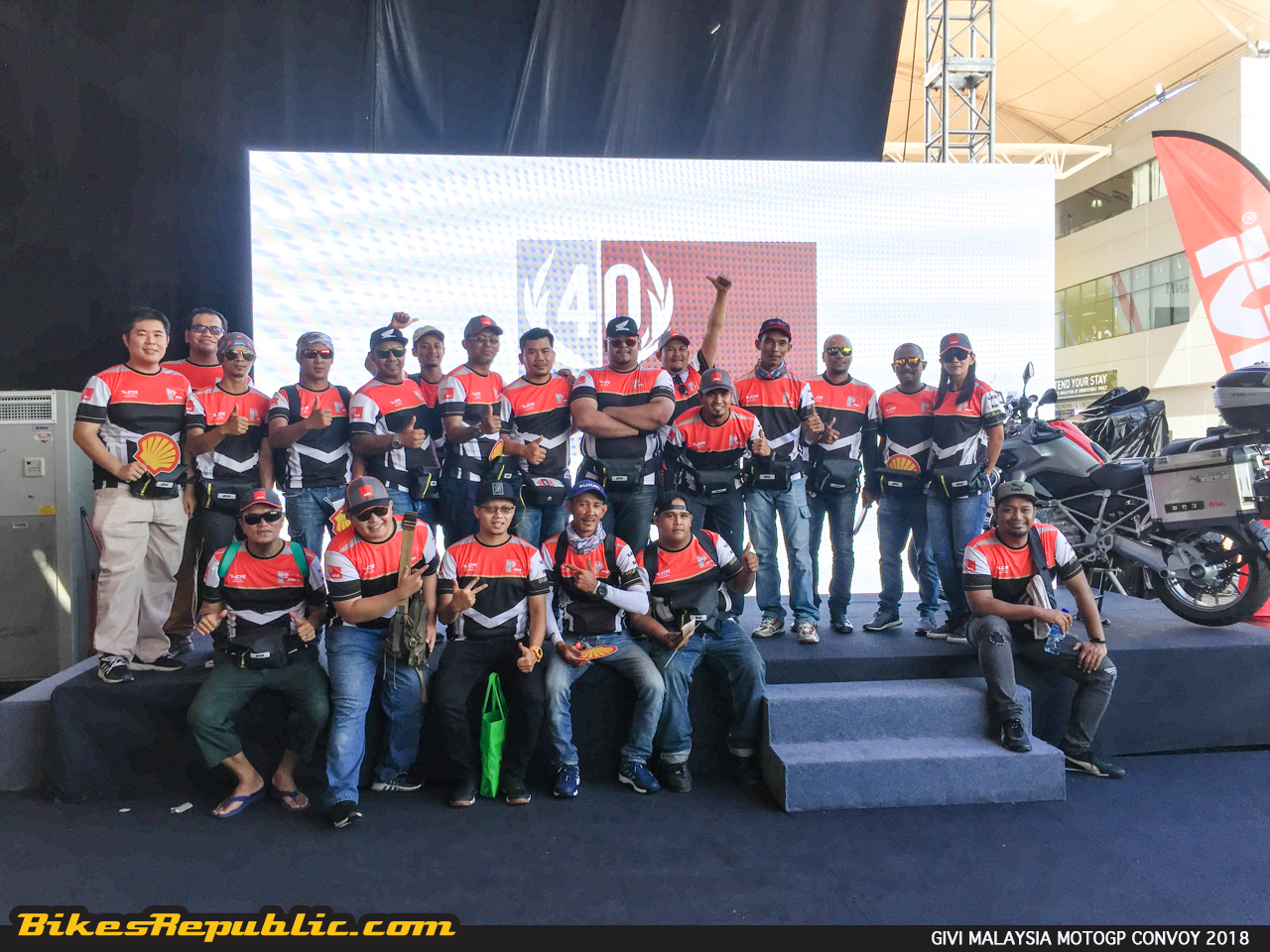
The convoy departed from the museum, escorted all the way by the Royal Malaysian Police all the way. The convoy participants were thankful for the escort as they bypassed the notorious bottlenecks as they got nearer to the Sepang International Circuit.

A special parking lot had been allocated for the participants, avoiding the difficulty of locating spaces for themselves. The motorcycles are guarded throughout the entire event by GIVI’s staff.

The participants then proceeded to GIVI’s massive pavilion at SIC’s mall area. There, there were given their tickets and more gifts.

A tribune was also provided, right opposite the Team LCR Honda pits.

Make sure you join GIVI’s MotoGP convoy next year. It truly beats all the trouble of having to ride there yourself.

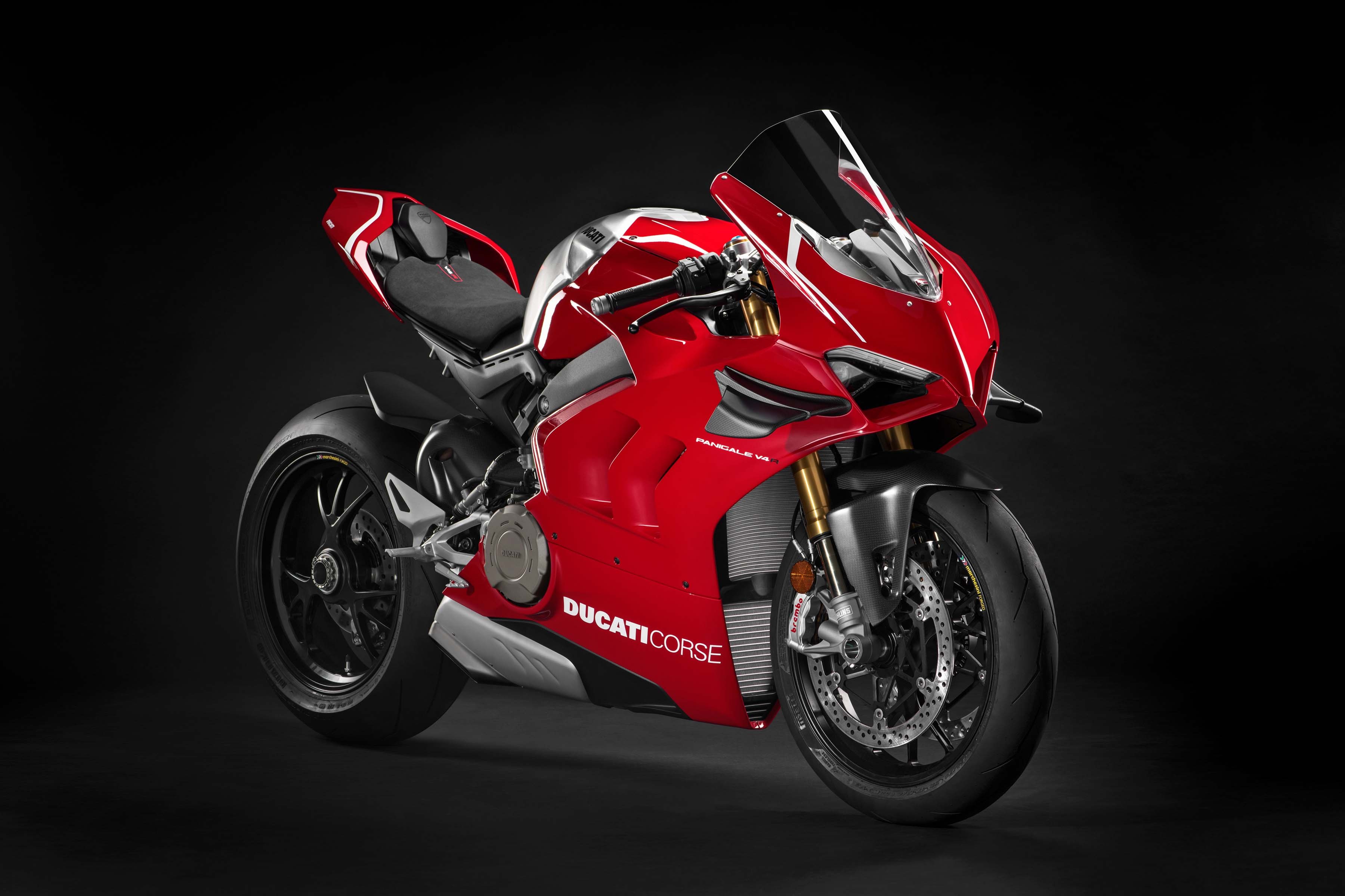
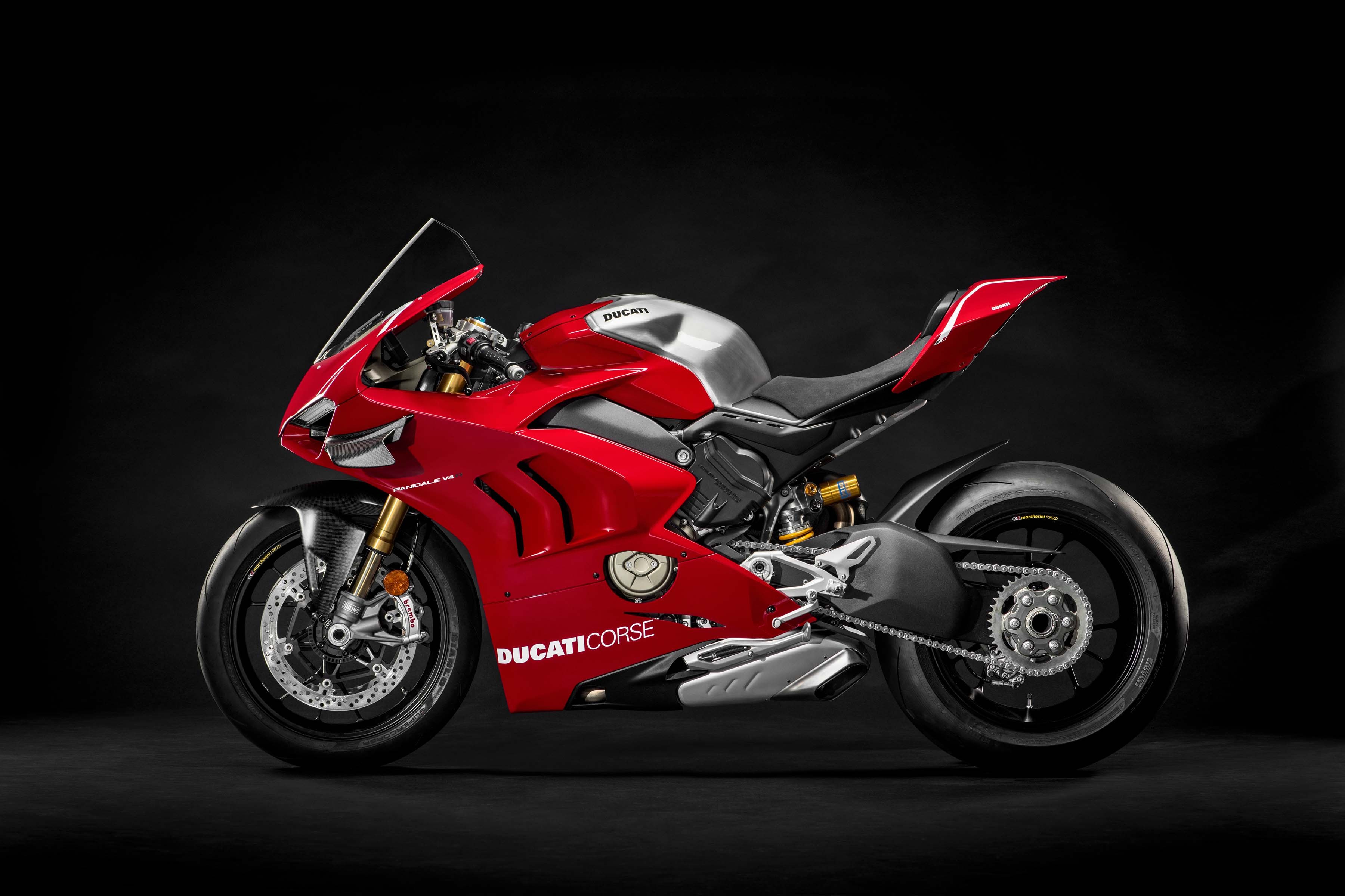
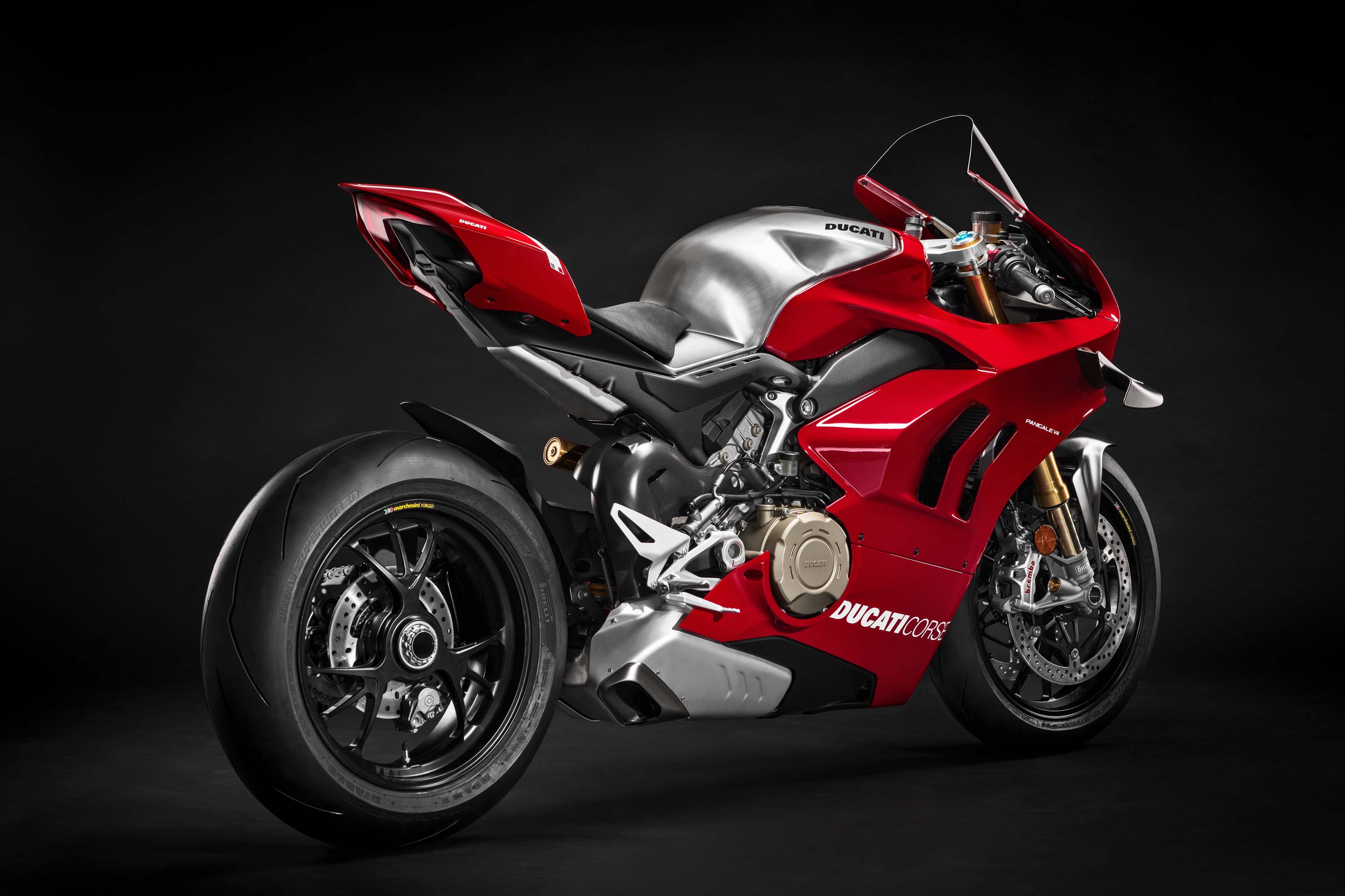
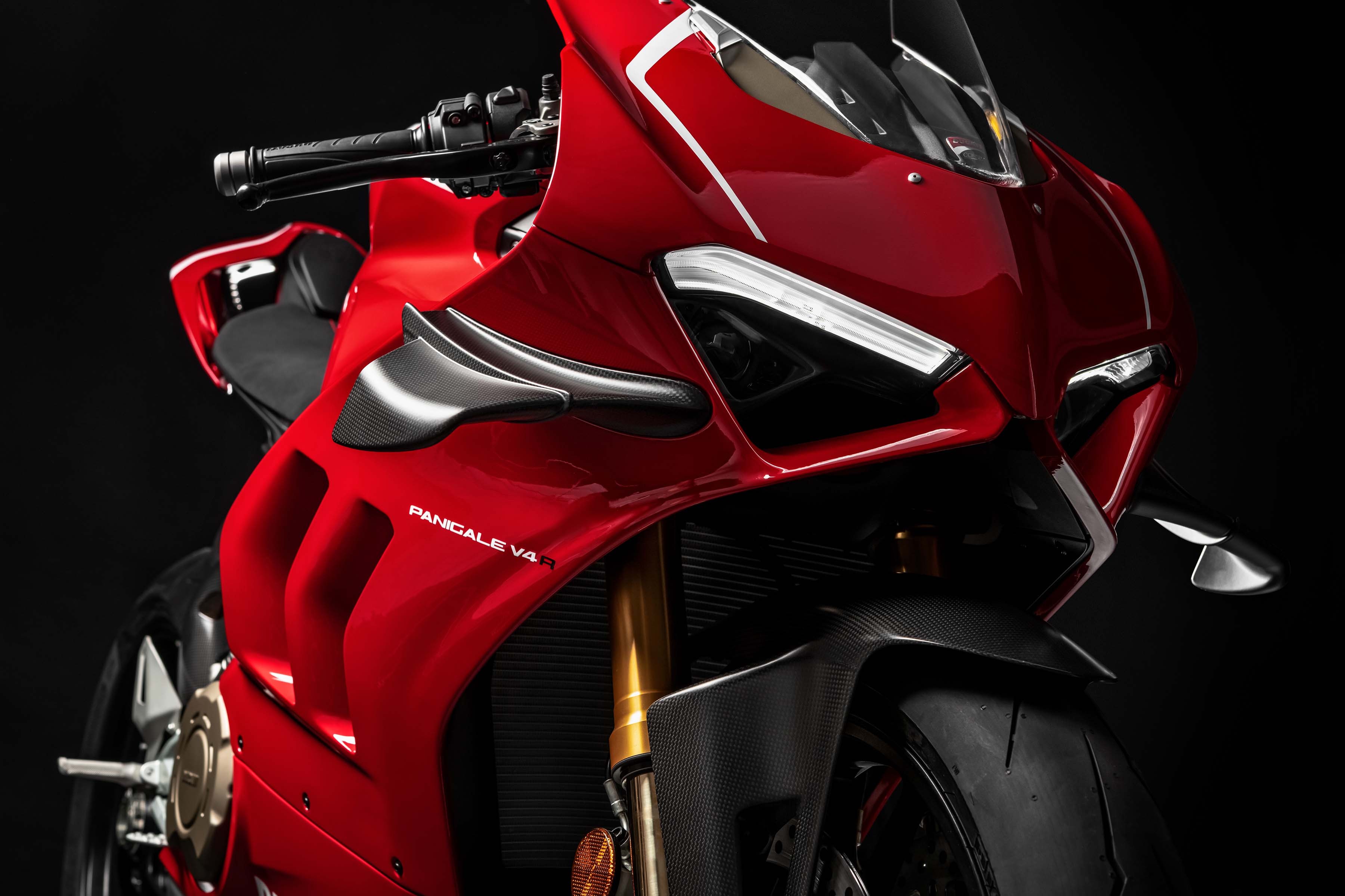
  • Ducati introduced the 2019 Ducati Panigale V4 R at the World Ducati Première 2019.

  • The 998cc engine produces 217 bhp, but the race exhaust brings it up to 231 bhp.

  • The new bodywork has winglets.

  • It weighs only 193 kg, fully fueled and ready to ride.

We expected the unveiling of the 2019 Ducati Panigale V4 R during the Ducati World Première 2019 and it didn’t disappoint.

The Panigale V4 R is the homologation model for World Superbike and other production-based superbike racing series. Production racing calls for the race bikes to have certain similarities to the road bike. Therefore, manufacturers build a specific number of “homologation” models, based on their production figures. The Panigale V4 R fills these requirements.

Its engine capacity is limited to 1000cc as per the rules for V-Four and inline-Four powered bikes, as a result. However, the Panigale V4 R’s 998cc engine punches out 217 bhp and 112 Nm of torque. In the interest of superior power-to-weight ratio, it weighs only 193 kg, fully fueled and ready to ride.

Wait, hang on. 217 bhp not enough for you, sir? Well, you can always add on the Ducati Performance exhaust made by Akrapovic to pump it up to a vicious 231 bhp. That’s the same power output as the Kawasaki Ninja H2 – without the benefit of a supercharger.

The 1103cc Desmosedici Stradale engine in the Panigale V4 and Panigale V4 S produces 212 bhp and 120 Nm of torque, by comparison.

2018 Ducati Panigale V4S Test & Review

The Panigale V4 R’s weight reduction is also the result of using lighter engine internals components. Ducati used forged pistons, titanium valves, titanium conrods, new camshaft and larger throttle body. The lighter components allow the Desmosedici Stradale R engine to rev higher to a maximum of 16,500 RPM. Peak power output is at 15,520 RPM, 2,250 RPM higher than the 1103cc engine.

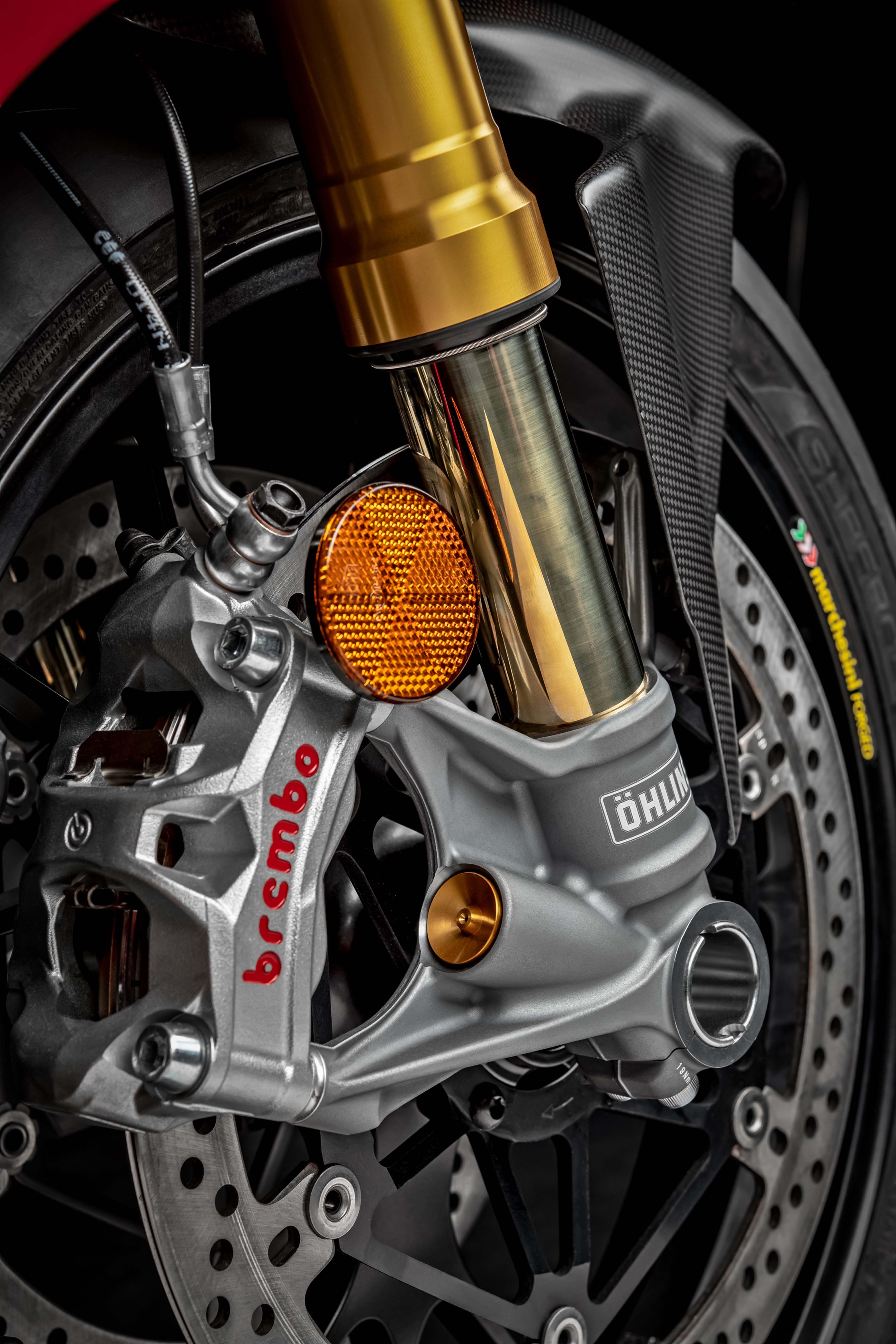
A “manual” suspension system also reduces weight compared to the electronic system found on the Panigale V4 S.

DU 2018-09-19 1714 REV01

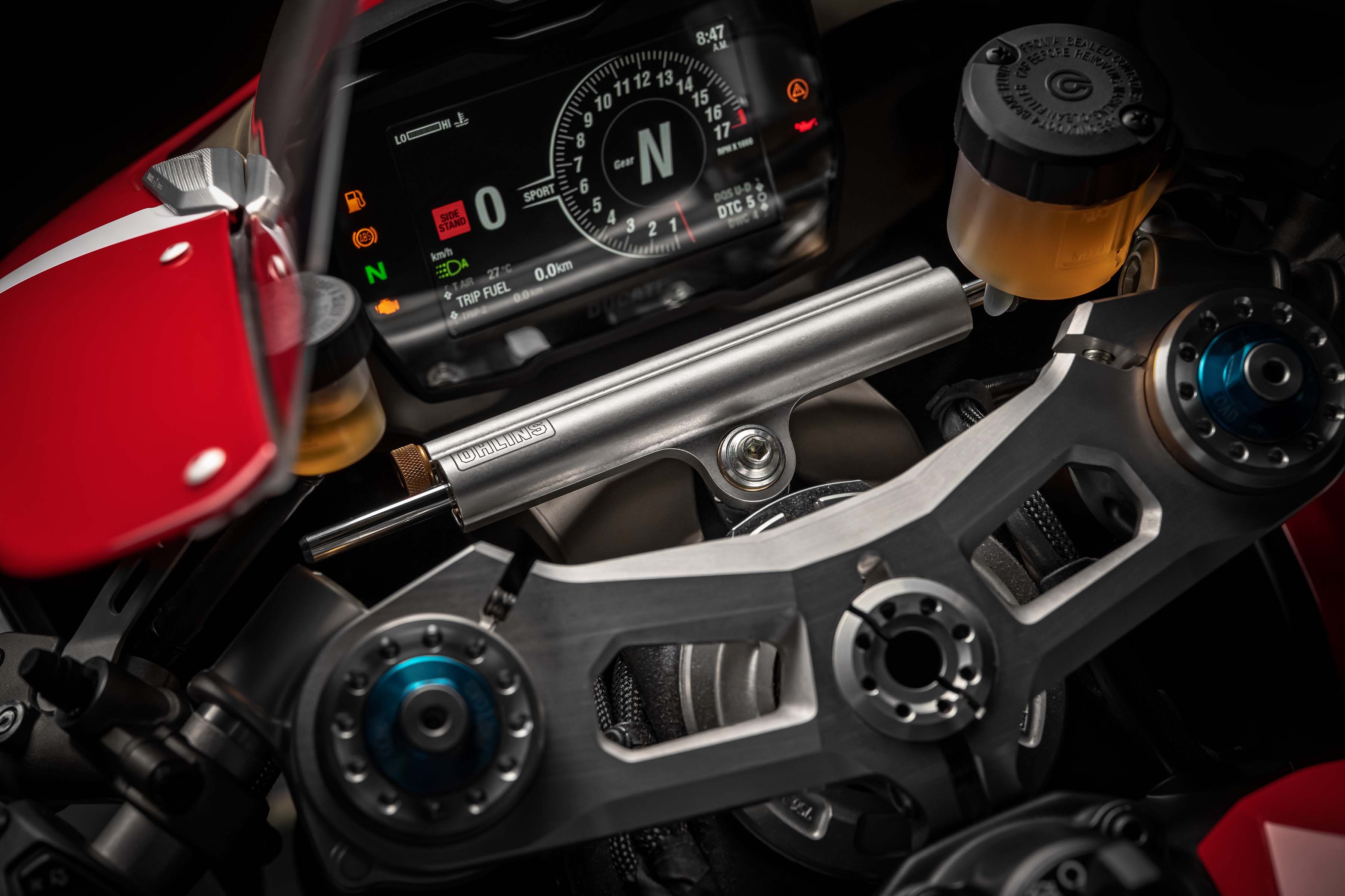
The updated electronics system includes a pitlane speed limiter, GPS-lap timer, besides the present IMU (Inertial Measurement System) based Cornering ABS and lean angle sensitive traction control, wheelie control, launch control, engine brake control and rear-wheel slide control.

The biggest news however, should be the winglets and new bodywork on the V4 R. The winglets represent Ducati’s intensive research and development in that area. The new bodywork also features large “gills” on both sides to aid airflow through the radiator.

DU 2018-09-19 1714 REV01

Its price should be released at the EICMA show later this week.

DU 2018-09-19 1714 REV01
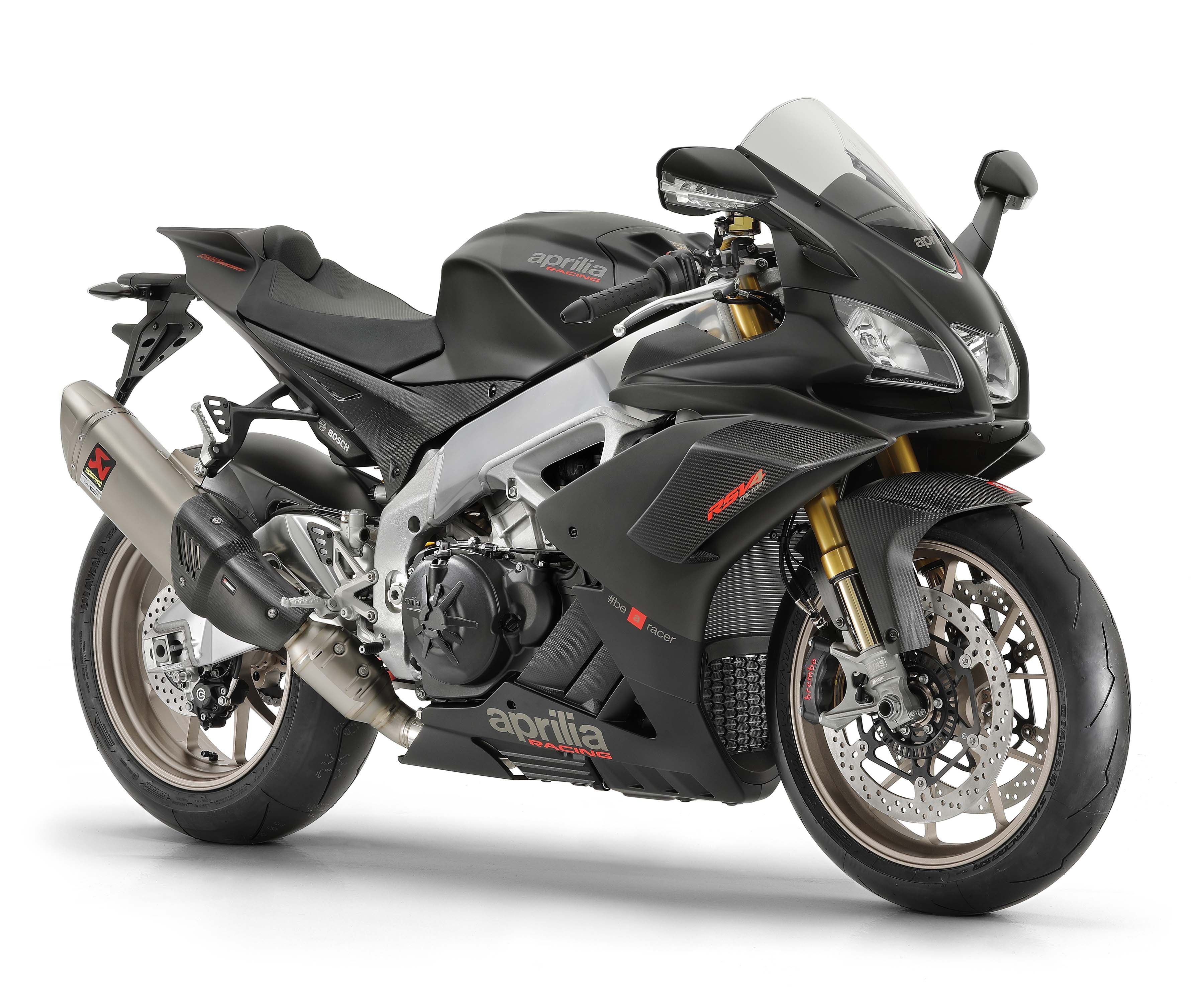
  • The 2019 Aprilia RSV4 1100 Factory sees its engine capacity increased to 1078cc.

  • The increase brings maximum power to 214 bhp and torque to 122 Nm, while weighing 199 kg wet.

  • The new bike will also feature winglets on its fairing.

It looks like manufacturers are upping the horsepower game since the introduction of the Ducati’s Panigale V4. The latest on the list is the 2019 Aprilia RSV4 1100 Factory.

The new RSV4 1100 Factory’s engine will produce 214 bhp, upstaging the Panigale V4’s by 1 bhp. That makes the Aprilia the most powerful naturally-aspirated sportbike.

Following in the footsteps of their Italian superbike rival, Aprilia will be producing 2 RSV4 variants of different engine capacities. The RSV4 Factory sees its 65o V-Twin capacity increased to 1078cc. On the other hand, the 1000cc RSV4 RR is the homologation model for superbike racing.

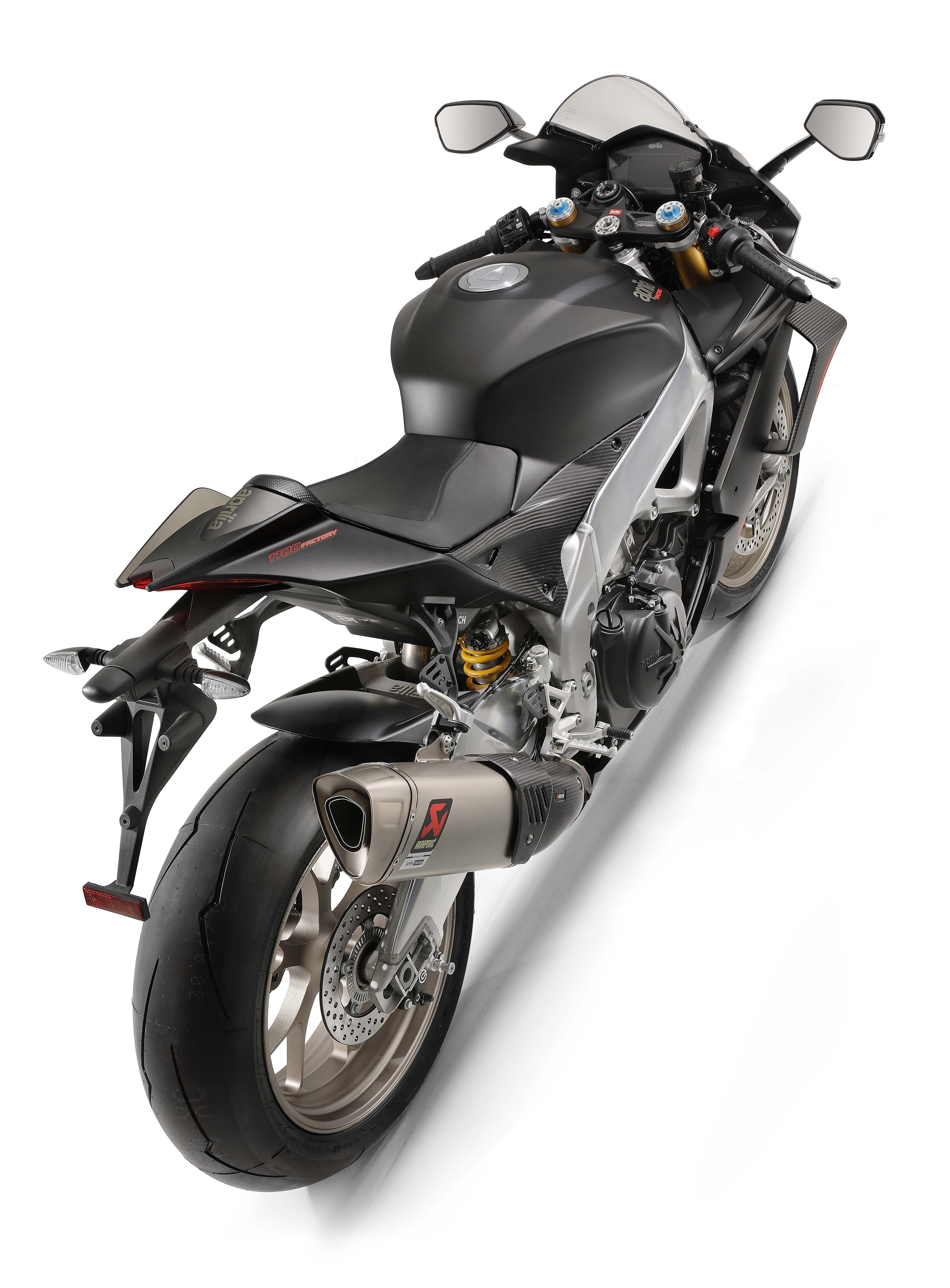
It isn’t just about a power increase, however. Torque has also been increased to 122 Nm. Additionally, Aprilia has lowered the weight of the RSV4 1100 Factory to just 199 kg, fully fueled. The Bosch lithium-ion battery and titanium Akrapovic exhaust system contributes to the weight reduction.

By the numbers, the 2019 RSV4 1100 Factory is 5 kg lighter, produces 16 more horsepower and 6.8 Nm more torque than the previous model.

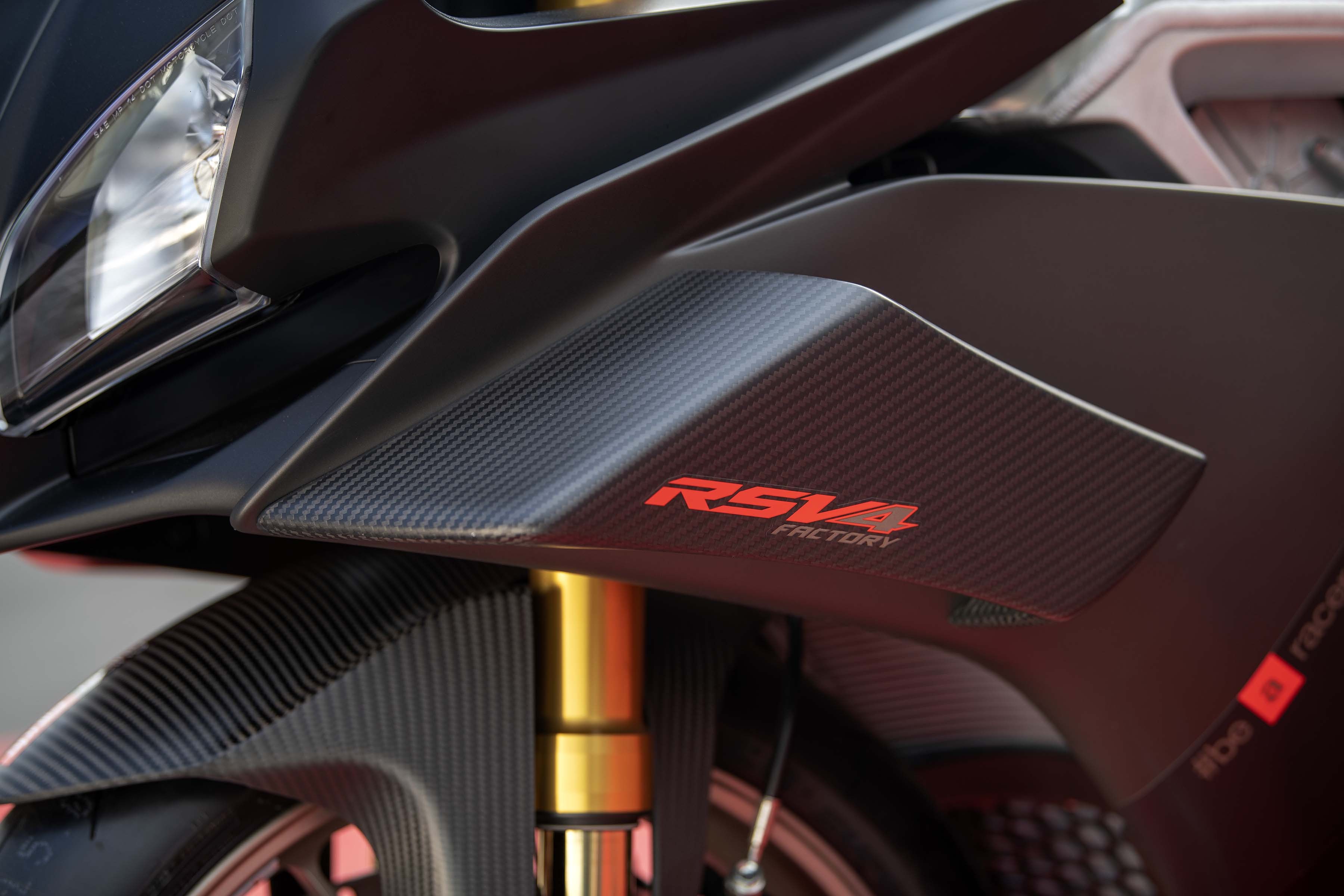
Another obvious change are the winglets that are evolved from the 2018 Aprilia RSV4 RF LE.

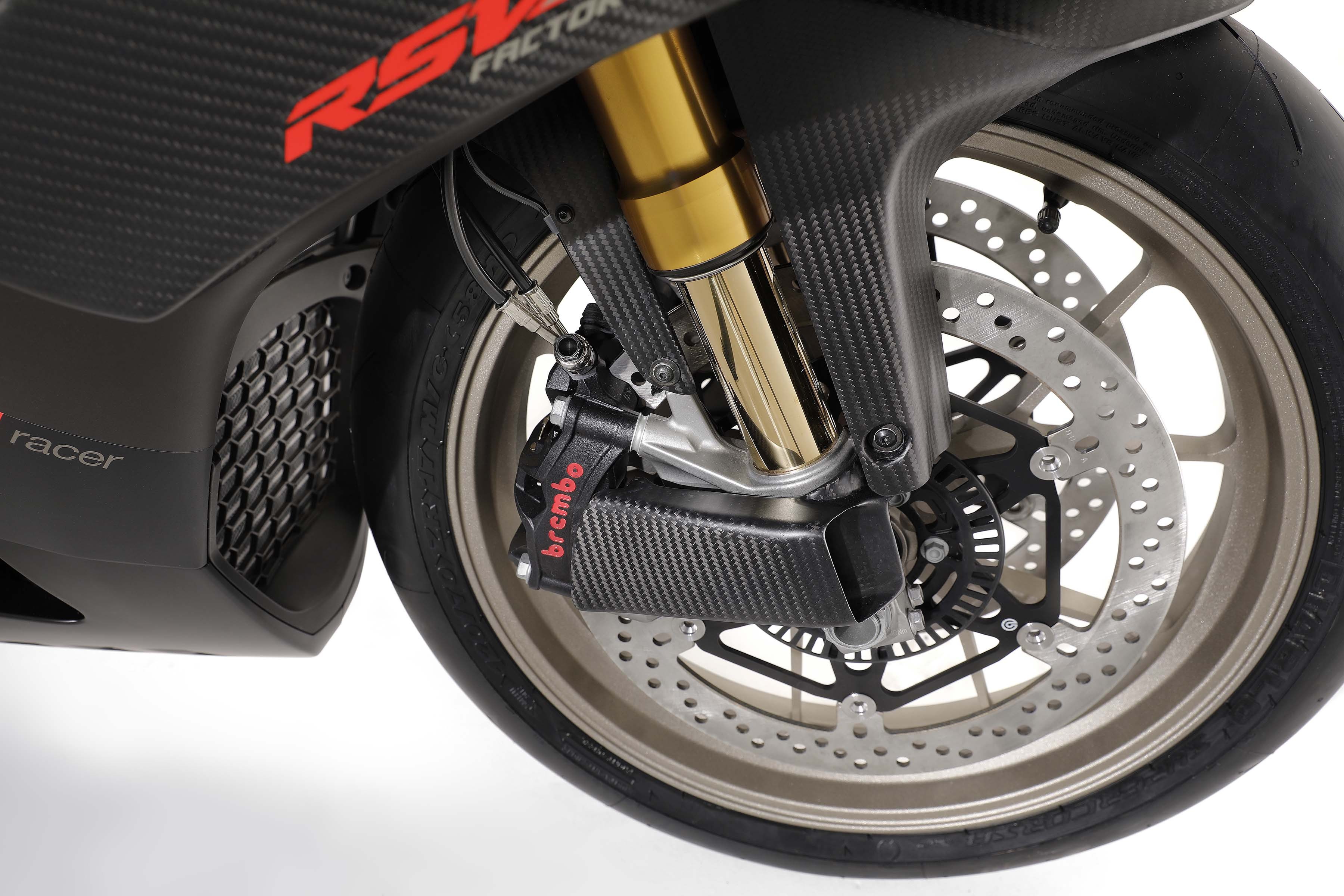
Brembo’s latest Stylema front brake calipers perform braking duties for the front. They are lighter yet more rigid than the outgoing Brembo M50 Monobloc. Gripping the discs are more aggressive brake pads. Look closely and you will notice air ducts for the front calipers.

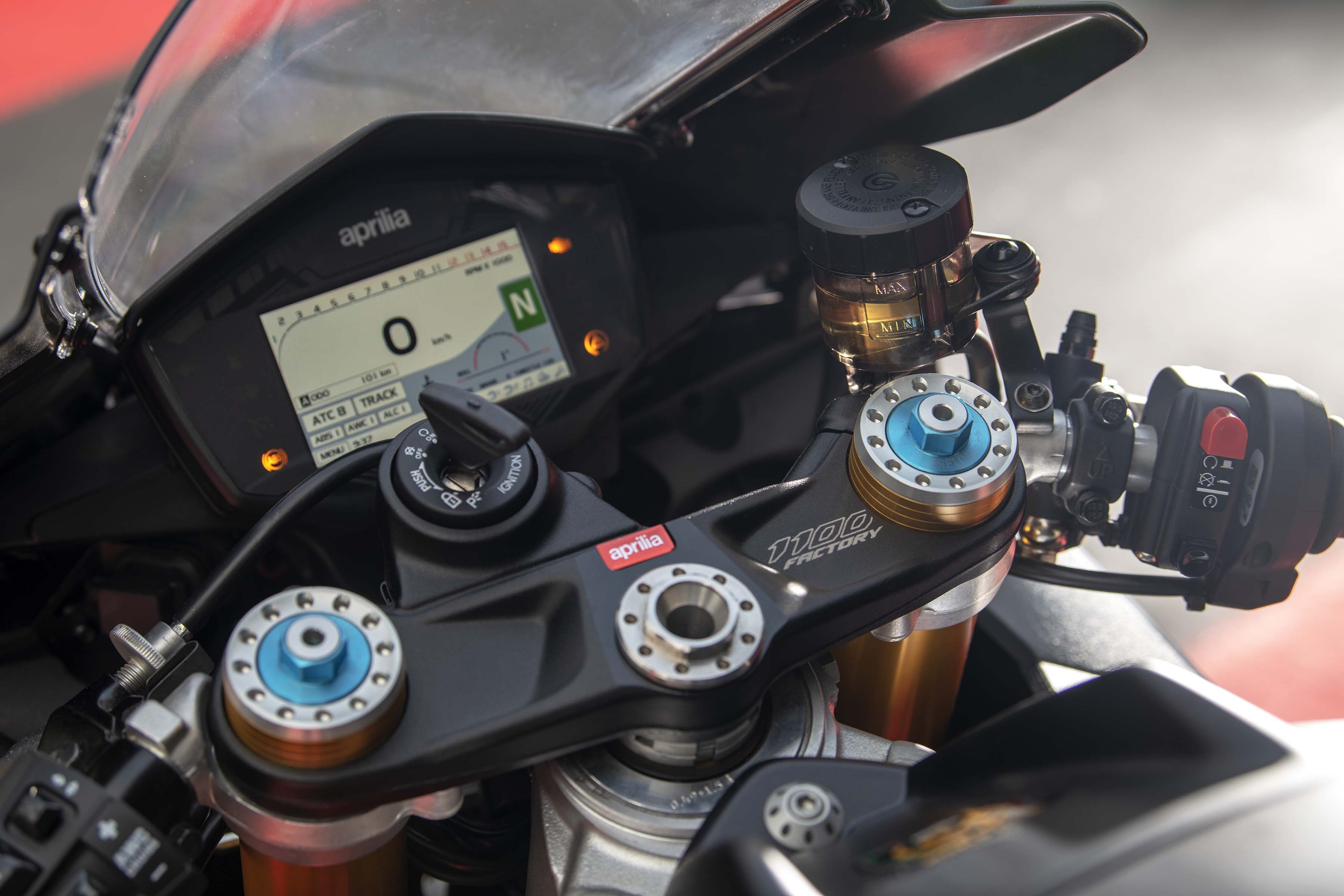
Front forks are Öhlins NIX with 125 mm travel (5 mm more) for better cornering. An Öhlins TTX shock suspends the rear end.

There are new steering bushings that steepen the rake angle. There is a 2 mm reduction of the steering yoke for less trail.

The steering changes results in a 4 mm shorter wheelbase. The swingarm has also been stiffened.

Last but not least, Aprilia have also upgraded the APRC electronics suite.

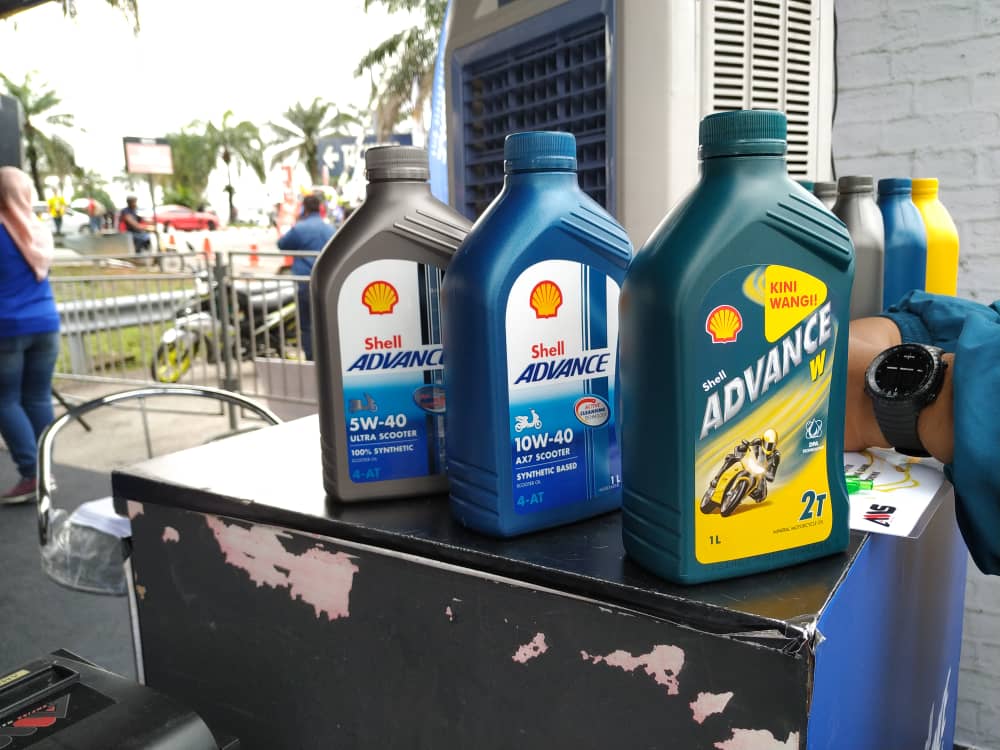
  • Visit the Shell Advance Ride-Thru at the Shell MotoGP 2018 for an unbeatable experience.

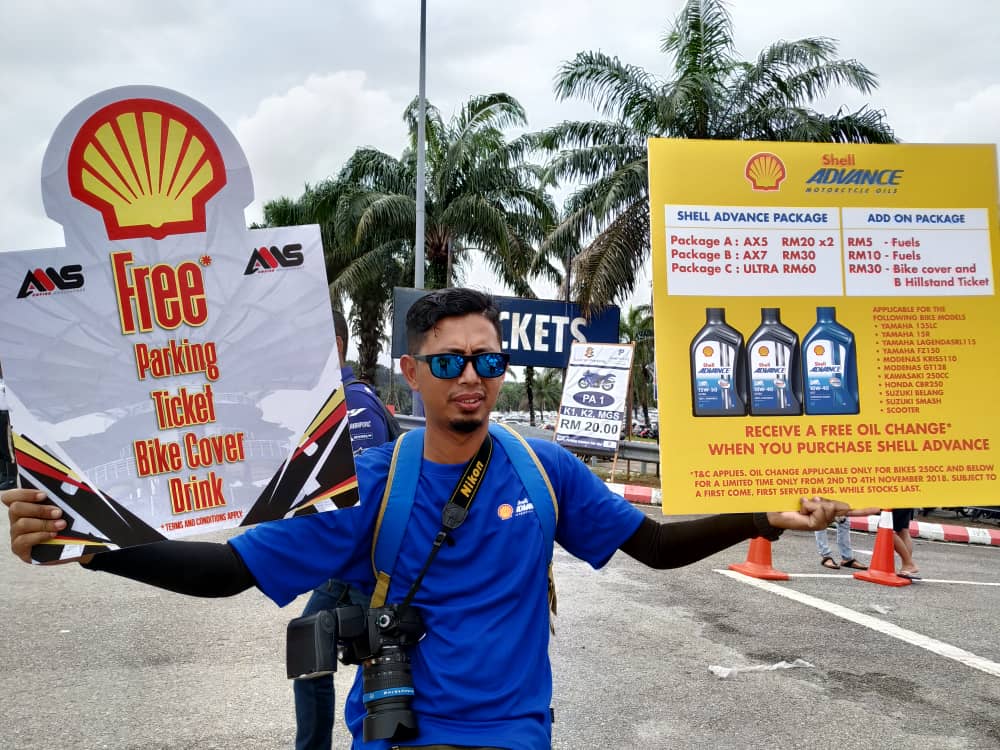
  • You will receive the best of the best with a minimal spending of just RM30.

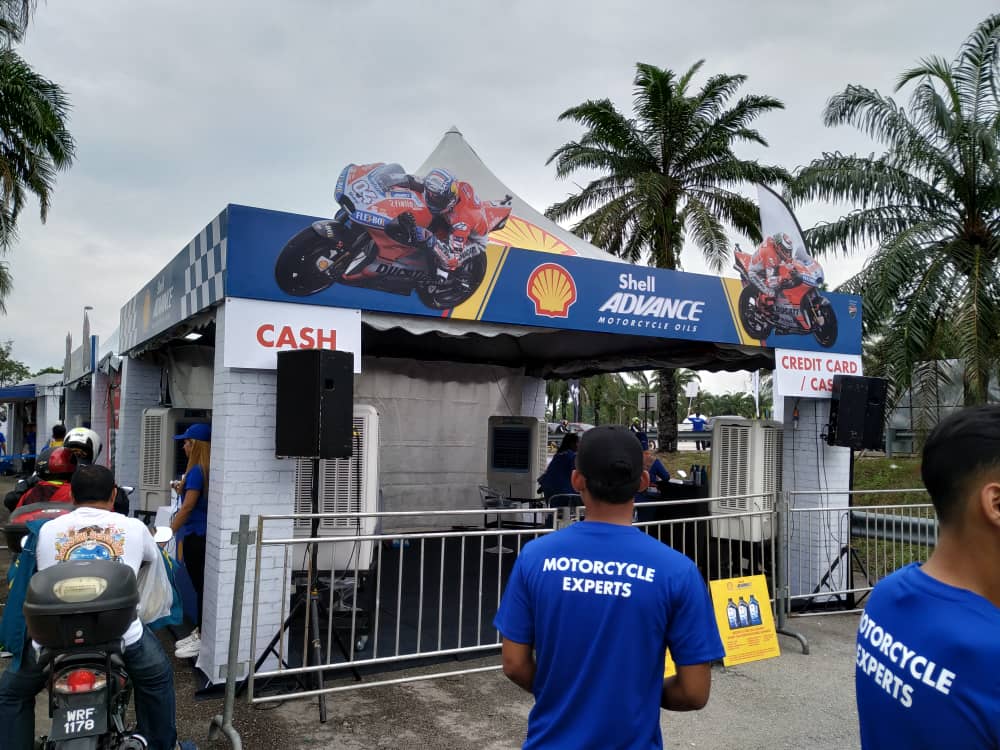
  • The Shell Advance Ride-Thru is located at the P1 parking area.

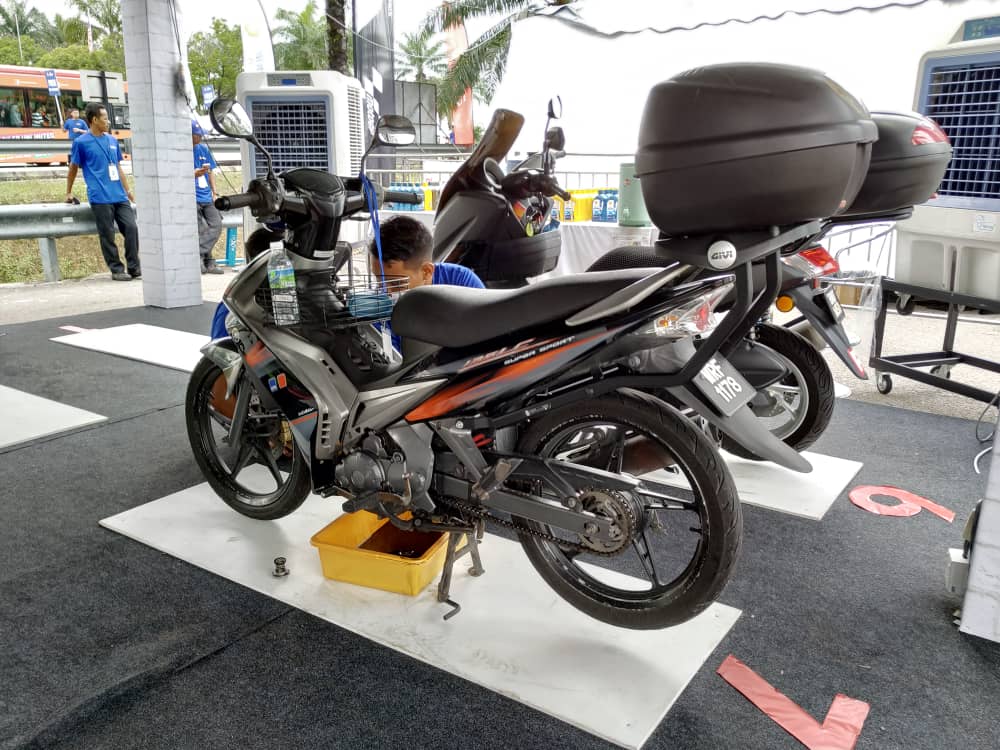
Here’s a great way to experience the Shell Malaysia MotoGP 2018. Why not try out the Shell Advance Ride-Thru?

Oh, we know how it’s like at MotoGP. You ride there all hyped up about the atmosphere and race ahead of you. You’re thinking about the glitzy new bikes on display, opportunities to selfie with hot models, win some exclusive prizes, see your heroes in action.

But the road starts to get hectic by the time you near Sepang International Circuit. On top of that, you have to find a place to park your bike. That’ll be RM20, please. And there’ve been rumors circulating around that parts of the bikes go missing. Oh dear.The solution is? Shell Advance Ride-Thru.

It couldn’t get any simpler:

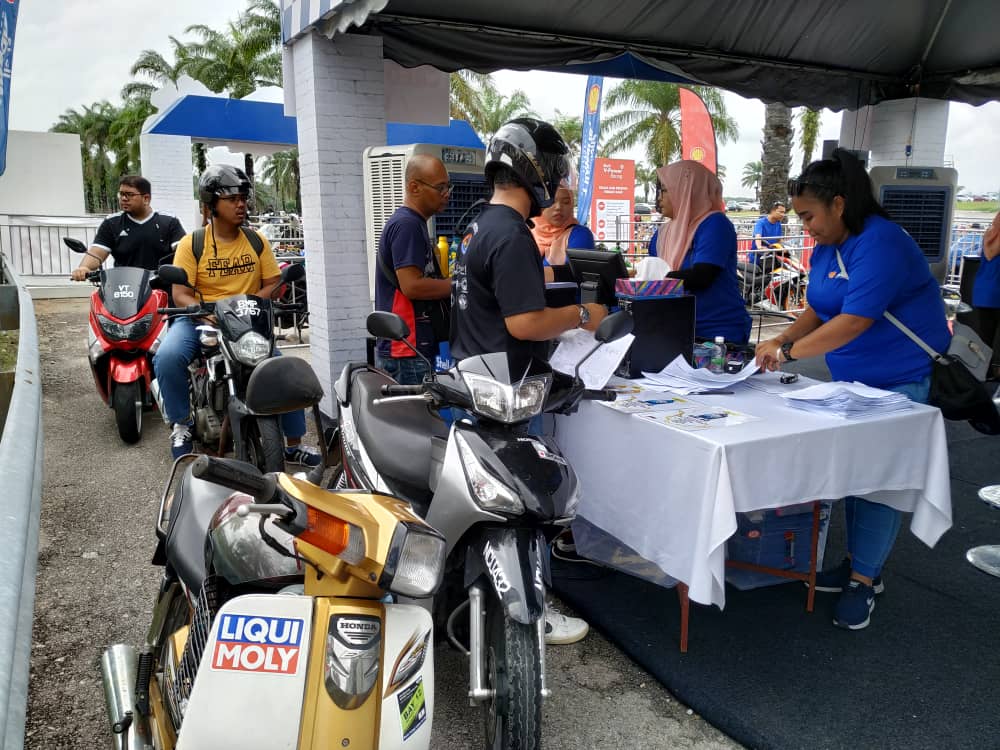
  • Ride right up to the counter;
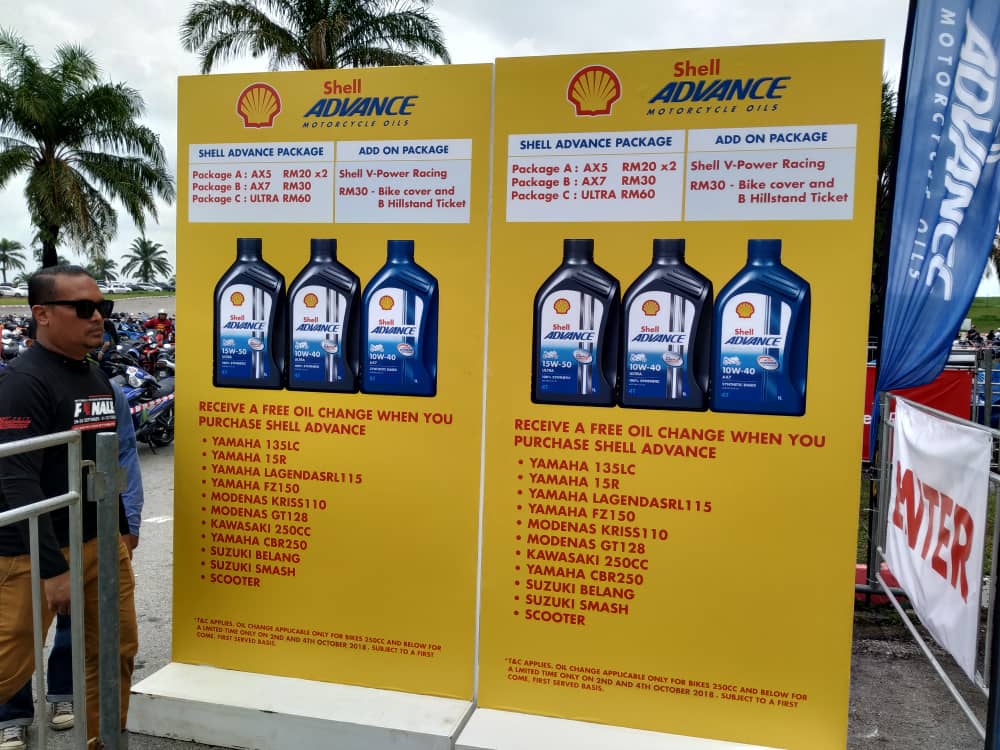
  • Select the Shell Advance Package you prefer;
  • Leave your bike with the trained mechanics;
  • Shell provides a new oil filter for your bike – FOC! (No kidding!);
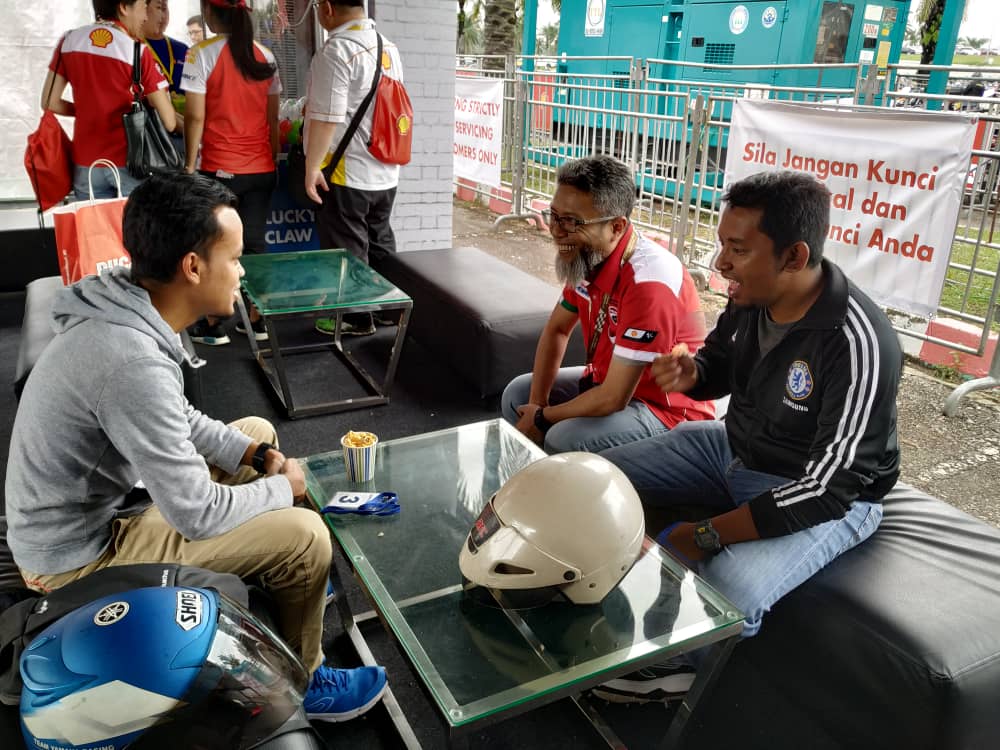
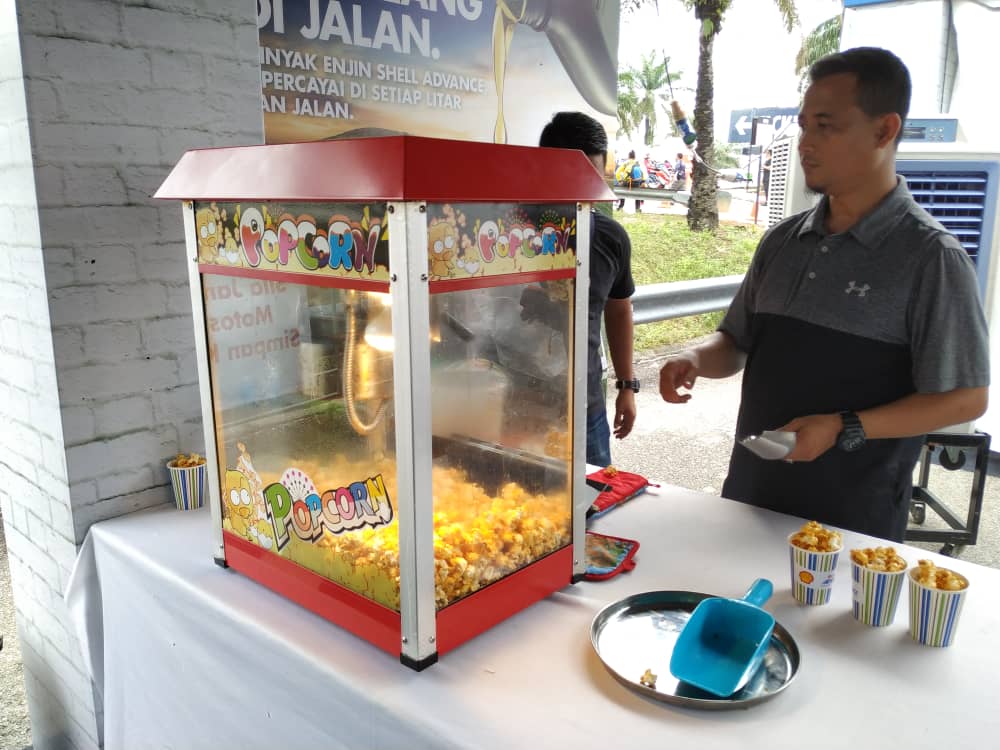
  • Go relax at the lounge or head into SIC’s mall area;
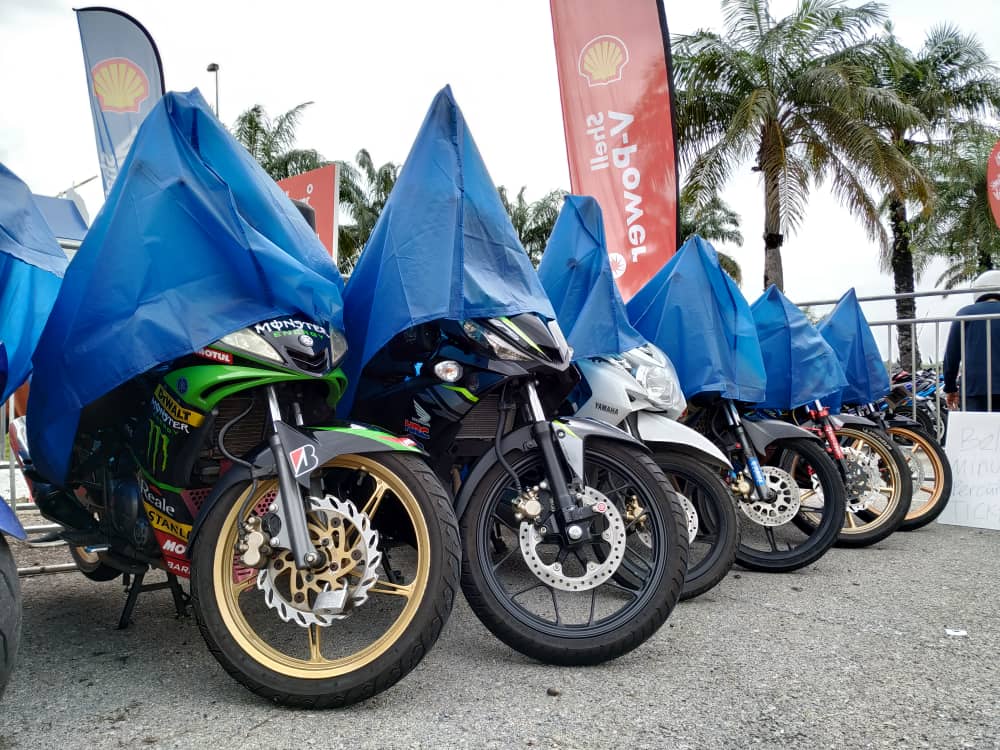
  • Your motorcycle will be parked in a secure area right next to the booth after it is serviced.

All for a minimum of just RM30.

However, if you also opt for the Add-On Package, you will receive:

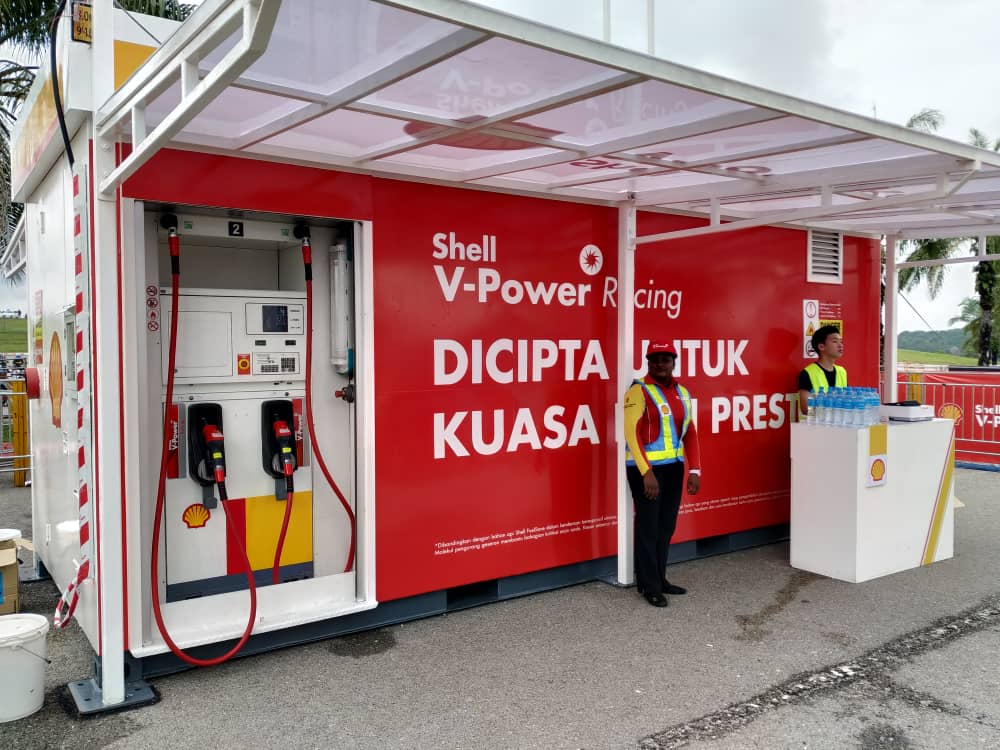
  • Topping off your tank with Shell V-Power petrol;
  • A motorcycle cover;
  • A hill stand ticket.

For just another RM30.

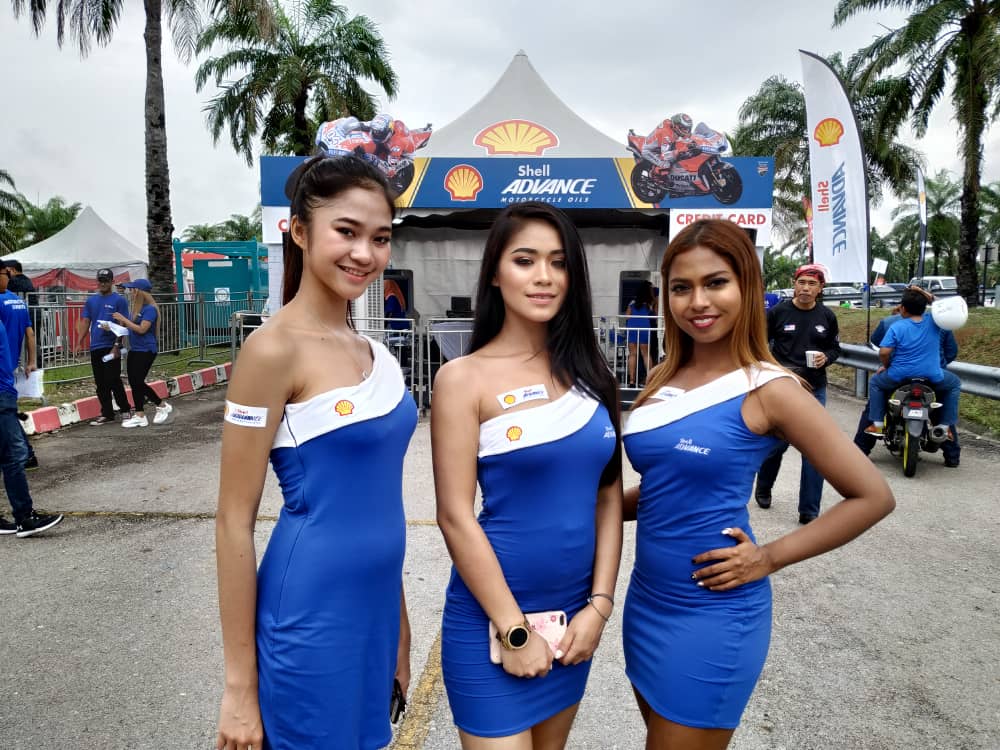
So, not only could you enjoy the race in peace, but your motorcycle would’ve been taken care of in the best possible manner when you return. It’s almost better than selfies with hot MotoGP models.

NOTE: Servicing is only open to motorcycles 250cc and below. Please refer to the picture below.

Archive

Follow us on Facebook

Follow us on YouTube